Indonesia
 English
 Arabic
 French
 Spanish
 Portuguese
 Deutsch
 Turkish
 Dutch
 Italiano
 Russian
 Romaian
 Portuguese (Brazil)
 Greek
High Demand Skills for the Next 10 Years: Future-Ready Career Guide
Other |
2026-10-30 06:02:24
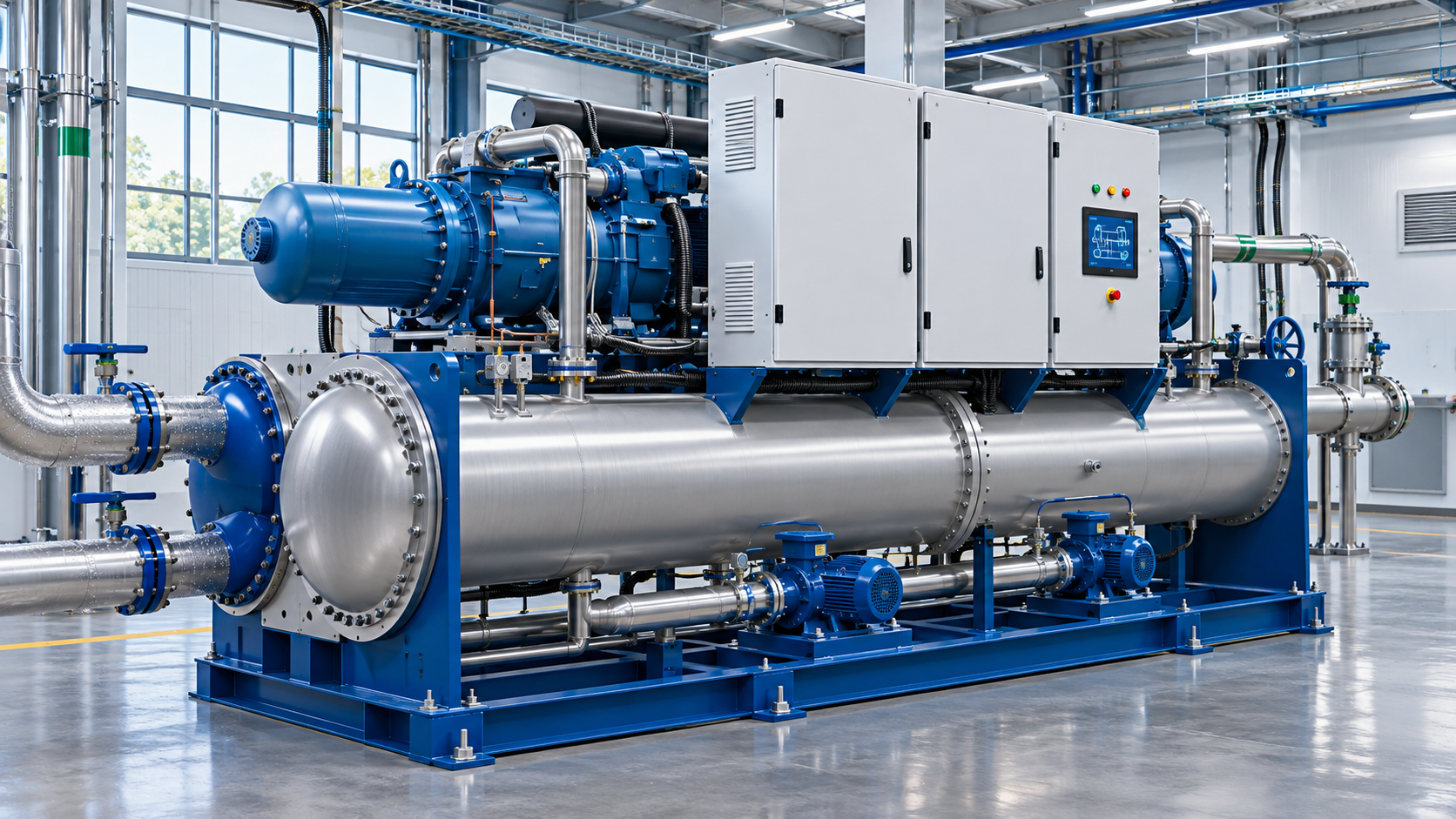
Industrial processes often depend on precise temperature control to maintain product quality, equipment performance and production efficiency. From pharmaceutical manufacturing and food processing to plastics, chemicals and engineering, consistent cooling plays an essential role in daily operations. An appropriately selected Water Chiller helps industries maintain stable operating temperatures, reduce unwanted heat and improve process reliability.
However, choosing an industrial cooling system requires more than comparing cooling capacities. Factors such as operating conditions, water flow, energy consumption, installation requirements and maintenance must also be considered.
An industrial water chiller is a refrigeration system designed to remove heat from water or another circulating fluid and deliver chilled water to industrial equipment or processes. The chilled water circulates through heat exchangers, production machinery or cooling circuits to absorb unwanted heat.
Most conventional water chillers operate through a refrigeration cycle involving an evaporator, compressor, condenser and expansion device. Each component performs a specific function to maintain the required cooling temperature.
Unlike basic cooling equipment, industrial chillers can be configured to meet different process requirements, including continuous operation, varying thermal loads and precise temperature control.
Temperature fluctuations can affect manufacturing consistency, product quality and equipment life. A properly designed water chiller helps address these challenges through controlled and dependable cooling.
Some important industrial benefits include:
1. Consistent Process Temperature: Maintaining stable cooling conditions helps manufacturers achieve uniform production quality, particularly in temperature-sensitive applications.
2. Improved Equipment Performance: Industrial machinery generates heat during operation. Removing excess heat helps prevent overheating and supports reliable equipment performance.
3. Better Energy Management: Selecting the correct chiller capacity and compressor technology can reduce unnecessary energy consumption and improve operating efficiency.
4. Production Reliability: Properly designed cooling systems help maintain production continuity and reduce temperature-related interruptions.
5. Application Flexibility: Industrial chillers can support different processes across manufacturing, pharmaceuticals, food and beverage production, plastics and chemical industries.
Understanding available chiller configurations helps businesses choose equipment according to their facility requirements.
Air-cooled chillers reject heat into the surrounding atmosphere using fans and air-cooled condenser coils. They generally require less water-related infrastructure and are suitable for facilities where cooling tower installation is impractical.
Water-cooled chillers transfer heat through a water-cooled condenser, generally connected to a cooling tower. They can provide efficient cooling in suitable installations, particularly where substantial cooling loads and stable operating conditions justify the additional infrastructure.
Screw chillers use rotary screw compressors and are commonly selected for medium-to-large industrial cooling requirements. They are suitable for applications requiring dependable operation and substantial cooling capacity.
Scroll compressor technology is commonly used in compact and smaller-capacity cooling systems. Depending on the configuration, multiple compressors can provide flexibility in managing different cooling loads.
The right selection depends on cooling demand, operating environment, installation space and lifecycle costs.
Selecting the wrong cooling capacity or configuration can increase operating costs and affect production performance. Businesses should evaluate the following factors before investing.
Cooling Capacity: Calculate the actual process heat load instead of selecting equipment based only on machinery size. Consider peak loads, operating schedules and future production expansion.
Required Temperature: Identify the desired chilled-water supply and return temperatures. Temperature requirements vary between food processing, pharmaceutical production and industrial machinery.
Water Flow Rate: Ensure that the circulation pump and piping arrangement can deliver the required flow throughout the cooling circuit.
Ambient Conditions: Outdoor temperature, humidity, ventilation and installation conditions can influence chiller performance, particularly in hot industrial environments.
Energy Efficiency: Compare operating efficiency at actual working conditions rather than relying exclusively on nominal capacity or advertised performance figures.
Maintenance Requirements: Check accessibility of components, availability of technical support, cleaning requirements and recommended preventive maintenance schedules.
Selecting experienced Water Chiller Manufacturers is important for obtaining equipment that matches specific industrial requirements. A reliable manufacturer should understand the application, assess the cooling load and recommend an appropriate system configuration.
Before finalizing a supplier, evaluate their technical experience, customization capabilities, component quality, manufacturing standards and after-sales support. Request detailed technical specifications, including cooling capacity, power consumption, operating temperatures, refrigerant, water flow and performance conditions.
Businesses should also check installation assistance, warranty coverage and maintenance support. Comparing quotations based on complete system specifications rather than purchase price alone helps make a more informed investment.
Aquatech Plus offers industrial cooling solutions, including water chillers, designed around different process and application requirements. Its experience in industrial system design and manufacturing makes it a relevant option for businesses exploring customized cooling solutions.
Explore Water Chiller solutions by Aquatech Plus to understand the available industrial cooling options. Businesses looking for experienced Water Chiller Manufacturers can also evaluate their requirements and discuss suitable configurations.
An industrial water chiller removes heat from circulating water and supplies chilled water to machinery, equipment and industrial processes requiring controlled temperatures.
Water chillers are widely used in pharmaceutical manufacturing, food processing, beverage production, plastics, chemicals, engineering and HVAC applications.
Capacity is determined by the process heat load, water flow rate and required temperature difference. An engineering assessment helps determine the appropriate cooling capacity.
Air-cooled chillers reject heat using ambient air, whereas water-cooled chillers use circulating condenser water, generally connected to a cooling tower.
Evaluate technical expertise, customization options, product specifications, component quality, energy performance, installation services and after-sales support before making a decision.
An industrial water chiller is an important investment for businesses that depend on accurate temperature control and reliable production processes. Choosing the right configuration, calculating cooling requirements correctly and following preventive maintenance practices can improve operational efficiency and equipment reliability.
Working with experienced manufacturers such as Aquatech Plus can help businesses identify cooling solutions aligned with their process requirements, installation conditions and long-term production goals.