Indonesia
 English
 Arabic
 French
 Spanish
 Portuguese
 Deutsch
 Turkish
 Dutch
 Italiano
 Russian
 Romaian
 Portuguese (Brazil)
 Greek
Beste mogelijke details gedeeld over Verhuisbedrijf
Other |
2026-08-06 08:24:22
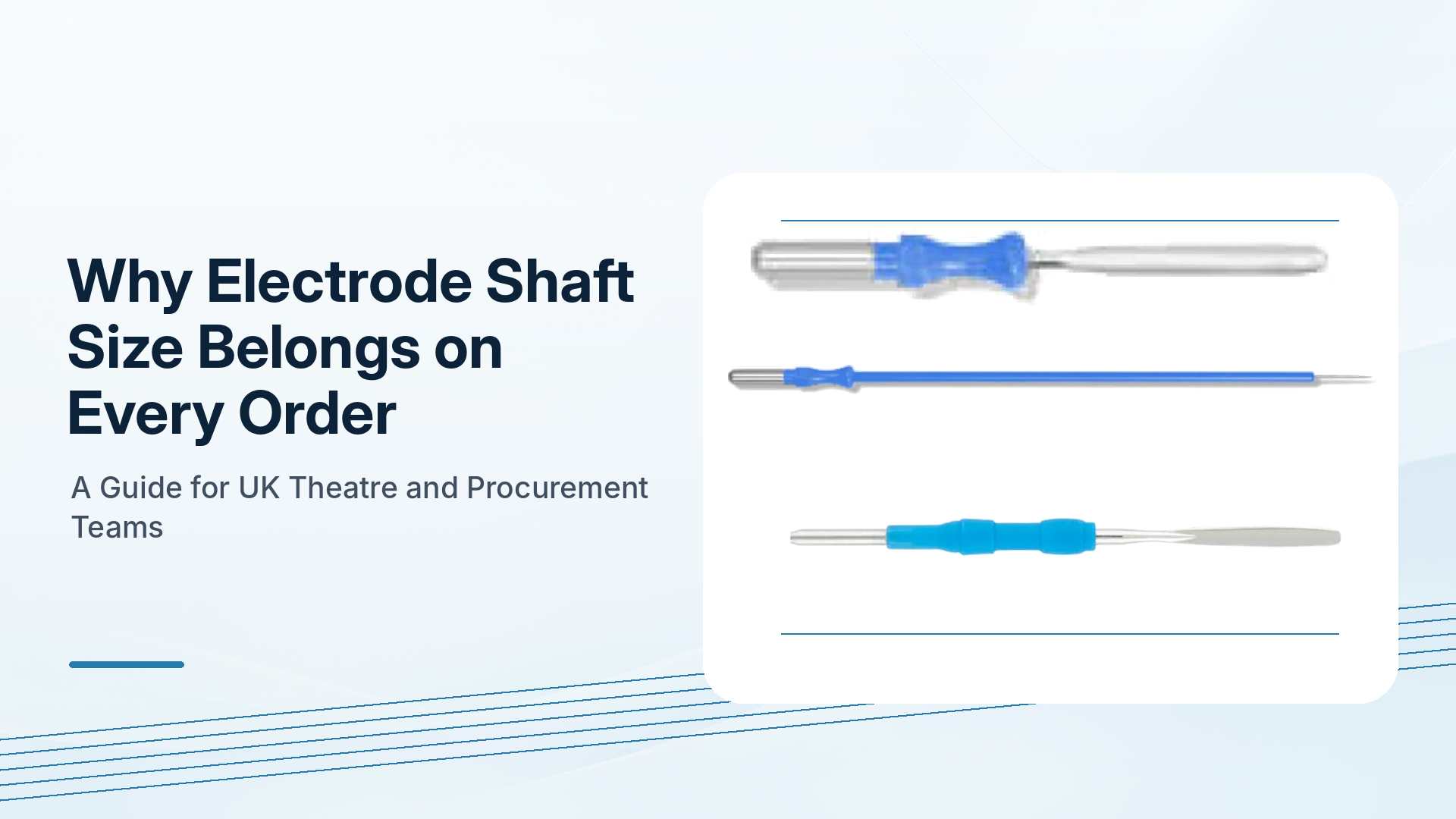
Ask a UK theatre team which diathermy electrode they want and the answer will describe the working end: a blade, a needle, a ball, a loop. Ask which shaft size it needs and there is often a pause. The shaft is the plain section of the electrode that slides into the cautery pencil, and because it is never seen during surgery, it is easy to forget when an order is written.
The consequence is familiar to anyone who has worked in theatre supplies. A box of electrodes arrives, the working end is exactly what was asked for, and the shaft does not fit the pencils in use. The box goes back, the department waits, and someone borrows stock from the next theatre.
Direct answer: Diathermy electrodes are made with different shaft diameters, commonly including 1.6 mm, 2.38–2.4 mm and 4 mm, and each cautery pencil accepts only the size it was designed for. Every electrode order and stock code should state the shaft diameter in millimetres and the pencil it fits. Recording this one detail prevents most electrode returns in UK hospitals.
Electrode shafts are not universal. The sizes UK buyers are most likely to meet include:
1.6 mm, used for some fine electrodes;
2.38 mm, the metric equivalent of 3/32 inch, which many suppliers describe as 2.4 mm;
2.4 mm, widely used for monopolar electrodes;
4 mm, used by some handpiece designs.
The difference between 2.38 mm and 2.4 mm is tiny, and the two are often used in the same pencils. The difference between 2.4 mm and 4 mm is not: an electrode of one will not seat in a pencil designed for the other.
Three habits cause most of the trouble.
Ordering by working end. Requisitions describe what the surgeon sees, not what the pencil needs.
Mixed handpiece fleets. A hospital may hold cautery pencils from several manufacturers, bought at different times, accepting different shafts.
Vague catalogue language. Phrases such as "standard shaft" or "universal fit" mean little without a number.
The pencil's instructions for use or technical data usually state the electrode shaft it accepts. Record that diameter against each pencil reference in the hospital's product file. If the information is missing, measure a sample of the electrodes currently used with that pencil.
"Blade electrode, single-use" is not enough. "Blade electrode, 2.4 mm shaft, single-use" is. When the shaft appears in the stock description, it appears on every requisition and every picking list.
The strongest control is a simple pairing in the product file: this electrode reference is approved for use with this pencil reference. When a new pencil model is introduced, the pairing shows immediately which electrodes need to change.
Picture a day-surgery unit that buys a new set of hand-control pencils accepting 4 mm shafts, while its main theatres keep older pencils that accept 2.4 mm shafts. The electrode stock list still reads "Ball electrode, single-use" with no shaft size. Within a week, 2.4 mm electrodes reach the day-surgery unit and do not fit. Had the stock list included the shaft, or linked each electrode to its pencil, the picking team would have sent the right box first time. The fix costs nothing more than an extra field in the product file.
Some manufacturers offer extensions that let a smaller-shaft electrode be used in a larger handpiece socket, for example a 4 mm extension that accepts a 2.4 mm electrode. They can reduce the number of electrode lines held, but they add a connection, so they should be approved by clinical engineering and used according to their instructions.
Long electrodes, often 140 mm or 160 mm overall, raise a second dimension to specify. Overall length and shaft diameter should be stated together.
Distributors serving UK hospitals can make shaft size impossible to miss:
list electrodes by shaft size first, then working end;
show compatible pencil references where known;
treat extensions as separate lines with clear "accepts" and "fits" descriptions;
query any order that does not state a shaft size.
Electrode catalogues vary in how clearly they show shaft size. Cosil Instruments, which manufactures diathermy electrodes in Sialkot, Pakistan, lists electrodes on 1.6 mm, 2.38 mm, 2.4 mm and 4 mm shafts, together with extensions and longer versions. Its guide to diathermy electrode shaft sizes in the UK sets out how to match electrodes to handpieces, and its wider range of diathermy electrodes for UK buyers covers working ends from needles to loops.
No single size suits every pencil. Several diameters are in common use, so the accepted size should be confirmed for each pencil model.
They are very close and often used in the same pencils, but confirm with the pencil documentation and a sample fit before ordering in volume.
Check the pencil's instructions for use or technical data. If that is not available, measure electrodes already approved for that pencil.
They can help, but each extension adds a connection and should be approved by clinical engineering and used according to its instructions.
The shaft diameter is the least visible part of a diathermy electrode and one of the most important. Recording it for every pencil, every stock code and every order is a small discipline that saves UK theatres a steady stream of returns and delays.
Check your electrode stock descriptions this week and add the shaft size wherever it is missing. For electrodes matched to your pencils, contact Cosil Instruments at sales@cosilinstruments.com.