Indonesia
 English
 Arabic
 French
 Spanish
 Portuguese
 Deutsch
 Turkish
 Dutch
 Italiano
 Russian
 Romaian
 Portuguese (Brazil)
 Greek
Simpele tactieken voor Welkomstbord Bruiloft Maken blootgelegd
Other |
2026-10-07 10:47:32
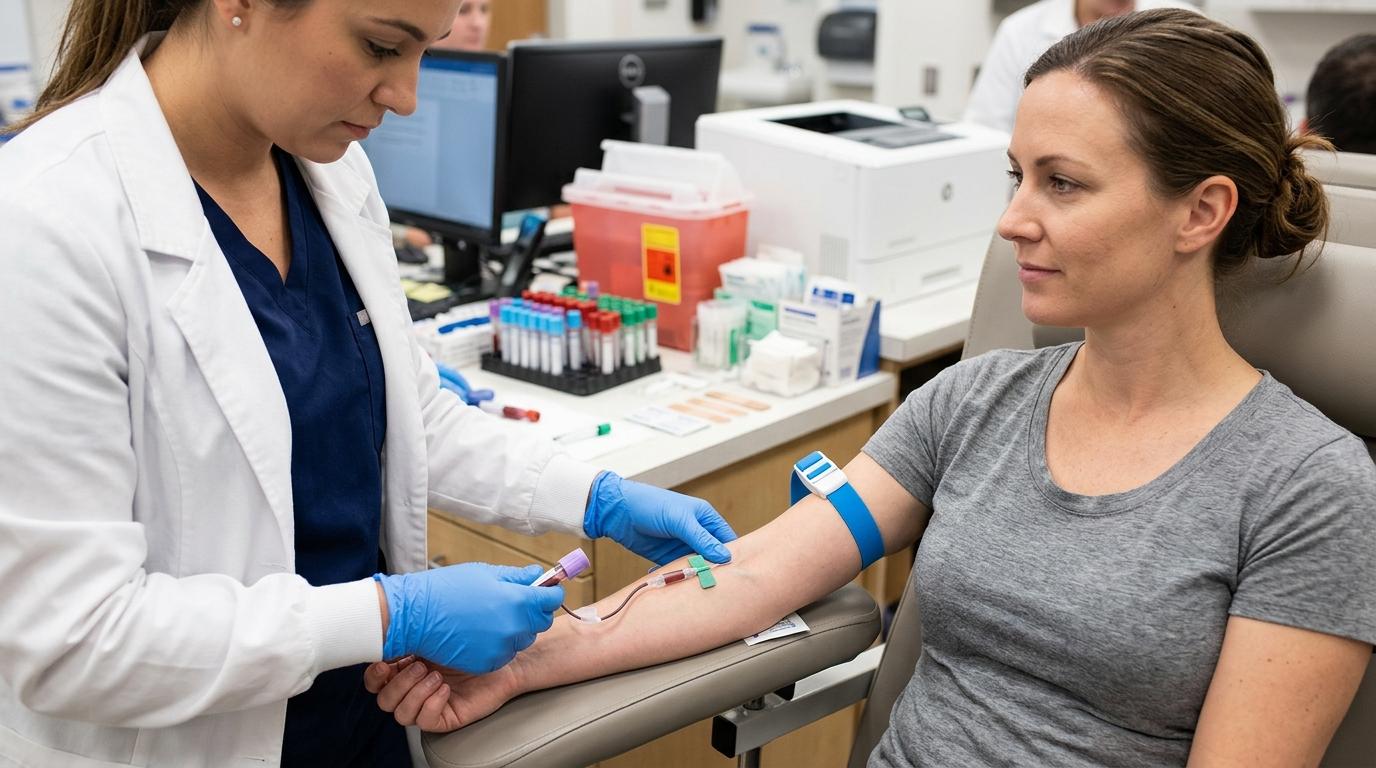
Choosing a diagnostic laboratory involves more than finding the nearest collection centre. Patients should consider whether the required tests are available, how samples are collected, what preparation is necessary and how reports are delivered. When arranging a blood test in bangalore, understanding these factors can help you make a more informed decision.
Whether you need a routine health assessment, a doctor-recommended investigation or follow-up testing, planning the process properly can prevent unnecessary delays and confusion.
One common mistake is selecting a diagnostic package before understanding which investigations are actually needed. Different blood tests measure different aspects of health, and the right selection depends on symptoms, medical history, age and the doctor's assessment.
For example:
A complete blood count (CBC) evaluates different blood cells and may help investigate anaemia or certain infections.
Blood glucose testing helps assess blood sugar levels.
Lipid profile testing measures cholesterol and related blood fats.
Thyroid function tests help evaluate thyroid hormone activity.
Liver and kidney function tests provide information about specific organ-related markers.
A comprehensive package is not automatically the best option for everyone. Ask your doctor whether individual investigations or a broader panel are appropriate.
Finding a convenient blood test in bangalore becomes easier when you compare providers using practical criteria rather than relying only on advertisements.
Confirm that the laboratory offers every investigation on your prescription. Some specialised tests may require particular collection conditions, timing or sample-handling arrangements.
Check whether you can visit a collection centre or arrange home collection. Home collection may be useful for older adults, busy professionals, people with mobility difficulties and families arranging several tests.
Correct patient identification, suitable collection tubes, hygienic procedures and appropriate transportation are important parts of laboratory testing.
Certain investigations require fasting or specific collection timings, while others do not. Always follow the instructions given for your prescribed tests.
Ask how reports are delivered, whether digital copies are available and whom you can contact if information needs clarification.
Proper preparation can help reduce avoidable errors before sample collection.
Follow this practical process:
Confirm the prescription: Check the names of all requested investigations and whether any need to be collected at a particular time.
Ask about fasting: Some tests require fasting, commonly for a specified period. Do not assume that every investigation requires an overnight fast.
Discuss medicines: Inform your doctor or laboratory about prescription medicines, vitamins and supplements. Never stop medication independently.
Stay appropriately hydrated: Plain water is generally permitted during fasting unless specific instructions say otherwise.
Share relevant information: Mention recent illness, previous difficulty with blood collection, fainting episodes or bleeding-related concerns.
Verify personal details: Ensure your name and other identifying information are recorded correctly.
For instance, a person scheduled for a fasting glucose test should follow the prescribed fasting duration rather than having breakfast immediately before collection.
The most suitable collection arrangement depends on your circumstances.
|
Factor |
Laboratory visit |
Home collection |
|
Convenience |
Requires travelling |
Collection takes place at home |
|
Suitable for |
People comfortable visiting a centre |
Older adults and busy households |
|
Preparation |
Test-specific instructions |
Same test-specific instructions |
|
Collection environment |
Designated laboratory area |
Suitable prepared space at home |
|
Sample handling |
Laboratory collection procedures |
Collection and transportation procedures are important |
Home collection does not change the medical purpose of the test. The same attention to patient identification, sample quality and laboratory processing remains important.
Example 1: A working professional
A professional with limited time during office hours needs routine investigations. Arranging a suitable collection appointment at home may reduce travel and waiting time.
Example 2: An older family member
An older adult who finds travelling difficult may prefer a home appointment, provided the requested investigations can be collected through that service.
In both situations, convenience should not replace checking test suitability and preparation requirements.
Consider a hypothetical patient who schedules several routine investigations but assumes that every test requires fasting. The patient delays eating for longer than necessary and arrives without confirming the actual instructions.
After contacting the healthcare provider, the patient learns that only certain investigations require fasting. The next appointment is planned according to the individual test requirements.
The lesson is simple: confirm preparation instructions before booking instead of following assumptions or general advice.
When comparing diagnostic arrangements, patients can explore EcoTown Diagnostics to understand its diagnostic and home sample collection offerings.
Before confirming an appointment, check the availability of your prescribed tests, applicable preparation instructions, collection arrangements and report delivery process. These details help establish whether a particular service suits your requirements.
Selecting a health package without understanding its contents.
Assuming every blood investigation requires fasting.
Stopping regular medicines without medical advice.
Providing incorrect patient details.
Ignoring the importance of sample collection and transportation.
Comparing services exclusively on advertised prices.
A reliable decision should consider the entire testing process rather than a single feature.
Arranging diagnostic testing becomes easier when you begin with the doctor's recommendation, confirm preparation requirements and evaluate collection arrangements. When planning a blood test in bangalore, prioritise test suitability, patient identification, sample handling and clear reporting procedures.
A little preparation before booking can help make the experience more organised and reduce avoidable repeat visits.
Common investigations may include CBC, blood glucose, lipid profile, thyroid function and kidney or liver function tests. The appropriate selection depends on individual medical requirements.
No. Fasting is required only for certain investigations. Follow the specific instructions provided by your doctor or laboratory.
Many diagnostic services offer home collection for eligible investigations. Confirm availability, location coverage and appointment arrangements before booking.
Consider test availability, collection procedures, patient identification, sample handling, preparation guidance and report delivery.
Generally, you can eat after the required samples have been collected. Carrying a snack may be helpful if you feel light-headed.