Indonesia
 English
 Arabic
 French
 Spanish
 Portuguese
 Deutsch
 Turkish
 Dutch
 Italiano
 Russian
 Romaian
 Portuguese (Brazil)
 Greek
Where to Find a Homestay in Uttarakhand for a Scenic Mountain Holiday?
Other |
2026-11-16 09:07:16
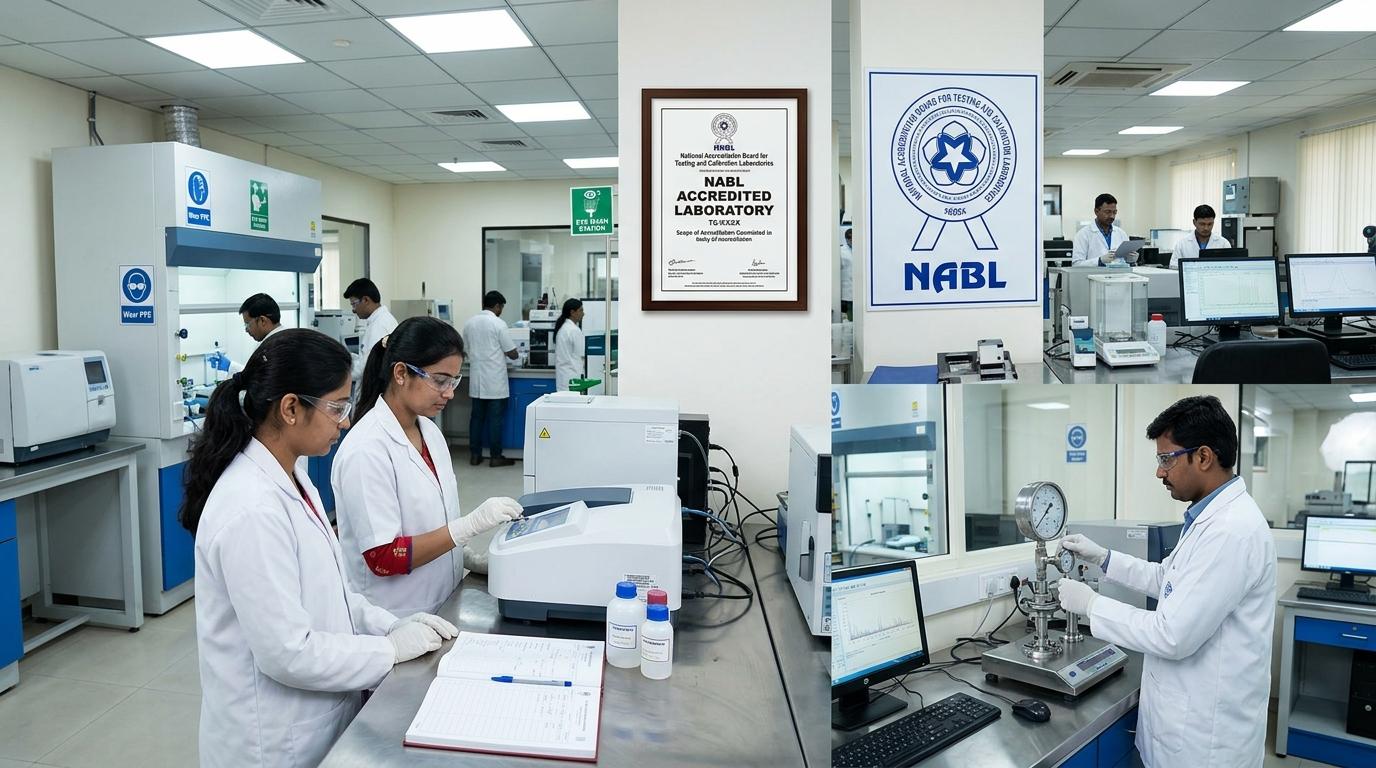
Choosing a diagnostic laboratory involves more than finding a nearby centre or comparing test prices. Patients should understand the laboratory's accreditation status, the tests covered under its approved scope, sample-handling procedures and report delivery process. When comparing reliable nabl accredited labs in bangalore, checking these details can help patients make a more informed healthcare decision.
NABL accreditation is an independent recognition of a laboratory's technical competence against applicable standards. However, accreditation does not automatically cover every test offered by a facility. Understanding this distinction is essential before selecting a diagnostic provider.
A laboratory may display an accreditation certificate at its reception, on its website or in promotional material. While this can be useful, patients should not assume that every investigation performed there is automatically accredited.
The scope of accreditation identifies the specific tests and activities assessed by the accreditation body. For medical laboratories, ISO 15189 is the relevant international standard covering quality and competence.
When evaluating nabl accredited labs in bangalore, consider these three details:
Test coverage: Is the particular blood or clinical investigation included in the approved scope?
Facility location: Does the accreditation apply to the actual location processing the sample?
Certificate validity: Was the accreditation valid on the date the test was performed?
These checks are more meaningful than relying on an accreditation logo alone.
Follow this practical process before choosing a diagnostic centre.
1. Identify the exact investigation: Write down the test name provided by your doctor. Similar-sounding tests may involve different methods or parameters.
2. Request accreditation information: Ask the laboratory for its certificate number and current accreditation details.
3. Review the approved scope: Confirm that the requested investigation appears in the laboratory's scope of accreditation.
4. Check the facility address: Verify that the sample-processing location corresponds to the accredited facility.
5. Understand sample handling: Ask whether samples are collected at the centre or at home, how they are identified, and whether they are transported to another processing location.
This process helps patients compare providers using relevant quality indicators rather than advertisements alone.
Not every laboratory offers the same patient experience. Accreditation is important, but other operational factors also influence convenience and service suitability.
|
Evaluation factor |
What patients should check |
Why it matters |
|
Accreditation |
Current certificate and scope |
Confirms covered activities |
|
Sample collection |
Centre or home collection |
Helps with accessibility |
|
Sample identification |
Labelling and patient details |
Reduces identification errors |
|
Reporting |
Expected turnaround time |
Helps plan follow-up |
|
Communication |
Report access and support |
Makes report retrieval easier |
Remember that a faster report is not necessarily a more accurate report. Patients should prioritise appropriate testing and reliable laboratory procedures.
Example 1: Routine health screening
A working professional needs a blood count, glucose assessment and lipid profile. Instead of selecting a laboratory solely because it is close to the office, the patient checks whether the relevant investigations fall within the laboratory's accredited scope.
Example 2: A specialised investigation
A patient requires a specialised hormonal test. The laboratory displays an accreditation certificate, but the patient cannot find the specific investigation in the available scope. The appropriate next step is to ask the laboratory for clarification rather than assuming the test is covered.
A hypothetical patient named Arun plans a preventive health check-up. He finds a nearby diagnostic centre advertising accreditation and assumes every investigation included in its package is covered.
Before booking, he requests the certificate and scope. He discovers that some tests need separate clarification. He asks the laboratory to identify which investigations are within the accredited scope and which are not.
As a result, Arun can make a better-informed booking decision and discuss any unresolved testing requirements with his doctor.
Lesson: Always verify the specific test, location and validity instead of relying on a general accreditation claim.
Patients comparing nabl accredited labs in bangalore should understand that accreditation is not a substitute for clinical interpretation.
A laboratory may follow documented quality procedures, but the meaning of a result depends on the test, clinical history, reference intervals and medical assessment.
For example, an abnormal glucose result may require confirmation or further evaluation depending on the patient's circumstances. Similarly, an isolated blood count result should not be interpreted without considering symptoms and other relevant findings.
Patients looking for laboratory and diagnostic services can explore EcoTown Diagnostics to understand its available investigations, sample collection options and diagnostic facilities.
Before booking, request the latest accreditation certificate and applicable scope directly from the provider. Confirm the current status rather than relying on an older certificate displayed online.
Selecting a diagnostic laboratory should involve more than convenience, promotional discounts or an accreditation logo. Check the current certificate, approved test scope, processing location and sample-handling arrangements.
A careful comparison of nabl accredited labs in bangalore can help patients ask better questions and choose services that meet their testing requirements. If you are unsure whether a particular investigation is covered by accreditation, request written clarification before booking.
It means an independent accreditation body has assessed a laboratory's technical competence and quality systems against specified requirements.
No. Only the activities and investigations included in the approved scope are covered.
Check the certificate number, issuing body, facility address, validity information and current status through the official accreditation registry.
Not necessarily. Convenience also depends on location, appointment availability, home collection and report delivery arrangements.
Yes. Check the included investigations, sample collection conditions, reporting arrangements and whether the tests meet your doctor's recommendations.