Indonesia
 English
 Arabic
 French
 Spanish
 Portuguese
 Deutsch
 Turkish
 Dutch
 Italiano
 Russian
 Romaian
 Portuguese (Brazil)
 Greek
Managing Commercial Bee Problems With Professional Care
Other |
2026-11-16 19:18:26
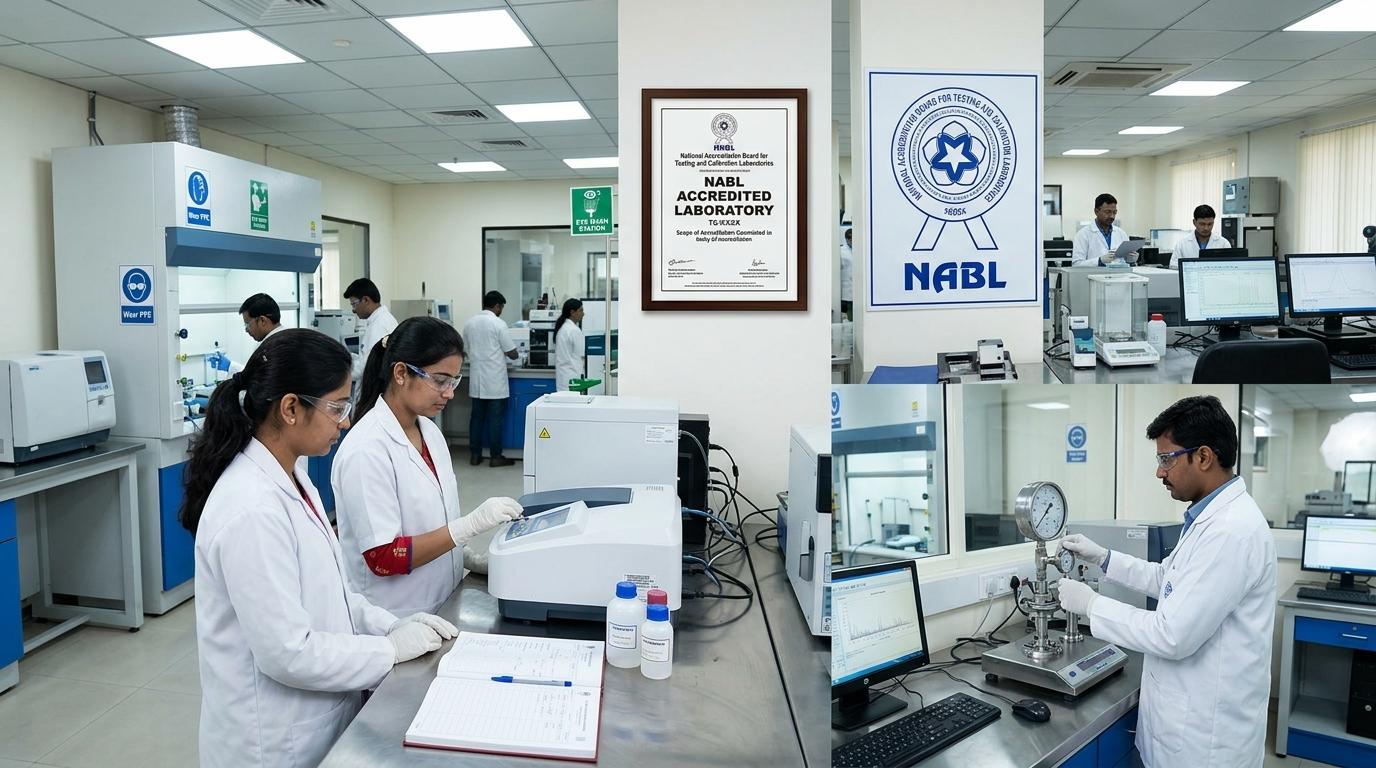
Choosing a diagnostic laboratory involves more than comparing prices and checking how close it is to your home. People researching reliable nabl accredited labs in bangalore should understand what accreditation means, how to verify its validity and why the scope of accreditation matters.
NABL stands for the National Accreditation Board for Testing and Calibration Laboratories. It provides independent accreditation based on assessments of technical competence and quality systems. For medical laboratories, accreditation is associated with ISO 15189 requirements.
However, patients should not assume that every test offered by an accredited organisation automatically falls within its accredited scope.
Laboratory accreditation is an independent assessment of a laboratory's competence to perform specified testing activities.
It considers aspects such as:
Testing procedures and technical methods.
Staff competence and training.
Equipment management and calibration.
Quality assurance processes.
Handling and identification of samples.
Documentation and reporting procedures.
Processes for identifying and correcting errors.
The objective is to establish confidence in the laboratory's ability to perform the activities included within its approved scope.
Accreditation is not a guarantee that every individual report will be error-free. It is also not a substitute for a doctor's clinical interpretation.
This is one of the most important points when selecting a diagnostic laboratory.
A laboratory may have accreditation for certain testing disciplines but not necessarily every investigation available at its facility.
For example, accreditation may cover particular areas such as clinical biochemistry, haematology or clinical pathology.
If a patient requires a specific test, it is useful to verify whether that investigation falls within the laboratory's current accredited scope.
When comparing nabl accredited labs in bangalore, checking the actual accreditation details is more meaningful than relying exclusively on a promotional statement.
Ask whether the laboratory can provide its accreditation certificate details.
Check the certificate number, issuing body, validity information and laboratory identity.
Review the tests and disciplines covered by the accreditation.
A certificate alone does not establish that every service provided by the organisation is accredited.
Find out how samples are collected, labelled, stored and transported.
Proper identification and handling are important because errors can occur before the actual laboratory analysis begins.
Ask how reports are delivered and how the laboratory handles discrepancies or requests for clarification.
A clear process for correcting administrative or reporting errors is valuable.
Consider whether the facility explains preparation requirements, collection timings and report availability.
Convenient communication can make repeat testing and follow-up easier.
|
Quality indicator |
What it tells patients |
What to verify |
|
NABL accreditation |
Independent assessment of technical competence |
Certificate and current status |
|
ISO 15189 |
Quality and competence requirements for medical laboratories |
Applicable accreditation scope |
|
Sample identification |
Helps prevent patient and specimen mix-ups |
Labelling and verification process |
|
Quality control |
Monitors analytical performance |
Laboratory quality procedures |
|
Report management |
Supports traceability and communication |
Report access and correction process |
These indicators complement one another. No single item should be treated as proof of perfect testing.
Patients can follow this process before booking a diagnostic appointment.
Identify the required test: Check the prescription and note the exact investigation.
Find the laboratory's certificate details: Request the accreditation number and certificate information.
Visit the official NABL directory: Search using the laboratory name, certificate number or location.
Check the validity: Confirm the current accreditation status rather than relying on an old certificate.
Review the scope: Ensure the relevant discipline or testing activity is covered.
Confirm practical arrangements: Ask about sample collection, preparation, report timelines and charges.
The official directory is particularly useful because it allows patients to check laboratory details rather than relying only on advertisements.
Example 1: A patient needs multiple blood investigations
A patient receives a prescription containing several blood tests and finds a facility advertising accreditation.
Instead of assuming every investigation is covered, the patient checks the laboratory's scope and confirms which tests are included.
This helps the patient make a more informed decision.
Example 2: A patient uses a home collection service
Another patient books sample collection from home.
The patient confirms whether the collection facility is associated with the accredited laboratory, how samples are transported and whether the relevant tests are covered under the laboratory's accreditation.
This is especially important when the sample is collected away from the main laboratory premises.
A hypothetical patient needs regular laboratory investigations and chooses a facility based on an accreditation logo displayed on its website.
Before booking, the patient asks for the certificate number and checks the official directory.
The patient discovers that accreditation must be assessed using the laboratory's identity, current validity and approved testing scope rather than the logo alone.
The patient then confirms whether the required investigations are included.
Lesson: Verification should involve the actual certificate and testing scope, not just a marketing claim.
People comparing nabl accredited labs in bangalore can review the services offered by Ecotown Diagnostics. Its website identifies the facility as an NABL-accredited diagnostic laboratory and lists services including clinical laboratory testing and medical imaging.
Patients should independently verify the current certificate status and relevant scope through the official accreditation directory before relying on an accreditation claim for a particular investigation.
Assuming accreditation covers every test.
Relying on an accreditation logo without checking certificate details.
Ignoring certificate validity.
Confusing general quality certification with medical laboratory accreditation.
Forgetting to verify sample collection arrangements.
Selecting a laboratory solely because it advertises the lowest price.
A suitable diagnostic laboratory should offer the investigation you need, maintain appropriate testing procedures and provide clear information about reports and sample handling.
When evaluating nabl accredited labs in bangalore, check the current certificate, approved scope and validity instead of relying only on promotional claims. These simple checks can help patients make better-informed decisions about where to undergo diagnostic testing.
It is independent recognition of a laboratory's technical competence for specified testing activities based on established assessment criteria.
No. Accreditation applies to the activities and testing scope specified in the certificate.
Use the official NABL directory and check the laboratory name, certificate number, status and approved scope.
No. Accreditation supports quality and technical competence but cannot guarantee that individual errors will never occur.
Accreditation is an important consideration, but patients should also examine test availability, sample handling, reporting arrangements and suitability for their requirements.