Indonesia
 English
 Arabic
 French
 Spanish
 Portuguese
 Deutsch
 Turkish
 Dutch
 Italiano
 Russian
 Romaian
 Portuguese (Brazil)
 Greek
Skyexchange vs Other Cricket Apps for Midweek Coverage: Which Is Better?
Games |
2026-11-16 07:29:55
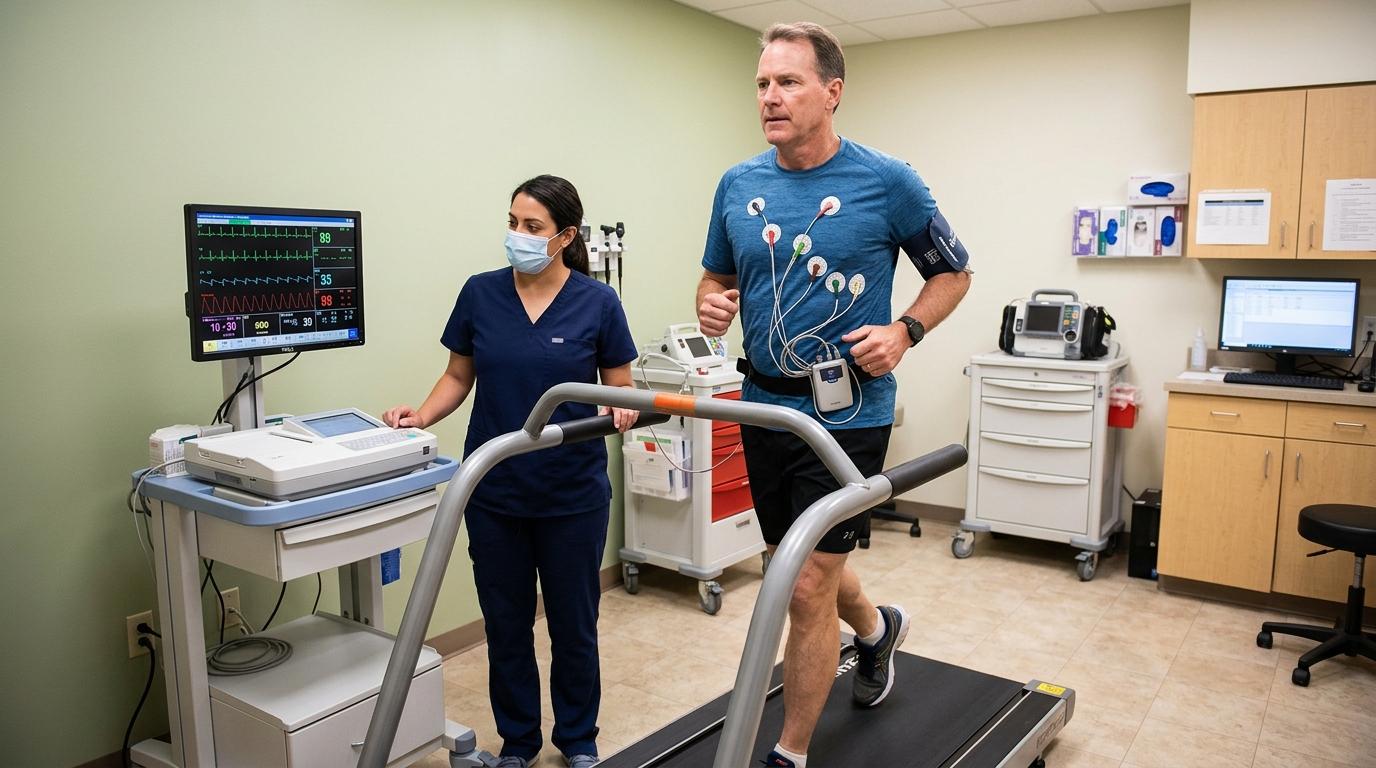
A treadmill stress test evaluates how the heart responds to physical activity under medical supervision. People arranging a tmt test in bangalore for doctor-recommended cardiac assessment should understand the preparation requirements, safety considerations and limitations of the examination before booking.
The test involves walking on a motorised treadmill while medical professionals monitor electrical heart activity and other clinical parameters. The exercise intensity generally increases gradually according to the testing protocol and the patient's tolerance.
It is not a general fitness assessment or a competition to see how long someone can walk.
During physical activity, the heart needs to pump more blood to meet the body's increased demand.
A stress test helps doctors observe how the heart responds to this additional workload. Depending on the patient's circumstances, it may assist in evaluating suspected coronary artery disease, exercise-related symptoms or functional exercise capacity.
A doctor may consider the examination when a patient reports symptoms such as:
Chest discomfort during physical activity.
Breathlessness while walking or climbing stairs.
Unexplained exercise intolerance.
Symptoms that appear at a particular level of exertion.
The decision depends on medical history, examination findings and the suitability of exercise testing.
A typical treadmill procedure involves several stages.
Resting assessment: The medical team reviews the patient's history and records baseline measurements.
Electrode placement: ECG electrodes are attached to the chest to monitor electrical heart activity.
Exercise phase: The patient begins walking at a controlled speed. The treadmill may gradually increase its speed or incline.
Continuous monitoring: Heart rhythm, blood pressure, symptoms and exercise response are assessed.
Recovery phase: After the treadmill stops, monitoring continues while the heart rate and other parameters move towards resting levels.
The examination is supervised, and the team may stop it if symptoms or monitoring findings make continuation inappropriate.
No. The ability to exercise safely is an important consideration.
Patients with certain acute cardiac conditions, uncontrolled symptoms or other significant medical problems may not be suitable for exercise testing at that time.
Similarly, people with severe joint problems, mobility limitations or conditions that prevent adequate treadmill exercise may need an alternative assessment.
A doctor should determine whether the expected diagnostic benefit outweighs the potential risk.
Preparation is important because unnecessary exertion, unsuitable clothing or unclear medication instructions can complicate the appointment.
|
Preparation factor |
Recommended approach |
|
Clothing |
Wear comfortable clothes suitable for walking |
|
Footwear |
Choose secure, comfortable walking shoes |
|
Meals |
Follow the centre's instructions about eating before testing |
|
Medication |
Ask the doctor whether any changes are necessary |
|
Smoking and caffeine |
Follow the specific instructions provided |
|
Medical records |
Carry prescriptions and previous cardiac reports |
|
Exercise |
Avoid unusual strenuous activity immediately beforehand |
Do not independently stop beta-blockers or other heart medications. Some medicines can affect the heart-rate response, so instructions must come from the treating doctor.
Confirm the prescription: Check that the doctor has requested a treadmill ECG stress test rather than another cardiac examination.
Discuss your health history: Mention chest pain, previous heart procedures, joint problems and other relevant conditions.
Ask about medicines: Obtain clear instructions about your usual prescriptions.
Prepare appropriate clothing: Wear comfortable footwear and clothes that allow easy movement.
Arrive with sufficient time: Allow time for registration and baseline assessment.
Communicate during exercise: Immediately report chest discomfort, dizziness, unusual breathlessness or significant fatigue.
When researching a tmt test in bangalore, patients should confirm that the facility has trained personnel and appropriate monitoring arrangements.
Patients sometimes confuse different cardiac investigations because they all relate to heart health.
|
Examination |
Main purpose |
Does it involve exercise? |
|
Resting ECG |
Records electrical activity at rest |
No |
|
Treadmill stress test |
Evaluates electrical response during exercise |
Yes |
|
Echocardiography |
Examines heart structure and movement |
Usually no |
|
Holter monitoring |
Records heart rhythm over an extended period |
Normal daily activities |
|
Stress echocardiography |
Examines cardiac imaging under stress |
Depends on protocol |
These examinations are not interchangeable. The treating doctor selects the appropriate investigation.
Example 1: A patient taking regular medication
A patient scheduled for exercise testing assumes that all medicines should be stopped to achieve a stronger heart-rate response.
This can be unsafe. The correct approach is to obtain medication instructions from the cardiologist before the appointment.
Example 2: A patient with knee discomfort
A patient has difficulty walking for extended periods because of knee pain.
Informing the medical team before testing allows the doctor to assess whether the patient can exercise adequately or needs another diagnostic approach.
A hypothetical patient experiences chest discomfort while climbing stairs and receives a recommendation for exercise testing.
Before booking, the patient informs the doctor about a previous knee injury and current medication.
The doctor reviews the medical history and determines whether the planned procedure is appropriate. If treadmill exercise is unsuitable, an alternative investigation can be considered.
Lesson: The correct test should be selected according to the patient's medical condition, not simply convenience.
Patients can review the cardiac diagnostic services offered by Ecotown Diagnostics. Its website lists treadmill stress testing and provides information about its appointment arrangements.
Before confirming, ask about the testing protocol, medical supervision, preparation instructions and report availability.
The centre's published page lists a TMT service price of ₹2,000, but patients should confirm the current price and inclusions directly before booking.
Follow the medical team's recovery instructions. Once monitoring is complete and the staff confirms that discharge is appropriate, most patients can return to their usual activities according to medical advice.
Take the report to the referring doctor. The result should be interpreted with symptoms, risk factors and other investigations.
A normal result does not exclude every possible cardiac condition, and an abnormal result does not independently establish a diagnosis.
A treadmill stress test is most useful when the patient is appropriately selected, properly prepared and monitored throughout the examination. Knowing the procedure and communicating medical concerns beforehand can improve safety and reduce appointment-related confusion.
Before arranging a tmt test in bangalore, discuss medication, physical limitations and symptoms with the treating doctor. Follow the prescribed preparation instructions and attend the examination only when the medical team confirms that it is appropriate.
The examination is not generally painful, although patients may experience physical exertion, tiredness or temporary discomfort while walking.
It depends on the severity of the problem and whether the patient can exercise safely. The doctor may recommend another investigation.
Never stop prescribed medication independently. Ask the cardiologist for individual instructions.
No. Results must be interpreted alongside symptoms, medical history and other clinical findings.
Preparation instructions vary. Ask the diagnostic facility whether fasting or meal restrictions apply to your specific test.