Indonesia
 English
 Arabic
 French
 Spanish
 Portuguese
 Deutsch
 Turkish
 Dutch
 Italiano
 Russian
 Romaian
 Portuguese (Brazil)
 Greek
How Microneedling Helps Improve Skin Texture
Health |
2026-10-08 04:51:44
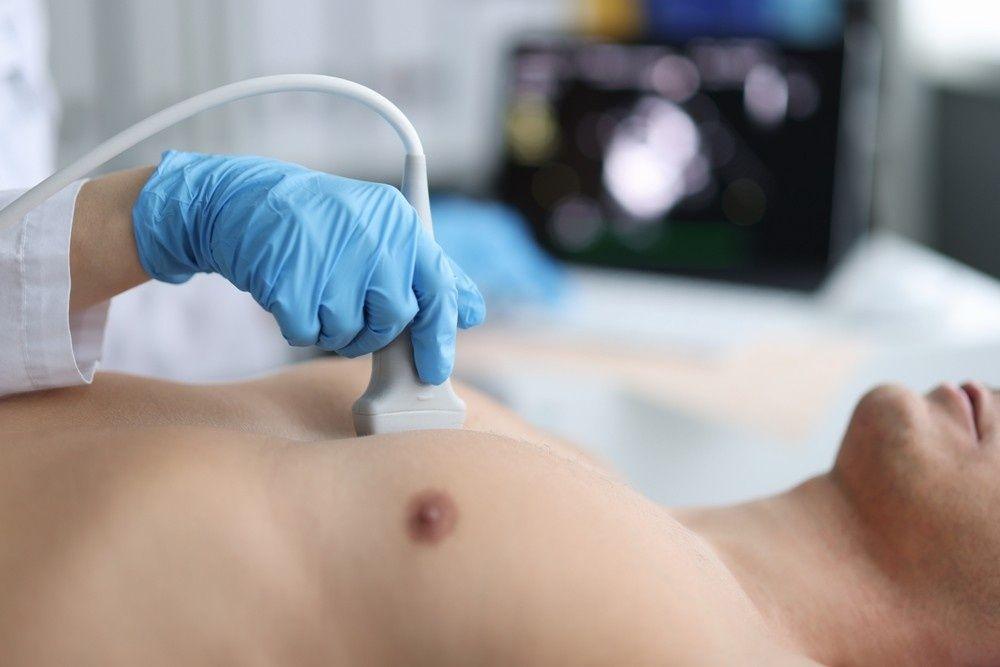
An echocardiogram is an ultrasound examination that produces moving images of the heart, helping doctors assess its structure, pumping function, valves, and blood flow. Choosing among different Echocardiography Testing Centres in Bangalore for a suitable heart assessment involves understanding which type of scan your doctor requires and whether the facility can perform it.
Patients sometimes assume every echocardiogram is identical. In reality, different examination methods answer different clinical questions. Confirming the correct procedure before booking can help prevent confusion and unnecessary repeat appointments.
The heart contains chambers, valves, and muscles that work together to circulate blood throughout the body.
An echocardiogram uses ultrasound waves to create images of these structures.
Depending on the examination, doctors can evaluate:
Heart chamber size and structure.
Heart muscle movement.
Pumping function.
Valve opening and closing.
Blood flow through the heart.
Certain structural abnormalities.
The results help doctors investigate symptoms and monitor known cardiovascular conditions.
However, an echocardiogram is not a substitute for every cardiac investigation. The appropriate test depends on the patient's symptoms and medical history.
One of the most important considerations when comparing Echocardiography Testing Centres in Bangalore is whether the required examination is available.
Different types of echocardiography serve different purposes.
Transthoracic echocardiography, commonly called TTE, is the standard examination.
A sonographer applies gel to the chest and moves an ultrasound probe over the skin to obtain images of the heart.
It is non-invasive and does not use ionising radiation.
A stress echocardiogram evaluates heart function during or immediately after physical exercise or medication-induced stress.
It may be recommended when a doctor needs to assess how the heart responds to increased workload.
Transoesophageal echocardiography, or TEE, uses a specialised probe passed through the mouth into the oesophagus.
Because the probe is positioned closer to the heart, it can provide more detailed images in selected clinical situations.
It requires additional preparation and medical supervision.
|
Examination |
How it works |
Typical purpose |
Important consideration |
|
TTE |
Probe placed on the chest |
Evaluating heart structure and function |
Usually requires minimal preparation |
|
Stress echo |
Images obtained during or after stress |
Assessing heart response to stress |
Exercise or medication may be involved |
|
TEE |
Probe introduced into the oesophagus |
Obtaining detailed cardiac images |
Fasting and sedation instructions may apply |
Your cardiologist should determine which examination is appropriate rather than selecting one independently.
When evaluating Echocardiography Testing Centres in Bangalore, consider these five practical factors.
1. Availability of the prescribed scan
Ask whether the facility performs the exact examination mentioned in your prescription. Do not assume that standard TTE availability means stress echo or TEE is also offered.
2. Qualified professionals
Confirm that trained personnel perform the examination and that the images are reviewed by an appropriately qualified doctor.
3. Equipment and examination process
Ask about the examination method and whether additional measurements or imaging techniques may be required.
4. Reporting arrangements
Understand when the report will be available and how the findings will be communicated to your cardiologist.
5. Patient preparation instructions
Preparation differs between examination types. Confirm whether you can eat, drink, and take your usual medication before arriving.
For most routine transthoracic examinations, special preparation is not necessary.
Patients are generally able to eat, drink, and take their usual medication.
A typical appointment follows these steps:
Arrive with your doctor's prescription and previous cardiac reports.
Inform the team about relevant medical conditions and ongoing treatment.
Change into a gown if requested.
Lie on the examination couch, often positioned on your left side.
Allow the sonographer to apply gel and move the ultrasound probe across your chest.
Follow instructions to change position or briefly hold your breath when required.
Ask about the expected report collection process.
A standard examination often takes approximately 30–40 minutes, although the duration can vary.
Stress and transoesophageal examinations have different preparation requirements. Follow the specific instructions provided by your healthcare team.
Patients should avoid several common assumptions:
Booking a routine scan when a stress examination has been prescribed.
Assuming every echocardiogram requires fasting.
Stopping regular medication without consulting a doctor.
Forgetting previous cardiac reports.
Expecting the scan report to replace a cardiology consultation.
Assuming an ultrasound result alone can explain every type of chest discomfort.
If you have severe or sudden chest pain, breathlessness, fainting, or other potentially serious symptoms, seek urgent medical attention instead of waiting for a routine appointment.
Example 1: A patient experiencing breathlessness
A person reports unusual breathlessness during routine activities. After evaluating the symptoms, the cardiologist recommends an echocardiogram to assess heart structure and pumping function.
The patient should confirm that the selected facility offers the prescribed examination and provides a report suitable for clinical review.
Example 2: A patient undergoing follow-up monitoring
Someone with a previously diagnosed valve condition requires another examination. The cardiologist may compare the new images and measurements with earlier reports to understand whether the condition has changed.
Carrying previous records can therefore be particularly useful.
Situation: A hypothetical patient receives a prescription for stress echocardiography.
Problem: The patient initially books a routine heart ultrasound without checking the examination type.
Action: Before attending, the patient reviews the prescription and contacts the diagnostic facility to confirm the correct procedure.
Expected outcome: The patient can arrange the appropriate examination and avoid an unnecessary repeat booking.
Lesson: Understanding the prescribed test is an important part of diagnostic planning.
Patients comparing Echocardiography Testing Centres in Bangalore can also explore EcoTown Diagnostics for information about available diagnostic services.
Before booking, verify the availability of the required examination, appointment timings, preparation instructions, and report delivery arrangements.
An echocardiogram can provide valuable information about heart structure, valves, and pumping function. However, selecting the correct examination is just as important as arranging the appointment.
Before choosing among Echocardiography Testing Centres in Bangalore, confirm your doctor's prescription, check the examination type, and understand the preparation and reporting process.
A standard transthoracic echocardiogram is generally painless. You may feel slight pressure from the ultrasound probe while images are recorded.
No. It uses ultrasound waves rather than ionising radiation.
Fasting is generally unnecessary for a standard transthoracic examination. Other types, particularly transoesophageal echocardiography, may require fasting.
A standard examination commonly takes around 30–40 minutes, although individual appointments may vary.
Yes. It can help doctors evaluate how heart valves open and close and identify certain abnormalities involving valve function.