Indonesia
 English
 Arabic
 French
 Spanish
 Portuguese
 Deutsch
 Turkish
 Dutch
 Italiano
 Russian
 Romaian
 Portuguese (Brazil)
 Greek
How to Wear Scuffers for Different Occasions in Canada
Shopping |
2026-11-20 06:54:50
A fisheries research project may have suitable equipment, a detailed study plan and a well-designed data template. Yet the quality of the final records can still vary if different team members follow different procedures.
One operator may record information immediately, while another may write notes for later entry. A staff member at one site may use a different location code from someone at another facility. These small differences can create problems when researchers try to combine observations or compare results.
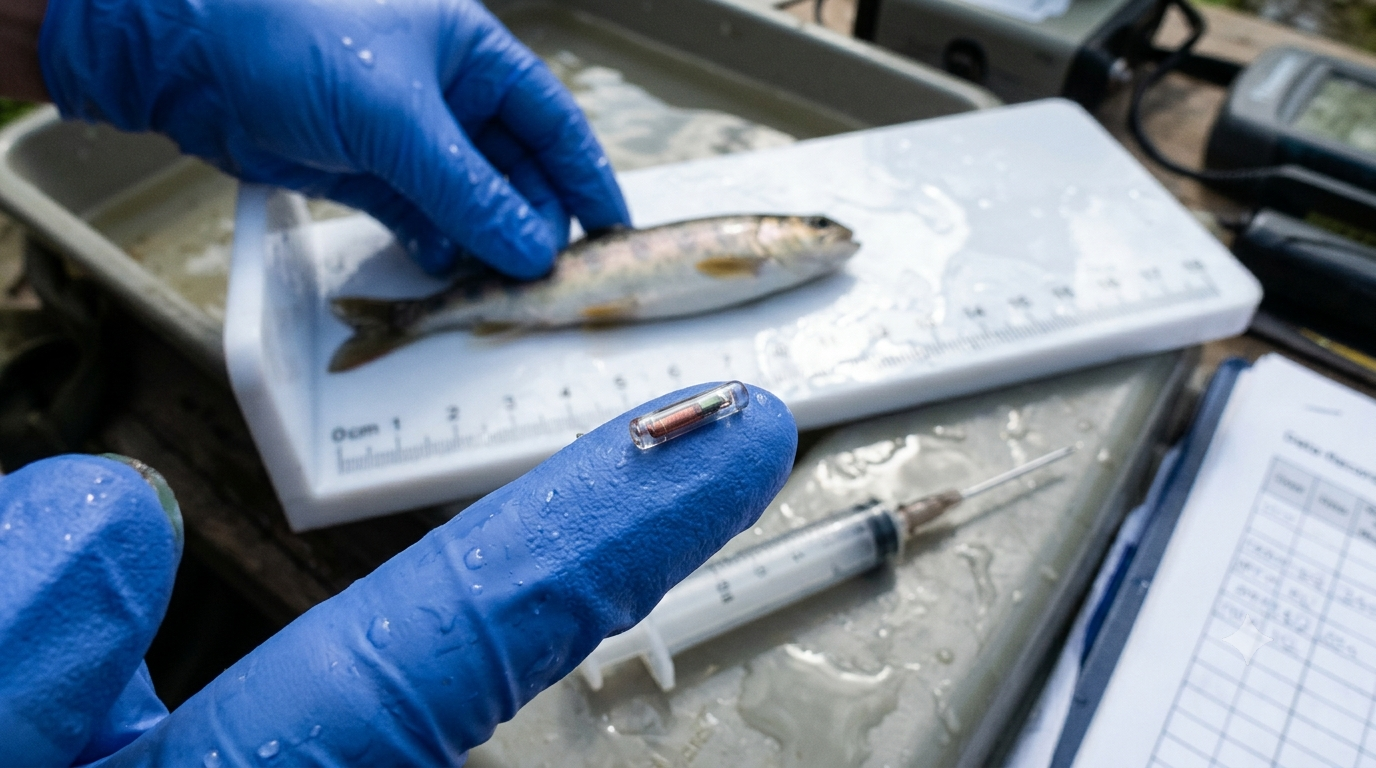
A consistent Fish tagging process for organised identification and monitoring therefore needs more than equipment selection. It needs trained people who understand the approved workflow, their responsibilities and how to respond when something does not go as planned.
Training should not be treated as a one-time introduction. It should be part of the project's quality-management process, especially when new staff join, equipment changes or procedures are updated.
Staff are more likely to follow a process consistently when they understand why it exists.
Begin training by explaining the project's objectives and the role of individual identification. Depending on the study, the programme may need to connect fish with repeated measurements, movement records, sampling events or research observations.
Explain how an incorrect identifier or incomplete record could affect later analysis. For example, if an observation is connected to the wrong fish, researchers may draw an incorrect conclusion about that individual's history.
Training should make clear that accurate records are part of the research process, not an administrative task to complete after the important work is finished.
Before training begins, the project should have a documented procedure that reflects its approved methods and equipment instructions.
The procedure should explain the responsibilities of staff and the sequence of activities they are expected to follow. It should not encourage operators to improvise invasive or technical procedures outside their training.
For projects involving PIT identification, the approved guidance should be developed with appropriately qualified personnel and follow relevant animal-welfare requirements and manufacturer instructions.
A useful procedure should cover:
Preparation and equipment checks.
Confirmation of the approved identification method.
Required record fields.
Reading and data-entry workflow.
Handling of uncertain or incomplete results.
Data transfer and verification.
Reporting equipment problems.
Responsibilities for reviewing records.
Keep the document practical. Staff should be able to find the relevant instruction quickly during routine work.
Staff should become familiar with the equipment before using it during an important research session.
A controlled training session can introduce the device's controls, display, power arrangements, compatible accessories and normal operating workflow. Demonstrations should follow the manufacturer's instructions and the project's approved procedure.
Training should also explain what the equipment cannot confirm. A device reading should not be treated as proof of every detail in a fish's record. The identifier still needs to be associated with the correct sampling event and checked within the wider data process.
Ask each trainee to demonstrate the approved workflow using suitable training materials. This helps the trainer identify misunderstandings before field deployment.
Equipment training and data-entry training should be connected.
A team may operate a reader correctly but still create inconsistent records if staff use different formats. Agree on standard fields and naming conventions before the project begins.
|
Information |
Training requirement |
|
Individual identifier |
Record the identifier in the approved format |
|
Project reference |
Select the correct study or programme |
|
Sampling date |
Use the agreed date format |
|
Location |
Choose an approved site or facility code |
|
Observation |
Enter the correct measurement or note |
|
Operator |
Record the responsible team member where required |
|
Record status |
Flag incomplete or uncertain information |
|
Data transfer |
Follow the approved export and backup process |
Use examples during training. Show staff how a correctly completed record should look and explain how to report a missing field.
A presentation can explain the rules, but practical exercises show whether staff can apply them.
Create training scenarios that reflect the project's normal work. For example, trainees might practise identifying the correct project, entering a sample record, selecting a location code and reviewing an export.
Include examples of common mistakes:
A missing identifier.
An incorrect location code.
A measurement entered with the wrong unit.
A record saved under the wrong sampling event.
An uncertain result that needs review.
Ask trainees to identify the problem and explain the correct next step.
The aim is not to test how quickly someone can complete a task. It is to confirm that they understand the process and can recognise when a record should not be accepted without review.
A useful training programme explains how to handle exceptions.
Staff should know whom to contact when equipment behaves unexpectedly, an identification result is uncertain or a record appears incomplete. They should not guess missing information or make unapproved changes simply to finish a session.
Create an escalation process that identifies:
Which issues the operator can resolve under the approved procedure.
Which problems require a supervisor or project lead.
Which equipment issues require supplier support.
How deviations and corrections must be documented.
When the activity should be paused or stopped.
This makes it easier for staff to respond consistently, even when the usual workflow cannot be completed.
A sign-off process provides a record of who has completed the required training.
The project can maintain a training register containing:
Staff member's name or internal identifier.
Training topic.
Date completed.
Trainer or supervisor.
Equipment or procedure covered.
Any required follow-up.
Authorisation status, where applicable.
The sign-off should reflect demonstrated competence, not merely attendance. If a task requires specialist qualifications or formal authorisation, follow the relevant organisational and regulatory requirements.
A clear register also helps managers identify when new staff need training before being assigned to project activities.
Even experienced staff can develop inconsistent habits over time. Refresher training helps reinforce procedures and communicate updates.
Consider a review when:
New equipment is introduced.
A tag model or reader changes.
The project expands to another location.
Data fields or reporting requirements are updated.
An audit identifies repeated errors.
New staff members join the team.
A procedure has not been used for an extended period.
Use real examples from the project's own quality reviews, while protecting any confidential or sensitive information.
A hatchery recruits additional staff before a busy monitoring period. The new employees have general experience working in aquaculture, but they are unfamiliar with the project's identification and data-entry process.
The supervisor introduces the project objectives, demonstrates the approved equipment workflow and explains the required record fields. New staff then complete practice records and review common errors.
Before participating in routine activities, each person completes the project's required training and authorisation process.
A research organisation operates two teams at different locations. Both teams collect similar information, but their spreadsheets use different date formats and location names.
The project lead creates a shared procedure and runs a joint training session. Staff practise using the same record template and discuss how to flag incomplete information.
The organisation then reviews a sample of records from both teams to check whether the new process is being followed consistently.
This hypothetical example illustrates a training approach and is not a report of a real research programme.
A fisheries research group reviews its monitoring records and discovers that location codes are frequently inconsistent. Some staff use abbreviations, while others enter full location names. Researchers spend additional time matching these records before analysis.
The project lead introduces a shared location list and updates the operating guide. The team completes a practical exercise in which staff correct sample records and explain how to report an unfamiliar location.
A supervisor then reviews records from the next monitoring sessions and provides feedback where necessary.
The improvement comes from combining a clear standard with practical training and follow-up. Simply distributing a revised document would not necessarily have changed how staff entered the information.
When reviewing identification equipment, consider how easily the intended users can learn the approved workflow and how the equipment fits into their daily activities.
Voda IQ offers PIT identification products and reader equipment that organisations can evaluate for suitable monitoring applications. Before making a selection, review the relevant specifications, compatibility information and operating documentation.
Ask what product guidance, technical support and training resources are available. The organisation should also plan its own internal training so that staff understand how equipment use connects with research records and data management.
A device should not be selected only because it appears simple to operate. The complete workflow must be appropriate for the project's technical, operational and welfare requirements.
Consistent identification records depend on consistent team practices. Staff need to understand the purpose of the programme, follow one approved procedure, use equipment correctly and record information in a shared format.
A strong Fish tagging training programme combines practical demonstrations, realistic exercises, clear exception handling and periodic refresher sessions. It also records who has completed the required training and who is authorised to perform specific tasks.
When training is treated as an ongoing part of research quality management, teams are better prepared to maintain reliable records as projects grow and operating conditions change.
Training helps staff follow the same approved procedures, operate equipment correctly and record information consistently. It can reduce avoidable errors when data is collected by different people or teams.
They should first complete the project's required training and demonstrate that they understand the approved workflow. Any formal qualifications or authorisations must also be met.
It should cover project objectives, equipment checks, approved procedures, required data fields, exception handling, data transfer and reporting responsibilities.
Refresher training is useful when equipment, procedures or data requirements change, when new staff join, or when reviews reveal repeated mistakes.
They can use practical demonstrations, review completed records, observe approved workflows and monitor recurring data-quality issues. Attendance alone does not demonstrate competence.