Indonesia
 English
 Arabic
 French
 Spanish
 Portuguese
 Deutsch
 Turkish
 Dutch
 Italiano
 Russian
 Romaian
 Portuguese (Brazil)
 Greek
Why Professional Stump Removal Matters for Properties in Spring Hill AL
Other |
2026-10-06 21:46:07
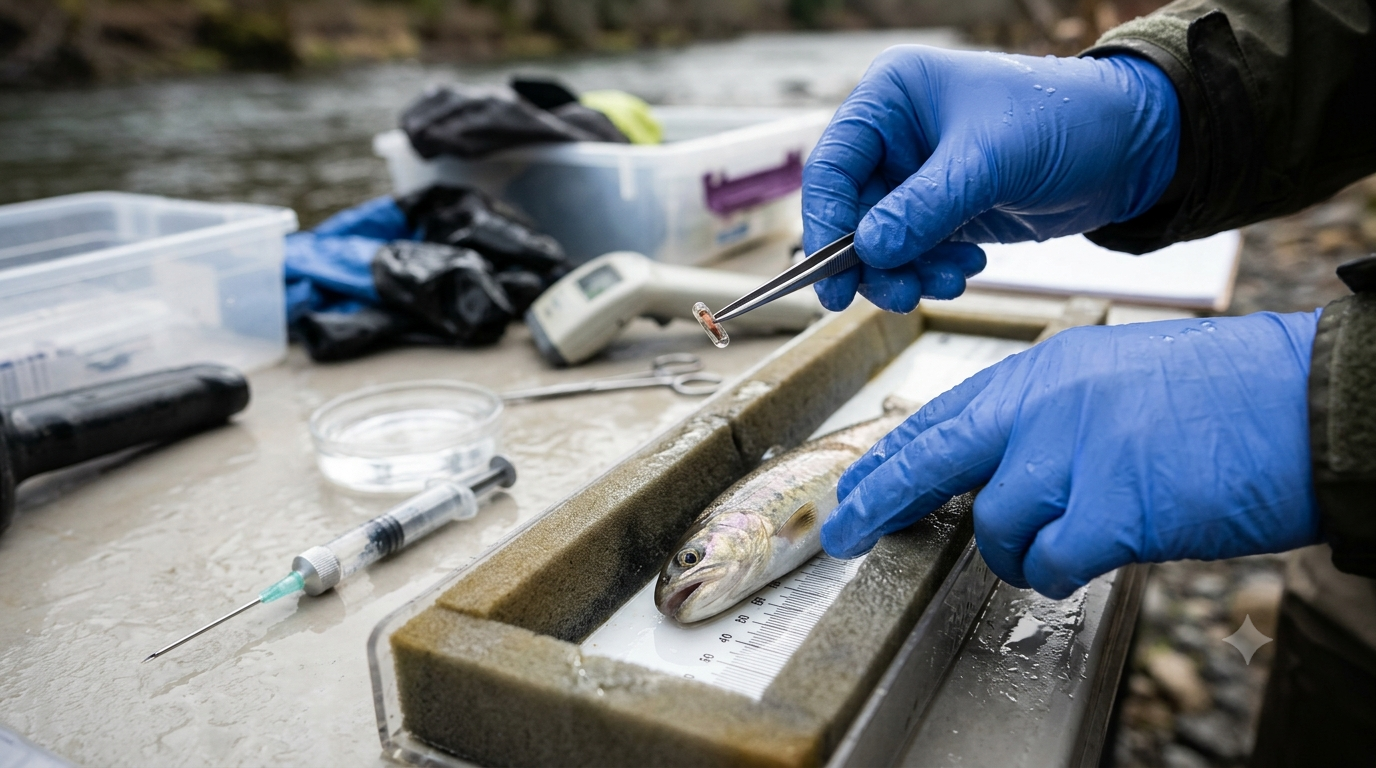
A fisheries research project can begin with a relatively small group of fish, a limited number of sampling locations and a simple record-keeping process. As the project develops, however, the number of fish, staff members, monitoring events and data records may increase. A process that works for a small trial may become difficult to manage when the programme expands.
This is why Pit tagging systems for organised fish identification and monitoring should be considered as part of a wider project plan rather than as an isolated equipment purchase. A successful programme needs suitable identification products, compatible reading equipment, consistent operating procedures and a clear approach to data management.
The objective is to create a system that can support the project's current requirements while allowing for future growth. Planning these elements early can reduce avoidable changes, improve consistency between sampling teams and make the resulting information more useful.
Start with the research or management question. Do not begin by selecting a tag simply because it is available or familiar.
A project may need to identify individual fish during repeated sampling, monitor movement between locations, maintain records during a production cycle or connect observations collected by different teams. Each objective may require a different combination of equipment and data fields.
Write down the questions the identification programme must answer:
Does the project need to recognise individual fish over time?
Will fish be monitored at one location or several?
How frequently will identification readings be collected?
Which measurements or observations must be connected to each fish?
How long is the monitoring period expected to last?
Will several teams or facilities contribute information?
What reports or research outputs will the collected information support?
These questions help establish the scope of the project. They also make it easier to distinguish essential requirements from optional features.
For example, a short study at one hatchery may need a straightforward identification and recording process. A multi-year study involving several facilities may need more detailed location histories, standardised data fields and a formal process for reviewing records.
Once the objective is clear, determine what type of identification approach is suitable.
For projects considering passive integrated transponder technology, the selected tag must be appropriate for the intended application and compatible with the reader system. The project should consider the fish species, size range, study requirements, handling protocols and relevant welfare guidance.
Do not select a tag based only on its physical dimensions or advertised reading range. Review the manufacturer's product information and consult qualified personnel about suitability for the species and application.
The identification plan should also define how the tag number will be connected to the project's records. An identifier is most useful when it can be linked consistently to the fish, sampling event and relevant observations.
A tag and a reader must work together as part of a compatible system. Before purchasing equipment for a larger programme, establish how readings will be collected and recorded.
Consider whether the project needs portable equipment for different sampling locations, a defined reading station or a combination of approaches. The decision should reflect where fish are monitored and how frequently readings are required.
The team should also confirm:
Which tag formats the reader supports.
Whether the reader is suitable for the planned environment.
How readings are displayed and stored.
Whether data can be transferred to the project's chosen system.
What accessories are required.
How the equipment will be checked before use.
A controlled pilot can help reveal workflow issues before the project expands. Test the complete process with compatible equipment and approved procedures, rather than checking only whether the reader powers on.
A reliable identification programme needs a standard way to store information. If every team member records data differently, the project may struggle to combine observations later.
Start with a core record structure. Depending on the research objectives, this may include:
|
Record field |
Purpose |
|
Individual identifier |
Distinguishes the fish within the project |
|
Species or stock |
Provides biological context |
|
Project reference |
Connects the record to the relevant study |
|
Sampling date |
Establishes when an observation occurred |
|
Location code |
Identifies where the observation was collected |
|
Operator |
Records who completed the activity |
|
Observation or measurement |
Stores the relevant research information |
|
Record status |
Flags missing, uncertain or incomplete information |
The project should define acceptable formats for each field. For example, location names should follow a shared list rather than being entered differently by each operator.
Keep the individual identifier separate from information that can change. A fish may move to another tank or facility, but its individual identification record should remain consistent. Record the location change as a separate event rather than changing the identifier.
A pilot helps the project test whether its proposed process works in real operating conditions.
Choose a manageable group and a suitable monitoring period. Use the pilot to evaluate the complete workflow, including identification, reading, data entry, review and export.
The pilot should answer practical questions:
Can staff follow the approved procedure consistently?
Is the selected equipment compatible with the tags?
Are the required records captured?
Can the team identify and correct incomplete entries?
Can information be transferred into the intended data system?
Are there any workflow steps that create unnecessary delays?
Can another trained team member repeat the process?
Do not judge the pilot only by how many readings were collected. Review whether the information is complete, traceable and usable.
If problems appear, document them and revise the process before increasing the programme's size. A small adjustment at this stage may prevent a much larger data-management problem later.
As a programme grows, more people may become involved. Without clear responsibilities, staff may assume that someone else has checked the equipment, entered the records or reviewed exceptions.
Assign responsibility for the main activities:
Equipment preparation and inspection.
Approved identification procedures.
Recording and checking observations.
Data transfer and backup.
Review of incomplete or uncertain records.
Approval of changes to the project workflow.
One person may perform several roles in a small project. The important point is that each responsibility is clearly assigned.
Create a short operating guide that explains the approved process. It should be practical enough for staff to use during routine work and detailed enough to support consistent training.
More fish and more sampling events usually mean more records. Without routine checks, small inconsistencies can become difficult to identify.
A data-quality process should look for:
Duplicate individual identifiers.
Missing sampling dates.
Unrecognised location codes.
Incomplete observation records.
Unexpected changes in measurement units.
Records that cannot be matched to a project or sampling event.
Unresolved differences between field notes and digital entries.
The team should decide how often these checks will take place and who will review the results.
Corrections should be documented according to the organisation's procedures. Avoid silently replacing uncertain information or deleting records simply because they do not match an expected result. Preserving a clear correction history makes later review more reliable.
A system designed for one location may need changes when the project adds another facility or research team.
Before expanding, check whether the same equipment, record structure and operating procedure can be used at the new location. Confirm that staff understand the naming conventions and that the data workflow can combine records from all participating sites.
A practical expansion plan should include:
Standard site and facility codes.
Consistent equipment and tag compatibility checks.
Training for additional operators.
Shared record formats.
A central process for reviewing data.
A documented method for handling equipment or connectivity problems.
If different locations have different operating conditions, record those differences. Standardisation should make information comparable without hiding important site-specific details.
A hatchery begins with a limited identification project involving one group of fish. The initial process uses one reader, a basic record template and a small team.
Before adding more tanks, the project lead reviews the pilot records. The team identifies inconsistent location names and several missing sampling details. It creates a standard location list, adds required fields and provides a short refresher session.
When the programme expands, new records follow the same structure. The team can combine information more easily because the standards were established before the number of records increased.
A research group plans to extend its study from one facility to a second location. The new team will collect similar observations, but it has different staff and daily operating arrangements.
The project lead prepares a shared data dictionary, confirms equipment compatibility and tests the transfer process. The team also agrees how to identify sampling events and report incomplete records.
The second location can now contribute information using the same core structure while retaining its own site code and relevant operating notes.
This is a hypothetical example to illustrate programme planning, not a report of a real customer project.
A fisheries research team starts with a small identification study. During the first stage, records are maintained in a simple spreadsheet and reviewed by one researcher.
After the project receives approval to include additional locations, the team recognises that the original process will be difficult to maintain. It reviews the identification workflow, defines standard fields and establishes a process for checking equipment and records.
The team then tests the updated process with a small additional group before using it across the wider project. This reveals a few missing fields that are added to the standard template.
The project expands with a clearer record structure and defined responsibilities. The main benefit is not simply a larger number of identified fish; it is the ability to maintain a consistent information system as the research grows.
When reviewing equipment options, consider both the immediate project and the expected future workflow.
Voda IQ provides PIT tag products and reader equipment for identification applications. Its product range can be reviewed when comparing potential components for a suitable monitoring setup.
Before selecting products, confirm the technical specifications, tag-reader compatibility, intended application and available data-handling options. Ask for clarification where the project's requirements are not covered by the published information.
Avoid purchasing equipment based on future assumptions alone. A phased approach can be more practical: establish the core requirements, test the complete workflow and expand when the project has demonstrated what additional capacity is needed.
A reliable identification programme is built through planning, testing and consistent record management. The project should begin with clear research objectives, select compatible identification equipment and establish how readings will be connected to observations and sampling events.
A small pilot can reveal problems before they affect a larger study. Standardised fields, defined staff responsibilities and regular data-quality checks then help the programme remain manageable as additional fish, locations and operators are introduced.
Well-planned Pit tagging supports more than individual identification. It creates a foundation for organised monitoring and research records that can remain useful throughout the project.
A pilot tests the complete workflow on a manageable scale. It can reveal equipment compatibility issues, inconsistent data entry, training needs and gaps in the record structure before the project adds more fish or locations.
Depending on the project, the record may include species, project reference, sampling date, location, measurements and relevant observations. The required fields should be defined according to the research objectives.
It may be possible when the equipment, procedures and data structure are suitable for all participating locations. Standard site codes and staff training help maintain consistency.
The review frequency should reflect the project's size, sampling schedule and data-management requirements. Checks may take place after sampling sessions and at planned intervals during the project.
Confirm the intended application, tag-reader compatibility, operating conditions, data storage and export options, accessories, staff requirements and supplier support. Test the complete workflow before scaling up.