Indonesia
 English
 Arabic
 French
 Spanish
 Portuguese
 Deutsch
 Turkish
 Dutch
 Italiano
 Russian
 Romaian
 Portuguese (Brazil)
 Greek
Your Guide to Personalized Acne Treatment in Riyadh
Health |
2026-10-12 11:31:59
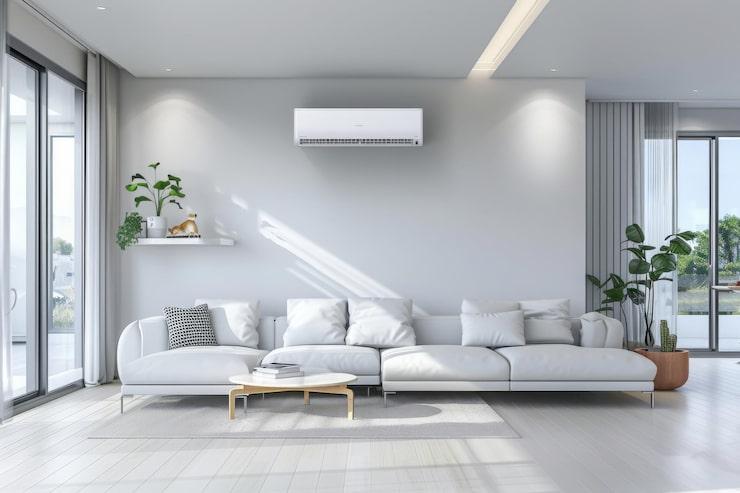
France’s residential cooling requirements are becoming more prominent as households respond to warmer summers, indoor overheating, and changing expectations around domestic comfort. Air conditioning, traditionally less established in French homes than in hotter European climates, is gaining relevance as households consider more effective ways to manage indoor temperatures. The demand environment is also evolving through renovation activity, energy-efficiency considerations, and the availability of advanced room-cooling technologies.
According to a Vyansa Intelligence report, the France Room Air Conditioners Market was valued at USD 159.22 Million in 2025 and is projected to reach USD 200.83 Million by 2032, registering a CAGR of 3.37% during 2026-2032. This expansion reflects the gradual integration of active cooling into residential comfort requirements, alongside demand from commercial establishments seeking localized temperature management.
Changing climatic conditions are making indoor thermal comfort a more significant consideration for French households. Extended periods of summer heat can increase indoor temperatures, particularly in apartments, buildings with limited insulation, and properties with substantial exposure to direct sunlight. Passive cooling measures remain relevant, but they may not provide sufficient temperature control during prolonged heat events.
Room air conditioners offer a targeted solution by allowing occupants to regulate temperatures in individual spaces. This capability is particularly relevant for bedrooms, living areas, home offices, and residential properties where installing centralized cooling infrastructure may be impractical.
Household awareness of indoor overheating is also influencing purchasing decisions. Consumers are increasingly considering cooling performance, operating efficiency, noise levels, and installation requirements when evaluating residential climate-control equipment. According to this industry report, the changing relationship between outdoor temperatures and indoor comfort is creating a more established demand environment for dedicated room-cooling solutions.
Energy consumption is an important consideration in the selection of room air conditioners. French households are increasingly attentive to the operating costs associated with electrical appliances, encouraging manufacturers to emphasize efficient compressors, improved heat exchangers, intelligent temperature regulation, and variable-speed operation.
Inverter technology is particularly relevant because it adjusts compressor output according to cooling requirements rather than relying exclusively on repeated full-capacity operation. This supports more consistent indoor temperatures and can improve operating efficiency under suitable usage conditions.
Latest market analysis indicates that product differentiation increasingly depends on the balance between cooling performance and electricity consumption. Energy labels also help buyers compare equipment based on standardized efficiency information, making product transparency an important competitive consideration.
The European Commission's ecodesign and energy-labelling framework establishes minimum performance requirements and provides consumers with information about energy consumption, cooling and heating efficiency, and sound levels. These requirements encourage manufacturers to incorporate efficiency improvements into product development and strengthen the importance of compliance across distribution channels.
Split air conditioners remain an important product category because they offer dedicated room cooling through an indoor unit connected to an outdoor component. Their suitability for permanent residential installations makes them relevant to apartments, individual houses, and properties undergoing renovation.
Window air conditioners and other configurations serve different installation requirements. However, product selection depends on available space, building restrictions, installation complexity, cooling capacity, and household preferences. In densely populated urban housing, limitations on external units can influence purchasing decisions and encourage demand for alternative configurations.
Industry analysis also highlights the growing importance of connected functionality. Smart controls, programmable operating schedules, remote temperature adjustment, and integration with home automation systems can improve equipment usability. These capabilities allow manufacturers to differentiate their products beyond basic cooling performance.
The combination of inverter compressors, improved filtration, quieter operation, and intelligent controls is creating opportunities for suppliers to address households seeking more sophisticated climate-management solutions.
Environmental regulations are becoming an important consideration for air-conditioning manufacturers and suppliers operating in France. European refrigerant policies are encouraging the transition toward cooling technologies with lower climate impact, requiring manufacturers to evaluate refrigerant selection, equipment design, safety requirements, and servicing capabilities.
The European Union's revised framework on fluorinated greenhouse gases is influencing product development and refrigerant availability. Alternative refrigerants, including propane-based solutions for suitable equipment categories, are receiving attention as manufacturers explore lower-impact cooling technologies.
For the room air-conditioning sector, this transition creates both opportunities and operational challenges. Manufacturers must balance environmental performance with cooling efficiency, equipment reliability, safety, and installation compatibility. Distributors and service providers also need appropriate technical knowledge to support changing equipment requirements.
In this report, regulatory compliance represents more than a product-design consideration. It also influences procurement decisions, supplier relationships, technician capabilities, and the long-term competitiveness of equipment portfolios.
Residential construction and renovation provide important demand opportunities for room-cooling equipment. New housing developments create opportunities for manufacturers to position air conditioners during initial property fitting, while renovation projects can generate replacement and first-time installation demand.
Apartments and individual houses have different cooling requirements. Apartments may prioritize compact equipment, lower noise levels, and installation flexibility, whereas individual houses can offer greater scope for multiple indoor units and room-specific cooling configurations.
The commercial segment also contributes to demand through offices, retail establishments, hospitality properties, healthcare facilities, and other buildings requiring localized temperature management. Businesses may prioritize equipment reliability, operating efficiency, maintenance accessibility, and consistent indoor comfort.
Detailed market insights indicate that suppliers with adaptable product portfolios and established installation networks can address these varied requirements more effectively. Online and offline distribution channels also provide different routes to customers, with physical retailers supporting product evaluation and technical assistance while digital platforms improve product discovery and comparison.
Competition in France increasingly depends on technological differentiation, energy performance, refrigerant compatibility, installation flexibility, and after-sales support. Manufacturers must respond to changing household expectations while maintaining compliance with European product requirements.
The ability to offer efficient split systems, compact configurations, connected controls, and environmentally considerate refrigerant options can strengthen product positioning. Installation partnerships and service capabilities are equally relevant because equipment performance depends on correct sizing, installation quality, and maintenance.
The Market research report perspective suggests that demand will increasingly reflect the interaction between climatic conditions, residential infrastructure, household purchasing priorities, and regulatory developments. Suppliers that align product engineering with these requirements will be better positioned to address evolving cooling needs.
France's room-cooling sector is therefore moving toward a more efficiency-conscious and technology-oriented demand environment. Latest market analysis points to residential comfort requirements, modernization of cooling equipment, and refrigerant transition as important considerations shaping future industry development. The industry's ability to combine reliable cooling, efficient operation, and regulatory readiness will remain central to its competitive direction.