Indonesia
 English
 Arabic
 French
 Spanish
 Portuguese
 Deutsch
 Turkish
 Dutch
 Italiano
 Russian
 Romaian
 Portuguese (Brazil)
 Greek
How Skin Whitening Treatment in Riyadh Helps Improve Skin Appearance
Health |
2026-11-03 11:19:54
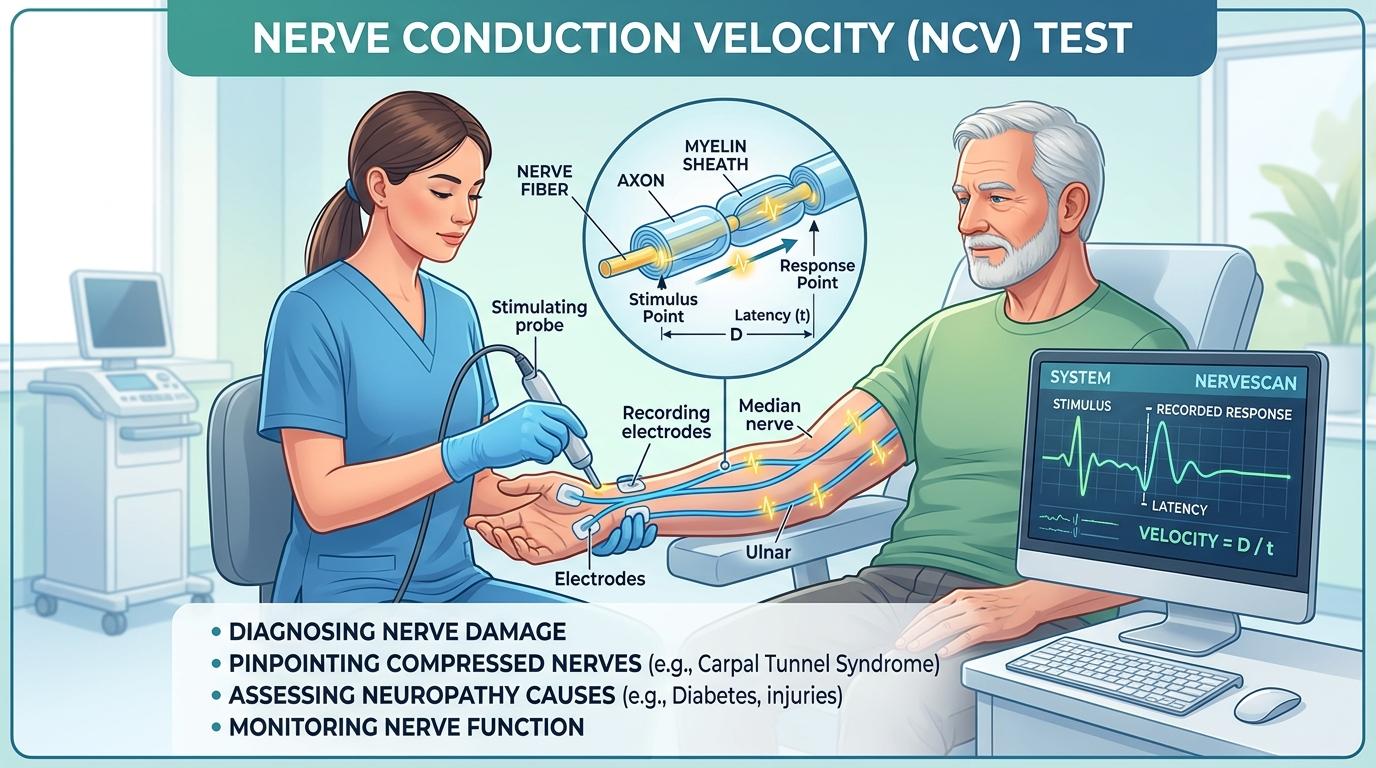
Persistent tingling, numbness, burning sensations or unexplained muscle weakness may sometimes indicate a problem involving peripheral nerves. When a doctor recommends further investigation, searching for an ncv test near me can be a practical next step.
An NCV test, also called a nerve conduction study, measures how quickly electrical signals travel through selected nerves. It can help clinicians investigate nerve damage, compression and certain neurological conditions. However, the test should be selected based on symptoms and medical assessment rather than performed as a routine checkup.
Nerve-related symptoms can develop gradually or appear suddenly. Their location, duration and severity can help a doctor determine whether nerve conduction testing is appropriate.
Common symptoms that may require evaluation include:
Persistent tingling in the fingers or toes.
Numbness in the hands or feet.
Burning or unusual sensations.
Muscle weakness.
Reduced sensation in a particular area.
Symptoms associated with suspected nerve compression.
For example, a person experiencing tingling in the thumb, index finger and middle finger may require assessment for possible median nerve compression.
Another individual with numbness extending through the leg may need a different neurological evaluation.
Not all these symptoms automatically require an NCV investigation. A clinician decides whether it is suitable.
Peripheral nerves carry electrical messages between the nervous system and different parts of the body.
An NCV examination uses electrodes placed on the skin to stimulate selected nerves and record their responses. The measurements help determine the speed and strength of electrical signal transmission.
Doctors may recommend the investigation when evaluating conditions such as:
Peripheral neuropathy.
Carpal tunnel syndrome.
Certain nerve compression disorders.
Nerve injuries.
Some neuromuscular conditions.
The study may be performed alongside electromyography (EMG). EMG evaluates electrical activity within muscles, while NCV focuses on signal conduction through nerves.
When searching for an ncv test near me, location should not be the only consideration.
Check these factors before making an appointment:
|
Evaluation factor |
What to confirm |
Why it matters |
|
Test availability |
Whether the required nerve study is offered |
Prevents unnecessary travel |
|
Clinical referral |
Whether a prescription or referral is required |
Ensures appropriate testing |
|
Equipment |
Availability of suitable nerve conduction equipment |
Supports the examination |
|
Staff expertise |
Who performs and interprets the study |
Important for accurate assessment |
|
Report delivery |
Expected report availability |
Helps plan follow-up |
|
Preparation |
Clothing and skin-care instructions |
Supports reliable measurements |
Also confirm the exact location, appointment timing and whether the facility performs the particular study requested by your doctor.
The procedure generally follows several steps.
Medical history review: The healthcare professional asks about symptoms, medical conditions and medications.
Positioning: You may sit or lie comfortably depending on the nerves being assessed.
Electrode placement: Small recording electrodes are attached to selected areas of the skin.
Nerve stimulation: A mild electrical impulse is delivered to stimulate the nerve.
Signal recording: The equipment records the nerve response and calculates relevant measurements.
Additional testing: Other nerves may be examined, and EMG may be recommended if clinically necessary.
The electrical pulses can feel like brief tapping or tingling sensations. Some discomfort is possible, but the procedure is generally well tolerated.
Preparation is usually straightforward.
Wear loose and comfortable clothing.
Avoid applying moisturisers, oils or creams to the examination area.
Keep your hands and feet comfortably warm.
Inform the healthcare team about pacemakers or other implanted electrical devices.
Share information about previous nerve investigations.
Follow any specific instructions given by the diagnostic centre.
If you take regular medication, discuss it with your doctor rather than stopping it independently.
Example 1: Repeated hand numbness
A 39-year-old office employee experiences recurring tingling in the fingers, particularly after long periods of computer work. A doctor examines the symptoms and suspects a possible nerve compression problem.
A nerve conduction study may help evaluate the affected nerve.
Example 2: Weakness and altered sensation in the foot
A 57-year-old individual notices reduced sensation in the feet and difficulty identifying certain movements. The doctor considers several possible causes and recommends appropriate neurological investigations.
The test results may help determine whether peripheral nerve dysfunction is present.
A 43-year-old professional experiences recurring tingling in one hand. Initially, the person assumes it is caused by sleeping in an uncomfortable position.
However, the symptoms continue and begin affecting daily activities.
After a clinical examination, the doctor recommends nerve conduction testing to investigate possible nerve compression. The patient books an appointment, follows the preparation instructions and completes the examination.
The report is reviewed alongside the clinical findings to determine the next steps.
The key lesson is that persistent symptoms deserve assessment rather than repeated self-diagnosis.
EcoTown Diagnostics offers diagnostic services in Bengaluru, including nerve conduction testing. Its NCV service page describes the procedure, preparation and reporting process.
If you are looking for an ncv test near me, confirm appointment availability, the exact study required and the expected reporting arrangements before visiting.
Nerve-related symptoms should not be ignored, particularly when they persist, worsen or affect everyday activities. A properly recommended NCV study can provide useful information about peripheral nerve function and help guide further evaluation.
Before booking an ncv test near me, obtain medical guidance, confirm that the centre offers the required examination and follow the preparation instructions. A qualified doctor should interpret the results in combination with your symptoms and clinical examination.
No. NCV evaluates electrical signal conduction through nerves, whereas EMG evaluates electrical activity in muscles. Both may be performed during the same appointment.
The electrical impulses may produce brief tingling or tapping sensations. The level of discomfort varies between individuals.
The duration depends on the number of nerves being examined and whether additional investigations are required.
Usually, fasting is not required. Follow the specific instructions provided by your diagnostic centre.
No. It evaluates selected peripheral nerve functions. Some neurological conditions require other investigations and clinical assessments.