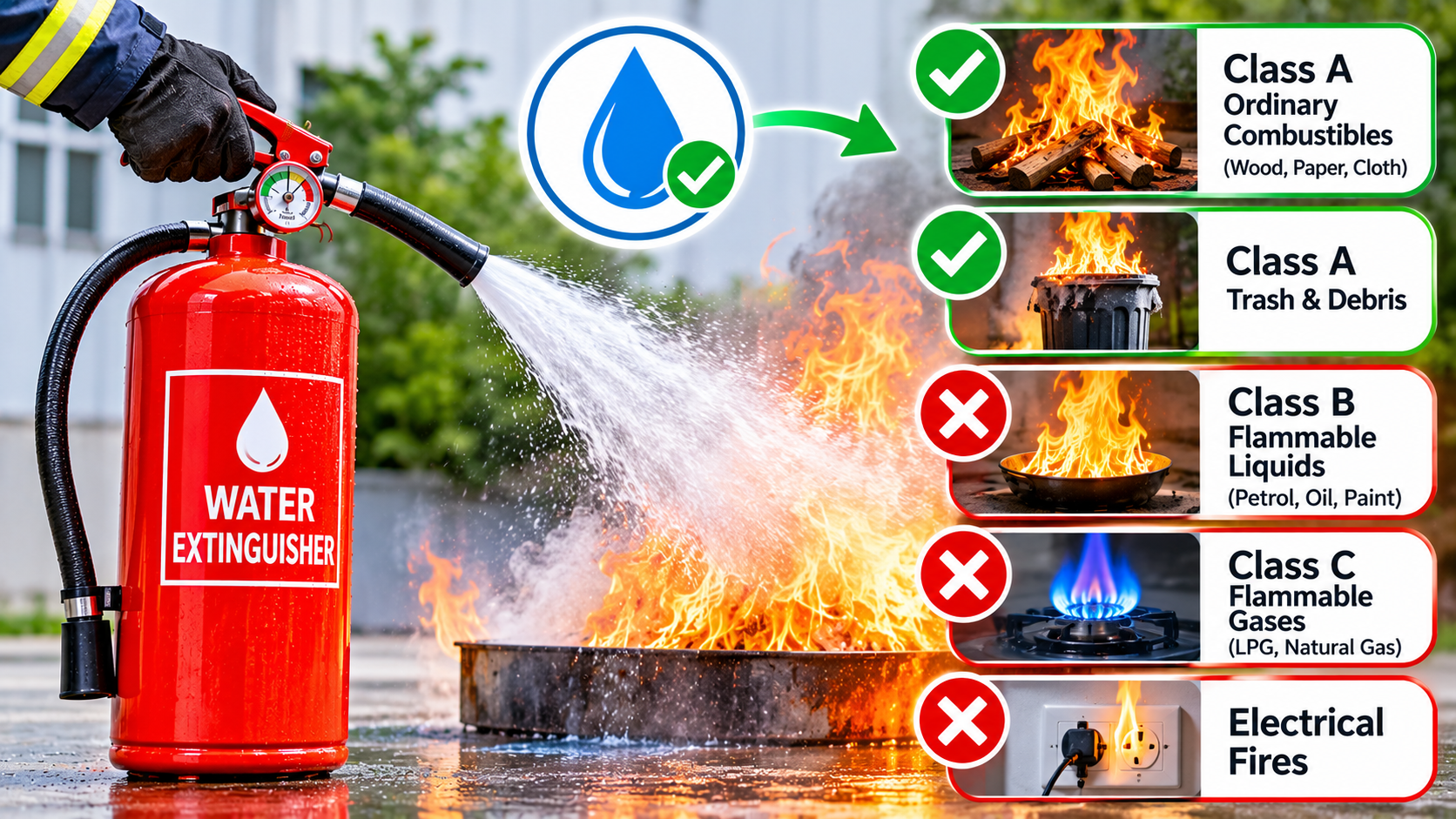
Water is one of the simplest fire-fighting agents, yet its effectiveness depends entirely on what is burning. Using water on the wrong fire can turn a manageable emergency into a dangerous situation. A Water Extinguisher is primarily designed to control fires involving ordinary combustible materials, where cooling the burning surface can reduce heat and stop combustion.
Understanding its applications, limitations, and safe operating conditions helps people select suitable fire protection equipment for homes, offices, warehouses, schools, and commercial buildings.
Which Materials Can Catch Fire and Be Extinguished With Water?
Fires involving everyday solid materials are among the most common situations where water-based extinguishing equipment is useful. These materials can continue burning when heat builds up, so applying water helps reduce their temperature and slows the combustion process.
Typical Class A fire materials include:
- Wood, cardboard, and paper
- Cotton, clothing, and fabric
- Upholstered furniture and mattresses
- Certain ordinary plastics and rubber materials
Water penetrates these materials and helps cool both the burning surface and surrounding fuel, making it useful for controlling small fires before they spread.
How Does Water Stop Flames From Spreading?
Water works mainly through heat absorption. When applied to burning materials, it absorbs thermal energy and lowers the temperature below the level required to sustain combustion. This cooling effect can also reduce the likelihood of nearby combustible materials catching fire.
A water extinguisher is particularly useful when burning solid materials are producing flames and heat in a confined area. Its discharge can help control the fire while reducing the temperature of surrounding surfaces.
However, effectiveness depends on how much material is burning, the depth of the fire, ventilation, and whether the flames have spread beyond the original source.
Where Are Water Extinguishers Commonly Used?
Water-based extinguishers are suitable for locations where ordinary combustible materials are present, and other fire hazards have been assessed separately. They are often considered for environments containing paper, furniture, packaging, wooden fixtures, and textile materials.
Common locations include:
- Schools, colleges, and educational buildings
- Offices with paper documents and furniture
- Warehouses storing non-hazardous combustible goods
- Residential areas and general storage spaces
- Workshops handling ordinary solid materials
The equipment should be placed where occupants can reach it easily without approaching a likely fire hazard or blocking an escape route.
Which Fires Should Never Be Tackled With a Water Extinguisher?
Although water is effective against ordinary solid-material fires, it can create serious hazards when applied to other types of burning fuel. The wrong extinguishing agent may spread burning substances, create electrical shock risks, or fail to control the flames.
Never use an ordinary water extinguisher on:
- Electrical fires: Water can conduct electricity and expose the operator to electric shock.
- Flammable liquid fires: Petrol, diesel, solvents, and oils may spread when struck by a water stream.
- Cooking oil fires: Burning cooking oil can react dangerously when water is introduced.
- Combustible metal fires: Certain metals require specially formulated extinguishing agents.
Selecting an extinguisher according to the fire classification is essential. A water-based unit should only be used when its label confirms suitability for the burning material and the conditions are safe.
What Should You Consider When Choosing Water-Based Fire Protection?
Choosing suitable fire protection requires an understanding of the building's contents, occupancy, possible ignition sources, and the areas where fires are most likely to occur. Some premises may require multiple extinguisher types rather than relying on water-based equipment alone.
For larger buildings, a properly designed
fire hydrant system can provide firefighters with a dependable water supply through dedicated piping, hydrant outlets, and associated components. Portable extinguishers and hydrant installations serve different purposes, so their placement and capacity should be determined according to the property's fire safety requirements.
Before selecting equipment, consider:
- The materials stored or used within the premises.
- Potential electrical and flammable-liquid hazards
- Extinguisher capacity, operating pressure, and approved rating.
- Accessibility, mounting height, and visibility
- Inspection, servicing, and maintenance requirements
A proper assessment helps avoid installing equipment that may be unsuitable for the actual fire risks.
How Can You Use a Water Extinguisher More Safely?
Operating an extinguisher requires a clear understanding of its instructions and the surrounding emergency conditions. Even a small fire can become uncontrollable when smoke increases, or combustible materials ignite rapidly.
If a fire is small, contained, and suitable for a water extinguisher, trained users should:
- Alert people nearby and ensure emergency services have been contacted.
- Keep a clear escape route behind them.
- Remove the safety pin and follow the extinguisher's operating instructions.
- Direct the discharge towards the base of the flames.
- Sweep across the burning material while maintaining a safe distance.
Never attempt to fight a fire if it is spreading, producing heavy smoke, blocking your exit, or putting you at risk. Evacuate immediately.
Why Do Inspection and Maintenance Matter?
An extinguisher can become unreliable if its pressure, components, or contents are not checked regularly. A damaged hose, leaking cylinder, corroded body, or missing safety pin can affect its performance during an emergency.
Routine checks should include:
- Confirming that the extinguisher is in its designated location.
- Checking the pressure gauge, where fitted.
- Inspecting the body, hose, nozzle, and safety seal.
- Reviewing the service date and maintenance record.
- Ensuring signage and access remain clear.
Professional servicing helps confirm that the equipment is ready for use and remains appropriate for the hazards within the building.
Frequently Asked Questions
Can a water extinguisher be used on burning wood?
Yes. Ordinary water extinguishers are designed for Class A fires involving materials such as wood, paper, cloth, and similar combustibles.
Can water extinguishers be used on electrical fires?
Ordinary water extinguishers should not be used on energized electrical equipment because water can conduct electricity. A suitable extinguisher rated for electrical hazards should be selected.
Are water extinguishers suitable for petrol or diesel fires?
No. Water can spread burning flammable liquids and make the situation worse.
Do water extinguishers work on plastic fires?
They can be suitable for certain ordinary combustible plastics when the extinguisher is rated for Class A fires. However, some plastics melt, release hazardous smoke, or behave differently during combustion, so the fire conditions and extinguisher rating matter.
Are water extinguishers suitable for every building?
No. Buildings may contain electrical equipment, flammable liquids, cooking oils, gases, or other hazards that require different extinguishing agents. Fire protection should be planned around the specific risks.
Conclusion
Water remains a practical extinguishing agent for fires involving ordinary combustible materials because it removes heat and helps prevent flames from continuing to spread. Its effectiveness depends on selecting the correct equipment, understanding fire classifications, and knowing when not to use it.
Fire safety is not simply about having an extinguisher available. It requires placing suitable equipment in the right locations, maintaining it properly, and ensuring occupants understand its limitations before an emergency occurs.
 Indonesia
 English
 Arabic
 French
 Spanish
 Portuguese
 Deutsch
 Turkish
 Dutch
 Italiano
 Russian
 Romaian
 Portuguese (Brazil)
 Greek