Indonesia
 English
 Arabic
 French
 Spanish
 Portuguese
 Deutsch
 Turkish
 Dutch
 Italiano
 Russian
 Romaian
 Portuguese (Brazil)
 Greek
Cross Platform App Development Texas - Building Apps for iOS and Android
Other |
2026-10-27 13:52:20
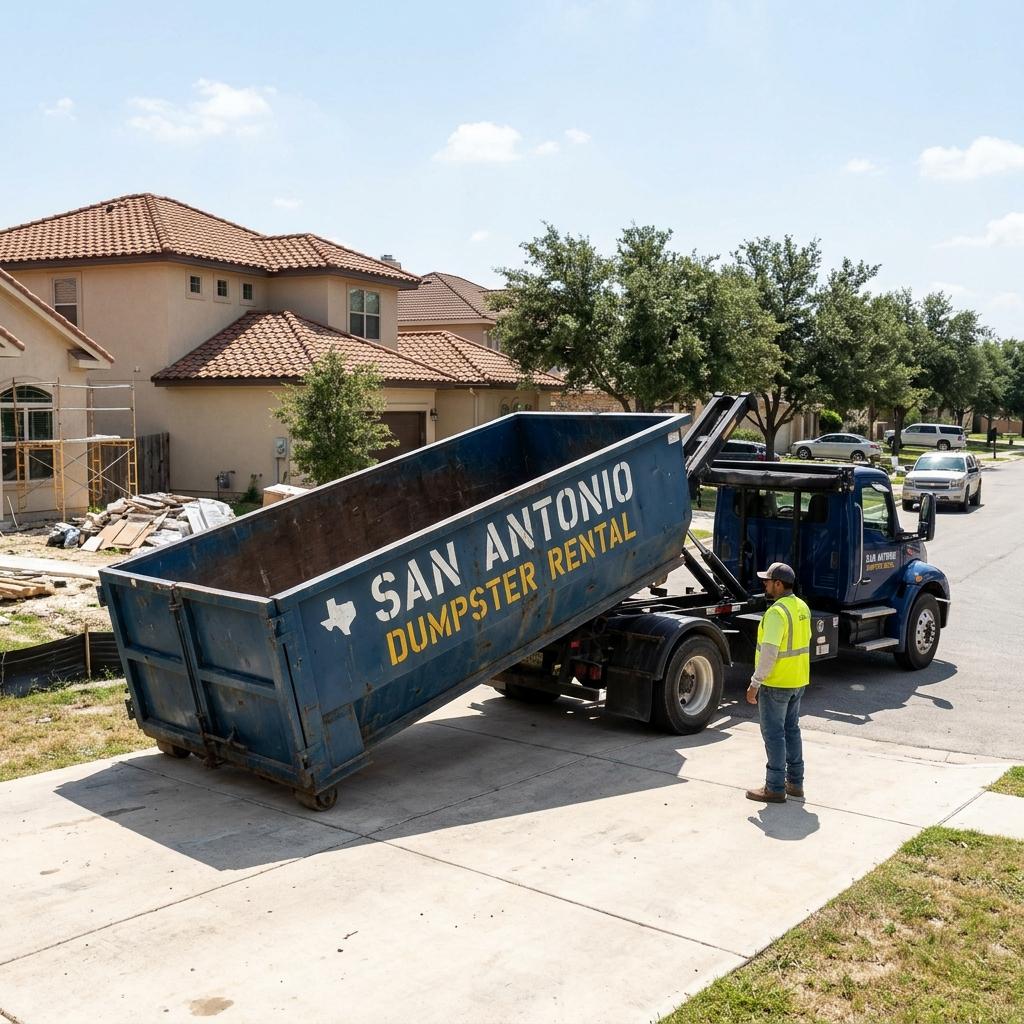
You've got a garage full of water-damaged drywall, a roof that needs stripping, or a clean-out that's been put off for three years. A roll-off container would solve it, and you're about to book one. Before you do, know that most of the money lost on these rentals is lost in the first ten minutes of the phone call, on choices that looked minor at the time.
The short answer to what goes wrong is this. People pick the wrong size, hide the wrong materials in the load, put the container where it can't legally or physically sit, and don't read the fee terms. Fix those four and you've avoided most of the trouble. Everything below breaks it down.
Booking Dumpster Rental San Antonio service is simple once you know four things. What exactly are you throwing away? Roughly how much of it is there? Where will the container sit? And how many days do you honestly need it?
Write those answers down first. A hauler can quote you accurately only if you can describe the job, and the quote you get is only as good as the description behind it.
Also check whether your project needs paperwork. A container on your own driveway usually needs nothing. One on the street or in the public right of way may need a permit from the City of San Antonio, and a homeowners association can have its own rules about how long a container may stay. Ask both questions before delivery day, not after.
Dumpsters are sold by volume in cubic yards, and the common residential sizes run from about 10 to 40 yards. A 10-yard unit suits a small bathroom demo or a garage purge. A 20-yard handles a roof or a full-room remodel. A 30 or 40 is for whole-house cleanouts and new construction.
Renters guess small to save money. Then the container fills halfway through the job, and a second haul costs more than the larger size would have. If you're between two sizes, take the bigger one. The price gap is usually smaller than the cost of a second trip.
Every container comes with a weight allowance, measured in tons, and anything over it is billed per ton. Volume doesn't protect you here. A 10-yard dumpster packed with concrete, brick, or roofing shingles can hit its weight limit long before it looks full. Heavy debris like that is often handled in smaller containers for exactly this reason.
Ask what the included tonnage is and what the overage rate runs. Then match it to your material. Three layers of asphalt shingles from a 2,000-square-foot roof are far heavier than the same volume of old furniture.
This one costs real money. Haulers refuse or surcharge items that can't go to a standard landfill or transfer station. Paint, solvents, motor oil, car batteries, propane tanks, and asbestos-containing materials are the usual offenders. Tires, mattresses, and appliances with refrigerant (a freon-charged refrigerator or window AC unit) often carry special handling fees.
Electronics are another trap. Old TVs and monitors can raise fees or be barred outright. If the hauler finds restricted material in the load, expect a surcharge, a rejected pickup, or both.
And if you suspect asbestos in an older San Antonio house, such as popcorn ceilings, old floor tile, or pipe wrap, stop. Get it tested before demolition. That's not a dumpster question, and a standard roll-off is the wrong place for it.
Picture a 30-foot container being backed up a driveway with a live oak hanging over it. The truck needs roughly 60 feet of straight approach and about 15 feet of clearance overhead, and low branches and power lines kill deliveries fast.
Measure the spot. A dumpster is about 8 feet wide and the truck tilts it to slide it off, so you need the length and the sky above it. Lay down plywood sheets under the wheels' path if your driveway is thin concrete or pavers, because a loaded container is heavy enough to crack both.
Leave room to open the rear door if it has one, and keep the container off septic lines and sprinkler heads. Clay soil here gets soft after a heavy rain, and a truck that sinks in can't leave.
Standard rentals include a set number of days, commonly about a week, and extra days are billed daily. A kitchen gut that's "done by Friday" almost never is. Contractors slip, inspections get rescheduled, and a Saturday morning delivery of the wrong cabinets eats half a week.
Ask what the base period is, what each extra day costs, and whether the hauler will swap a full container for an empty one mid-project. If the job could run long, book the longer window upfront. It's cheaper than extending.
Two quotes can look twenty dollars apart and end up far apart in the final bill. What's inside the number matters more. Does it include delivery, pickup, disposal, and the tonnage allowance? Are there fuel charges, a dump fee, or a trip charge if the driver arrives and the container is blocked by a parked car?
Get the quote in writing, or at least in a text or email you can pull up later. Ask for the all-in number for your specific material and size. A rate that sounds low and leaves out disposal is just a delayed invoice.
For more on keeping a project budget honest, planning your cleanup costs carefully is a habit worth building before any job starts.
Local haulers also tend to answer faster on scheduling than national brokers who subcontract the delivery. A broker isn't always worse, but you'll want to know who is actually showing up with the truck.
Overfilled containers don't get hauled. Debris has to stay at or below the top rail, because trucks can't legally carry loads that spill onto the road, and a driver can refuse to lift one. Haulers don't bluff about this.
Load smart. Put flat, heavy items on the bottom and break down boxes and furniture so air doesn't take up space. Fill the corners first. Don't build a peak in the middle that looks tidy and fails at the first pothole on Nacogdoches Road.
Watch the neighbors, too. An open container at the curb invites other people's trash, and you're the one paying for that mattress someone dropped in overnight. A tarp or a closed door helps, and so does asking a neighbor to leave it alone.
Size the container for both volume and weight, keep prohibited items out, measure the spot before delivery, and book enough days. Compare quotes by what's included rather than by the headline number, and load to the rail, not above it. Do those things and the rental stays boring, which is exactly what you want.
How far in advance should I book a roll-off container?
Book a few days ahead for standard sizes. Weekends and spring cleaning season fill up faster, so call earlier if you have a fixed deadline.
Can I put a dumpster on the street in San Antonio?
Often you can, but you may need a city permit for the public right of way. Check with the city before delivery, and ask your hauler whether they handle the paperwork.
Can I share a dumpster with a neighbor?
Yes, and it's a good way to split the cost. Agree on what goes in first, since one person's banned item becomes both people's fee.
What happens if the driver can't reach the container for pickup?
You'll usually be charged a trip fee and have to reschedule. Keep cars and gates clear on the pickup day.
Do I need to be home for delivery and pickup?
Not usually, as long as the drop spot is marked and clear. Leave a note or send a text with the exact placement.
Is it okay to put yard waste in the same container as household junk?
Usually yes, though some haulers price green waste separately or want it kept apart. Ask when you book.
Will a dumpster damage my driveway?
It can scratch or crack thin concrete and pavers. Plywood or thick boards under the contact points spread the weight and protect the surface.
Can I get a smaller container for a tiny cleanout?
Yes, 10-yard units exist for exactly that. If you only have a few bags of trash, a junk removal pickup may cost less.