Indonesia
 English
 Arabic
 French
 Spanish
 Portuguese
 Deutsch
 Turkish
 Dutch
 Italiano
 Russian
 Romaian
 Portuguese (Brazil)
 Greek
How to Treat Dark Circles and Under-Eye Hollows Together
Health |
2026-10-23 10:07:21
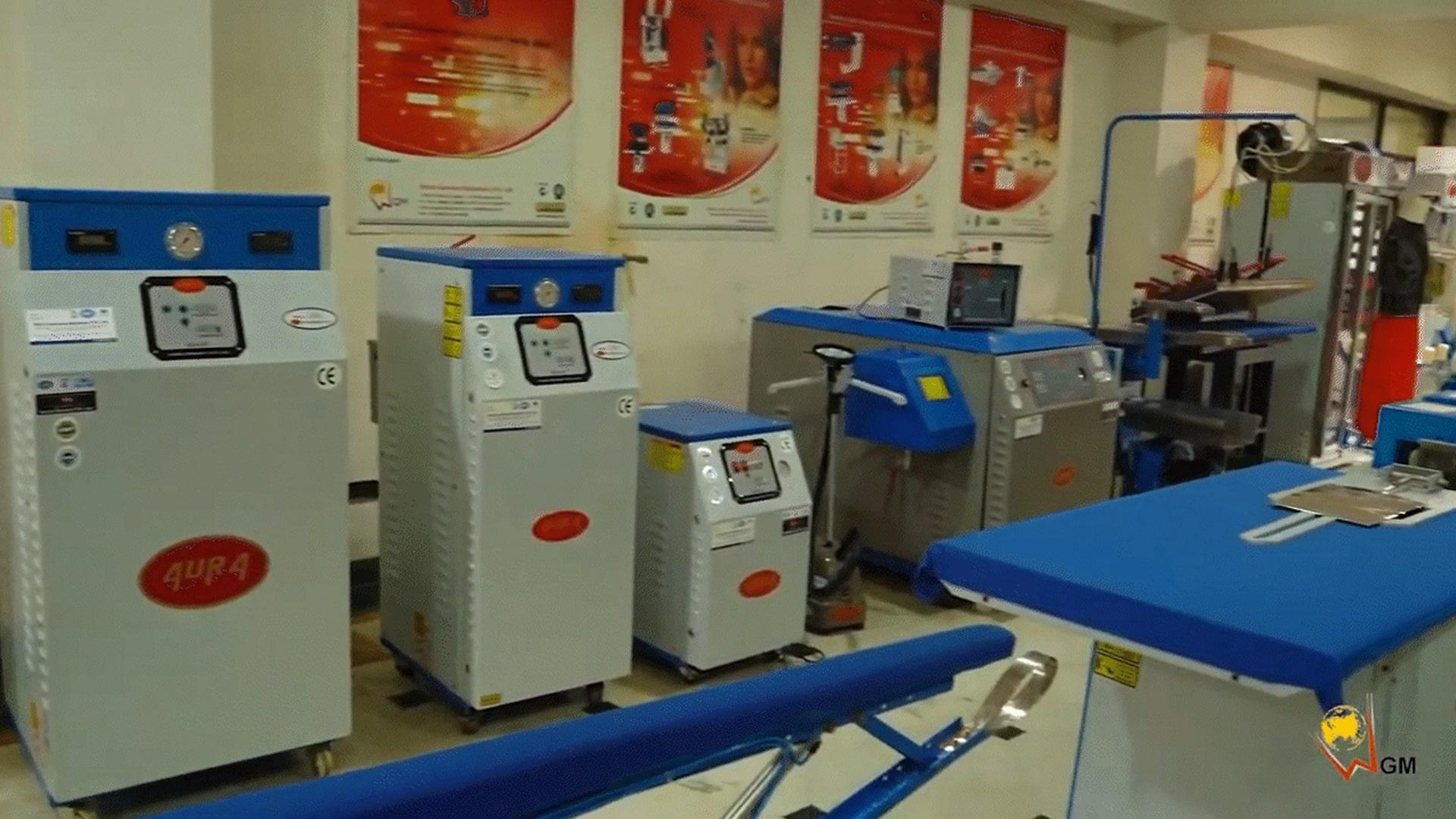
The garment manufacturing industry is continuously evolving with advanced technologies, improved production methods, and increasing customer expectations. Manufacturers today need machinery that delivers accuracy, consistency, productivity, and efficient fabric utilization. Among the most important investments in a garment production facility is a reliable Cloth Cutting Machine.
Fabric cutting is one of the earliest and most critical stages of garment manufacturing. The quality of cutting directly influences garment measurements, stitching accuracy, fabric consumption, and the overall quality of the finished product. Choosing suitable cutting equipment can help manufacturers improve production efficiency, minimize material wastage, and maintain consistent product quality.
Whether you operate a small garment manufacturing unit, an apparel export facility, or a large textile production plant, understanding different cutting technologies is essential before investing in machinery.
A cloth cutting machine is industrial equipment used to cut fabric into specific shapes and dimensions according to garment patterns and production requirements. These machines help manufacturers cut individual fabric layers or multiple layers with greater speed and accuracy than conventional manual methods.
In commercial garment manufacturing, precision is extremely important. Even a small cutting error can affect garment fitting, create stitching difficulties, and increase material wastage.
Modern cutting equipment offers several operational advantages:
Improved cutting accuracy and consistency.
Faster fabric-cutting operations.
Reduced manual effort and operator fatigue.
Better utilization of raw materials.
Consistent garment components across production batches.
Improved workflow between fabric preparation and stitching departments.
For businesses handling regular production orders, investing in suitable cutting machinery can contribute significantly to operational efficiency.
Different fabrics, production volumes, and garment designs require different cutting technologies. Understanding the available options helps manufacturers select machinery according to their operational needs.
Straight knife cutting machines are widely used in garment manufacturing facilities. They feature a vertically moving blade that cuts through multiple layers of fabric.
These machines are suitable for different garment production applications and can handle a variety of fabric thicknesses, depending on the machine specifications.
Key advantages:
Suitable for multi-layer fabric cutting.
Useful for straight and curved cutting operations.
Relatively easy to operate.
Appropriate for small and medium-scale production requirements.
Band knife cutting machines use a continuous blade running around rotating wheels. The fabric is guided against the stationary cutting blade to achieve precise shapes.
They are particularly useful when garment manufacturers require accurate cutting of smaller components and intricate fabric shapes.
Key advantages:
High cutting precision.
Suitable for detailed cutting operations.
Consistent cutting quality.
Useful for specialized garment components.
Round knife cutting machines use a circular rotating blade to cut fabric. They are commonly used for lightweight materials and comparatively straightforward cutting operations.
Key advantages:
Compact equipment design.
Convenient handling.
Suitable for smaller cutting requirements.
Useful for different fabric applications.
End cutter machines are used to cut fabric at the end of a spreading table. They help manufacturers achieve accurate fabric lengths and improve the efficiency of fabric-spreading operations.
Key advantages:
Efficient fabric-end cutting.
Reduced manual cutting effort.
Improved production workflow.
Consistent cutting across fabric spreads.
Selecting the right machine requires an understanding of your manufacturing requirements. The cheapest option is not necessarily the most economical over the long term.
Consider the following factors before making a purchasing decision.
Different materials require different cutting capabilities. Cotton, polyester, denim, knitted fabrics, and blended textiles may have different cutting characteristics.
Choose machinery that can handle your regular fabric types without compromising cutting quality.
Evaluate your daily production requirements before selecting equipment.
Small garment units may benefit from manually operated cutting machines, while large manufacturing facilities may require equipment capable of handling multiple fabric layers and continuous production.
Precision is essential for maintaining garment dimensions and minimizing fabric wastage.
Look for machines with reliable blade systems, stable operation, and suitable cutting capabilities for your patterns.
Operator convenience is another important consideration. Machinery with practical controls, accessible maintenance components, and straightforward operation can help simplify everyday production activities.
Before purchasing machinery, understand the availability of replacement parts, technical support, maintenance services, and operator guidance.
Reliable after-sales assistance can help reduce unexpected production interruptions.
Consider electricity consumption, blade replacement, maintenance requirements, operator costs, and overall machine durability.
Evaluating the complete operating cost provides a better understanding of the investment's long-term value.
Fabric cutting is not an isolated manufacturing activity. It forms part of a larger production workflow involving fabric inspection, spreading, cutting, stitching, finishing, and packaging.
Efficient coordination between these departments helps maintain production schedules and consistent garment quality.
For example, after fabric cutting, garment components may proceed through stitching, pressing, finishing, and quality inspection.
Industrial finishing departments also depend on reliable steam-generation equipment. Businesses requiring steam for garment finishing and pressing operations can explore Diesel Fired boilers and other industrial boiler solutions.
A properly selected boiler can support steam requirements for different garment finishing applications, depending on its capacity and operating specifications.
Similarly, businesses operating commercial laundry and garment-care facilities may require specialized cleaning equipment for delicate fabrics and garments.
A Dry to dry Laundry Machine is designed to perform the cleaning and drying stages within the same machine cycle. Such equipment is particularly relevant to professional dry-cleaning operations where controlled garment treatment and efficient processing are important.
Considering these interconnected requirements helps businesses plan machinery investments more effectively.
Choosing appropriate industrial machinery is an important step towards building a productive and dependable manufacturing operation.
The right equipment can help businesses:
Maintain consistent production quality.
Improve operational efficiency.
Reduce avoidable material wastage.
Manage production schedules more effectively.
Support changing manufacturing requirements.
Improve workplace productivity.
Manufacturers should evaluate equipment specifications, production requirements, available technical support, and long-term operating costs before finalizing their investment.
Welco Garment Machinery Pvt. Ltd. (WGM) focuses on introducing innovative concepts and advanced machinery solutions for garment finishing, home furnishing, leather finishing, and industrial and commercial laundry operations.
Since 1994, the company has been serving businesses with a range of industrial machinery and technology solutions.
Its product portfolio includes different types of fabric cutting equipment, such as straight knife cutting machines, band knife cutting machines, round knife cutting machines, and end cutter machines.
Businesses looking for suitable machinery can explore the company's range of Cloth Cutting Machine solutions to understand the available equipment and specifications.
Welco Garment Machinery also offers industrial and electric and oil-fired boiler solutions, along with professional dry-cleaning equipment for commercial laundry applications.
By offering machinery across different industrial requirements, WGM supports businesses looking to improve their garment manufacturing, finishing, and laundry operations.
Selecting the right Cloth Cutting Machine is an important investment for garment manufacturers aiming to improve production accuracy, fabric utilization, and operational efficiency.
Understanding the different machine types, fabric requirements, production capacity, maintenance considerations, and long-term operating costs can help businesses make informed purchasing decisions.
Along with cutting equipment, evaluating supporting machinery such as industrial boilers and dry-cleaning systems can help businesses develop a more organized and efficient industrial operation.
For manufacturers exploring dependable garment and laundry machinery solutions, Welco Garment Machinery offers a range of equipment designed for different industrial applications.