Indonesia
 English
 Arabic
 French
 Spanish
 Portuguese
 Deutsch
 Turkish
 Dutch
 Italiano
 Russian
 Romaian
 Portuguese (Brazil)
 Greek
Looking for a Pet Salon in Dubai? Give Your Furry Friend the Care They Deserve
Other |
2026-10-28 07:02:40
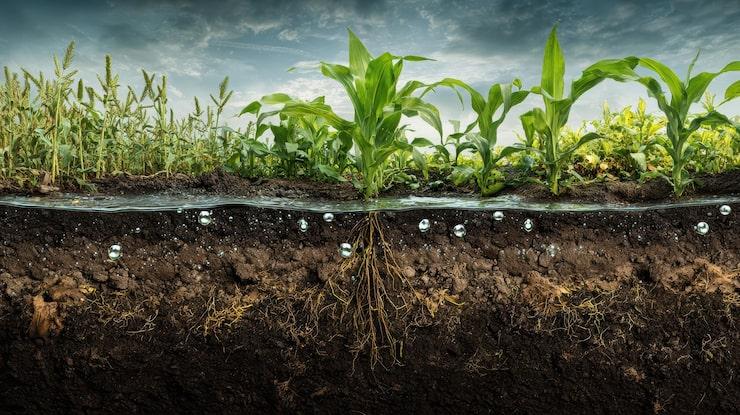
India’s agricultural productivity depends not only on the availability of fertilizers and crop protection products but also on the condition of the soil in which crops are cultivated. Nutrient depletion, declining organic matter, soil acidity, salinity, and changes in soil structure are creating demand for more targeted soil management practices. As farmers seek to improve input efficiency and maintain productive farmland, soil treatment is becoming an increasingly important part of agricultural planning.
According to a Vyansa Intelligence report, the India Soil Treatment Market was valued at USD 1.72 Billion in 2025 and is projected to reach USD 2.61 Billion by 2032, registering a CAGR of 6.14% during 2026-2032. This expansion reflects the need for solutions that improve soil fertility, correct chemical imbalances, manage biological threats, and restore land affected by degradation. Demand is increasingly influenced by the shift from broad-based input application toward soil-specific treatment and nutrient management.
Soil testing is becoming an important foundation for selecting appropriate treatment products. Farmers require information about nutrient availability, pH conditions, organic matter, and other soil characteristics to determine which interventions are suitable for their fields. This creates opportunities for suppliers offering soil amendments, conditioners, biological inputs, and diagnostic-linked advisory services.
India’s Soil Health Card programme supports this shift by providing farmers with soil test-based recommendations for nutrient management. The programme connects soil assessment with crop-specific guidance on fertilizers, biofertilizers, organic inputs, and soil treatments. Its importance lies in encouraging more informed input selection rather than relying exclusively on conventional application practices.
In this report, soil diagnostics are relevant not only as an agricultural service but also as a demand-generation mechanism. Testing recommendations can translate into requirements for micronutrient correction, organic amendments, pH adjustment, and other targeted interventions. Suppliers that connect product availability with agronomic guidance can strengthen their position across agricultural distribution networks.
Organic amendments represent an important product category within the India Soil Treatment Market. Animal manure, crop residue, compost, and sewage sludge and biosolids serve different soil improvement requirements. Their applications include adding organic matter, supporting nutrient availability, improving soil structure, and contributing to moisture retention.
The increasing focus on sustainable agriculture also supports interest in organic inputs and residue recycling. Compost and appropriately processed agricultural residues can help return organic material to cultivated land, while manure-based products provide an additional source of nutrients. However, product consistency, contamination control, nutrient composition, and appropriate application rates remain essential to ensuring reliable field performance.
According to this industry report, demand for organic amendments is connected to the broader requirement for maintaining soil productivity over repeated cultivation cycles. Suppliers with standardized processing, quality assurance, and crop-specific application guidance can address the requirements of farmers seeking dependable soil improvement products.
Biological treatment is gaining relevance as agricultural users explore methods to improve nutrient availability and support soil microbial activity. Biofertilizers, microbial inoculants, and other biological formulations can contribute to processes such as nitrogen fixation and nutrient solubilization. These solutions are particularly relevant where farmers are looking to integrate biological inputs with conventional soil fertility management.
The India soil treatment industry can benefit from wider adoption of biological products through agricultural input retailers, cooperatives, extension networks, and specialized agri-input distributors. However, adoption depends on formulation stability, viable microbial content, storage conditions, compatibility with other inputs, and performance under local soil and climatic conditions.
Manufacturers therefore need to focus on product validation and technical support. Clear application instructions and evidence of field suitability can improve confidence among farmers and distributors. Biological solutions are unlikely to replace every conventional treatment method, but they can become a more integrated part of soil management programmes.
Soil treatment requirements also extend beyond agricultural fertility improvement. Industrial activities, waste disposal, chemical handling, and other land-use practices can result in contamination that requires assessment and remediation. Such sites may need specialized treatment before they can be safely reused for their intended purpose.
The Central Pollution Control Board’s guidance on contaminated sites addresses site investigation, risk assessment, and the selection of appropriate remediation technologies. It recognizes that treatment decisions depend on contamination characteristics, intended future land use, technical feasibility, and site-specific remediation objectives.
This creates opportunities for providers offering physicochemical, biological, and thermal treatment technologies, alongside environmental testing and remediation services. The requirements of contaminated industrial land differ substantially from routine agricultural soil improvement. Consequently, technical assessment and suitable treatment selection remain central to project execution.
Latest market analysis points toward stronger demand for integrated soil management solutions. Digital soil mapping, laboratory testing, localized agronomic recommendations, and biological inputs can help suppliers develop more targeted product offerings. The combination of diagnostic services and treatment products also creates opportunities for recurring engagement with farmers and agricultural institutions.
The India soil treatment industry faces several adoption challenges. Fragmented agricultural holdings, uneven access to testing facilities, limited awareness of specialized products, and inconsistent product quality can affect purchasing decisions. Biological formulations also require appropriate storage and handling, while remediation projects may involve complex technical and regulatory requirements.
Industry analysis indicates that suppliers will need to address these barriers through distribution partnerships, farmer education, localized product development, and reliable technical support. A Market research report perspective also highlights the importance of connecting treatment technologies with the actual requirements of agricultural land and contaminated sites. Detailed market insights suggest that product performance, accessibility, and diagnostic-led recommendations will remain important factors in procurement decisions.
The future of the India Soil Treatment Market will be shaped by the ability of agricultural input manufacturers and remediation providers to address diverse soil conditions. Organic amendments, pH adjusters, soil conditioners, biological formulations, and specialized remediation technologies serve distinct requirements, making product selection and application expertise important competitive considerations.
As soil testing becomes more closely connected with agricultural decision-making, demand can increasingly move toward treatment programmes tailored to specific nutrient deficiencies, soil characteristics, and crop requirements. Companies that combine consistent product quality with agronomic support and accessible distribution will be better positioned to address this evolving demand. The sector’s development will ultimately depend on how effectively soil treatment solutions contribute to agricultural productivity, resource efficiency, and responsible land management.