Indonesia
 English
 Arabic
 French
 Spanish
 Portuguese
 Deutsch
 Turkish
 Dutch
 Italiano
 Russian
 Romaian
 Portuguese (Brazil)
 Greek
Video-chat.live for quick conversations — funny story at lunch
Party |
2026-09-03 11:35:30
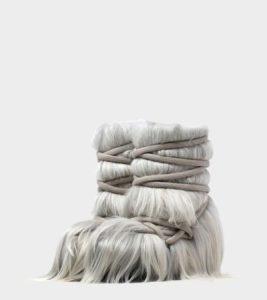
I made every mistake possible with my first pair of heavy leather boots. Full day of walking on day one, no tape, no plan. By three in the afternoon I was limping home with a raw patch on each heel, annoyed at the boots when the problem was me.So let me save you that. Breaking in softens leather and loosens stiff spots. It doesn’t make a boot longer, and it won’t change the shape of the toe box much. If you take only that from this article, you’re already ahead of most people.One honest caveat. I can’t verify how any particular Rick Owens model behaves, and the construction changes from season to season. That’s why you won’t find a promised number of days here, just how break-in tends to work and how to run it sensibly.
Give the boots a few weeks of regular wear and a few things happen. The leather relaxes across the ball of your foot, which is the widest part, and around the ankle, where the boot rick owens every time you step. The collar and heel cup start out like cardboard and gradually go soft as they absorb your warmth.The sole changes too. A thick platform feels like a plank at first. Wear it for a while and it begins to bend where your foot bends, so the boot stops feeling like you’re dragging two bricks around. The insole picks up a faint impression of your foot as well, which is why a worn pair usually feels better than a new one.What won’t change is length and volume. A boot that’s too short on day one will be too short on day sixty. Wearing it more just teaches you to resent it.
Wear them indoors first. An hour or two, on a clean floor, in the socks you’ll really wear, with the tags still attached. That last part matters because plenty of shops won’t take back shoes that have touched pavement, and an indoor trial keeps your options open.After a few sessions, take a short walk. Then half a day. Then a full one. A rough pattern of a few days indoors, then a week or so of gradual outdoor wear, suits most people, but your feet are the real timer, not a calendar. If something hurts, go back a step.If you own a second pair, swap between them. Leather needs a day to dry and relax, and rotating makes both pairs last longer.
Thick socks stretch leather a little faster, and lots of people lean on them. The danger is that they hide a real problem. If the boots only feel okay with thick socks and feel Rick Owens Boots the ones you wear every day, you’re covering up a size issue, not solving it.Lacing helps more than people expect. Looser lacing over the top of the foot eases pressure there, while a firm lock at the ankle cuts down heel lift. Some problems blamed on the leather are really lacing.
This is where people get stuck. Some discomfort is completely normal early on: snug toes, a stiff heel, a bit of rubbing at the ankle bone. That should ease within a handful of wears.Then there’s the kind that doesn’t ease. Heel pain that keeps growing, toes jammed against the front, pressure across the top of the foot, numbness. Those aren’t break-in problems, they’re size or shape problems, and the boot isn’t going to grow to fit you. If you feel them on day one, stop and check the return window.A simple test is direction. Slightly better each time you wear them? You’re breaking in. The same or worse? You aren’t.
A little heel lift in a stiff new boot is common, and it often fades once the sole starts flexing with your stride. A heel that slides up and down on every step is another story. Usually that means the boot is too big, or the heel cup doesn’t suit your foot.Heel grips or a thicker insole can rescue mild cases. If your foot also slides forward downhill and your toes bump the front, the size is probably wrong and no patch will fix it.
Dry leather resists stretching, so a light coat of conditioner on clean boots can help. For one stubborn spot, a cobbler can stretch the boot on a machine right where it pinches, which is far safer than the home tricks.Those tricks include soaking the boots, wearing them wet, or blasting them with a hair dryer. People swear by them, and I wouldn’t. Water and heat can crack leather, loosen the glue under the sole and leave stains that never come out.
Tape the usual hot spots before you leave the house, mostly the back of the heel and the bony bump on the ankle. Wear socks that fit and don’t bunch. And when a spot starts to burn, take the boots off. Finishing the day in them turns a warning into a blister. If you do get one, the schedule was too ambitious, and that’s all it means.
Smooth leather is the most forgiving. Suede softens too but stretches less, and canvas barely moves. If a suede or canvas pair is tight on day one, I’d treat that as a reason to send it back, not something time will fix.Heavy padding around the ankle can feel snug for longer, and it compresses a little with wear. That’s normal, but compressing padding doesn’t add length.
These boots tend to be heavy, with thick platforms. Your calves may ache for the first few days, and that passes. What doesn’t pass is a boot that rocks side to side or tips you backward. That’s a shape issue, and wear won’t fix it.
Around two weeks of short indoor sessions with pain that’s still sharp means it’s the wrong pair. Don’t hold on out of stubbornness. Look at the return window early, since it’s often shorter than you’d hope, and remember that some retailers refuse returns on shoes with outdoor wear. If you bought secondhand, ask the seller about returns before you pay, and get the insole length so you can compare it with a pair that fits.
Once they settle, the difference is big. The leather has a little give, the heel holds without rubbing, and the sole bends with you. A pair that felt hostile on day one can turn into the one you grab every morning.The funny thing is you rarely notice the moment it happens. You only notice when you pull on a newer, stiffer pair and realize how far the old ones have come.