Indonesia
 English
 Arabic
 French
 Spanish
 Portuguese
 Deutsch
 Turkish
 Dutch
 Italiano
 Russian
 Romaian
 Portuguese (Brazil)
 Greek
Can You Get Pregnant After Tummy Tuck Surgery?
Health |
2026-10-05 08:14:55
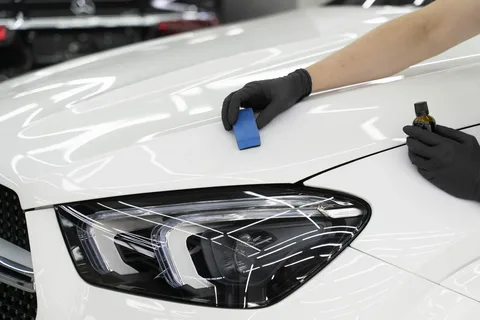
Choosing a way to protect your car's paint can feel like comparing apples, oranges, and armor plating. Wax, sealants, ceramic coatings, and paint protection film all promise a better finish, but they work differently and suit different drivers. This guide compares them side by side, explains where Ceramic coating treatment wins and where it falls short, and helps you match a product to your situation.
A ceramic coating is a liquid protective product, most often based on silicon dioxide, that bonds to a vehicle's paint as it cures. It forms a thin, hard, transparent layer with a slick, water-repelling surface. The layer is not paint and does not replace your clear coat. It acts as a sacrificial barrier that absorbs everyday wear, so the paint beneath is exposed to less of it.
Wax is the traditional choice. It sits on top of the paint and gives a warm, deep shine. It is cheap and easy to apply, but it wears away in weeks to a few months and must be reapplied often.
Sealants are synthetic polymers that last longer than wax, usually several months. They deliver a sharp, reflective gloss and are simple to apply, but they are less durable than a coating.
Coatings bond chemically with the surface and last far longer, from around a year for consumer products to several years for professional-grade options. They improve gloss, repel water and dirt, and make washing easier.
PPF is a transparent, flexible urethane film applied over the paint. It is the best option for physical protection against stone chips and light scratches, and some films can recover from minor marring. It is also the most expensive and requires professional installation.
|
Feature |
Wax |
Sealant |
Ceramic Coating |
Paint Protection Film |
|
Typical lifespan |
Weeks to months |
Months |
One to several years |
Several years |
|
Gloss |
Warm, deep |
Sharp |
Very glossy |
Varies by film |
|
Chip protection |
None |
None |
Minimal |
Strong |
|
Water repellency |
Moderate |
Good |
Excellent |
Good |
|
Ease of cleaning |
Fair |
Good |
Very good |
Good |
|
Application difficulty |
Easy |
Easy |
Moderate to hard |
Professional only |
|
Relative cost |
Low |
Low to moderate |
Moderate to high |
High |
Compared with wax and sealants, a coating requires far less frequent reapplication, saving time over the years.
Dirt, road film, and water spots do not cling as strongly to a coated surface, so washing is faster and gentler.
Coatings offer a protective layer against UV exposure, bird droppings, tree sap, and light chemical staining. These contaminants are common causes of dulling and etching on unprotected paint.
The clear, hard layer amplifies gloss and color depth, particularly on dark paint.
Professional paint correction helps restore a vehicle’s finish by reducing swirl marks, light scratches, oxidation, and other visible paint imperfections.
It is important to be honest about the limits.
Not a chip shield: Stones and debris can still damage paint. If chips are your main worry, PPF is the better tool.
Not scratch-proof: It resists light marring only slightly. Deep scratches remain deep.
Not maintenance-free: Regular, careful washing is still required.
Preparation-dependent: The coating locks in whatever paint condition lies beneath it, so imperfections must be corrected first.
Not permanent: Lifespan depends on product quality, application, climate, and care.
A ceramic coating is a strong choice. Protecting fresh factory paint from the start preserves its appearance, and easier cleaning pays off over years of ownership.
Consider PPF on high-impact areas such as the front bumper, hood, and mirrors, and add a ceramic coating over it for easier cleaning. This combination is popular among enthusiasts.
A quality sealant provides decent protection at a low cost. Reapply it every few months and wash carefully.
Wax offers satisfaction and a classic finish, though you will reapply it often.
Heavy sun, salty roads, and tree cover accelerate wear. Ceramic coating helps with UV and contaminants, and PPF protects against chips.
A clean, well-polished car may be enough. A full coating is less cost-effective if you will not enjoy the benefits for long.
Hot, sunny regions benefit from UV-resistant coatings, which help slow fading. Coastal areas face salt air, and cold regions deal with road salt, so frequent rinsing and a durable layer of protection are useful. Dusty or polluted environments increase the importance of regular washing, even on coated vehicles.
Whichever protection you choose, preparation is the foundation.
Wash thoroughly to remove loose dirt.
Decontaminate with a clay bar or iron remover to lift embedded particles.
Polish if needed to remove swirls and light scratches.
Wipe the panels with a panel-prep solution to remove oils.
Apply in a clean, shaded area and follow curing instructions.
Skipping these steps is the most common reason for disappointing results.
Use a pH-neutral shampoo and clean microfiber towels.
Avoid brush-style automatic car washes.
Remove bird droppings and bug residue promptly.
Refresh water-repelling performance with compatible spray toppers.
Inspect the surface regularly and book a professional check if beading fades sharply.
Ceramic coating is not the only way to protect paint, and it is not always the right one. Wax and sealants are affordable and simple, while paint protection film leads for physical protection. Ceramic coating sits in the middle, offering long-lasting gloss, easier cleaning, and chemical resistance. Match the product to your budget, driving conditions, and how long you plan to keep the car, and prepare the paint properly for the best results.
Professional detailing services can improve paint clarity, enhance the vehicle’s appearance, and leave the exterior looking smooth, clean, and well maintained.