Indonesia
 English
 Arabic
 French
 Spanish
 Portuguese
 Deutsch
 Turkish
 Dutch
 Italiano
 Russian
 Romaian
 Portuguese (Brazil)
 Greek
Understanding Hereditary Hair Loss and Treatment Options
Health |
2026-09-22 05:46:57
Alternative titles:
• Why Custom Boxes Are the Smartest Packaging Investment for Growing Brands
• Custom Boxes Explained: How the Right Packaging Turns First Impressions into Loyal Customers
Suggested meta description: Planning custom boxes for your brand? Learn how to choose the right material, size, printing and finish, plus tips for ordering sustainable packaging in the UK.
Before a customer touches your product, they touch the box it comes in. That moment, whether it happens on a shop shelf, a doorstep or in an unboxing video, shapes how they judge everything inside. That is why more UK businesses, from one-person online shops to established retailers, are moving away from plain stock cartons and investing in custom boxes.
But "custom" covers a lot of ground. Material, size, print method and finish all affect how a box looks, how well it protects, and what it costs. This guide walks through each decision so you can brief a packaging supplier with confidence and end up with boxes that actually work for your business.
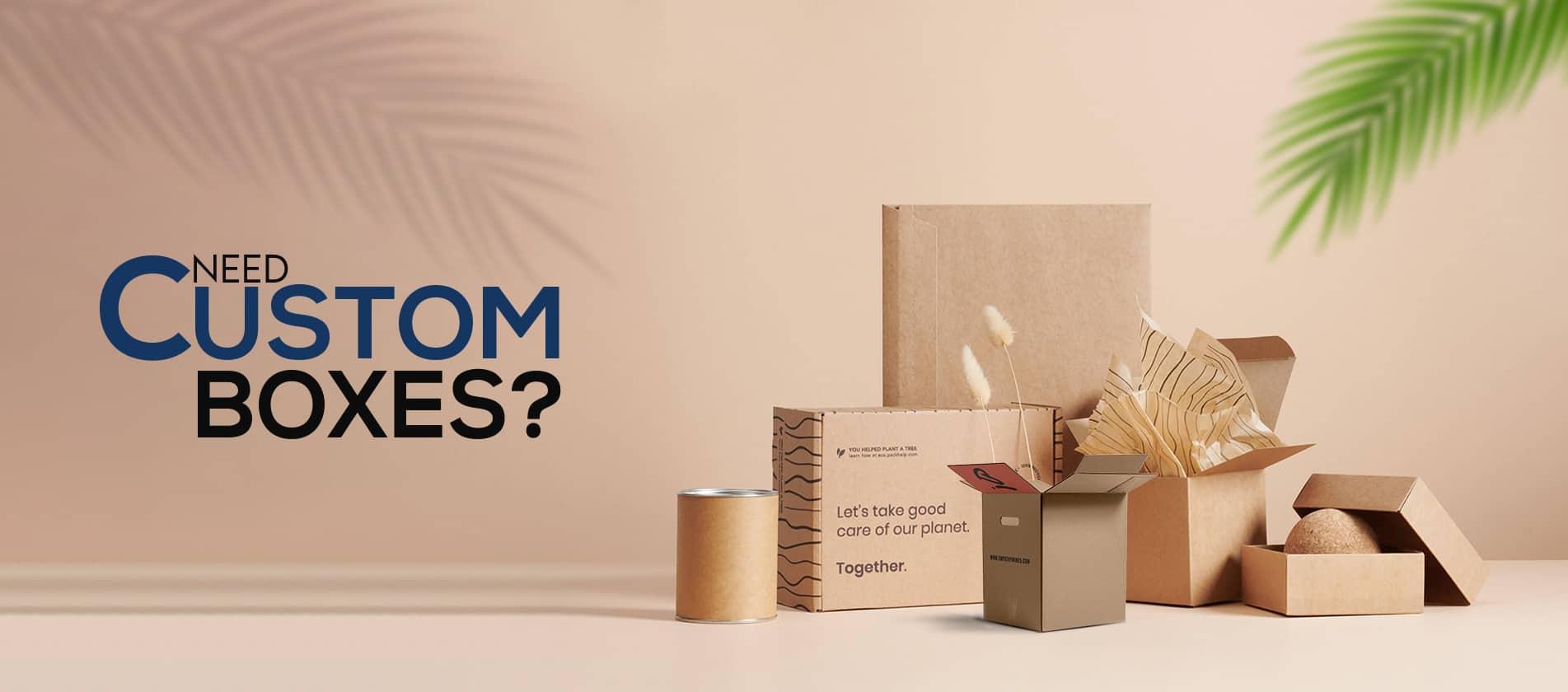
Custom boxes are packaging made to your specifications rather than picked from a catalogue of standard sizes. You choose the dimensions, structure, material, artwork and finishing. The result is a box that fits your product closely, carries your branding, and suits the way it will be sold, whether that is retail display, eCommerce shipping, subscription mailers or gift packaging.
First impressions drive repeat sales. For online brands especially, the box is often the first physical contact a customer has with you. A well-made, branded box signals care and quality before the product is even out.
Better protection means fewer returns. A box built to your product's exact dimensions leaves little room for movement, so you need less void fill and see fewer items damaged in transit.
Right-sized boxes cut shipping costs. Many couriers price parcels by size as well as weight. Shipping air in an oversized carton costs money on every order.
Every box is free advertising. Your packaging is seen by the customer, their household and, increasingly, their social media followers. A memorable box gets shared; a brown carton rarely does.
Consistency builds recognition. When your logo, colours and typography appear the same way on every box, customers start to recognise your brand at a glance.
The best material depends on what you sell and how far it travels.
• Kraft board: A natural brown, recyclable stock with an earthy, honest look. Popular with organic, handmade and eco-focused brands.
• Cardboard stock and paperboard: Lightweight with a smooth surface that takes print beautifully. Ideal for cosmetics, food, candles and retail cartons.
• Corrugated board: Has a fluted inner layer that gives it real strength. The standard choice for shipping boxes, mailer boxes and heavier products.
• Rigid stock: Thick chipboard wrapped in printed paper. It feels premium in the hand and suits jewellery, electronics, gift sets and luxury goods, though it costs more and does not fold flat for storage.
A simple rule: match the material to the journey. A box that sits on a shelf needs to look good; a box that goes through a courier network needs to survive being dropped.
Measure your product's length, width and height, including any inserts or protective wrapping, and give your supplier internal dimensions. Then think about structure. Common options include tuck-end cartons, roll-end mailers, two-piece lid-and-base boxes, sleeve-and-tray designs, magnetic closures and die-cut windows that show off the product. Custom inserts made from card or foam hold items in place and make the unboxing feel deliberate rather than accidental.
• Digital printing: Best for short runs, prototypes and quick turnarounds. There are no printing plates, so small orders stay affordable.
• Offset printing: The go-to method for larger runs. It delivers excellent colour accuracy, and the unit cost drops significantly as quantities rise.
• Screen printing: Great for bold, solid colours and simple designs, particularly on kraft or textured surfaces.
• Full-colour (CMYK) printing: Needed for photographs, gradients and detailed artwork.
Whatever method you choose, always ask for a proof before production, and supply Pantone references if exact brand colours matter to you.
Finishing is where custom boxes go from good to memorable. Embossing raises your logo off the surface, while debossing presses it in. Foil stamping adds metallic shine in gold, silver or holographic tones. Soft-touch lamination gives a velvety texture, matte lamination creates a clean, modern look, and gloss coating makes colours pop while adding light scuff protection.
A word of advice: one or two finishes used well almost always look better than every option stacked together.
UK shoppers increasingly expect brands to take packaging waste seriously, and regulations around packaging continue to tighten. The good news is that sustainable choices often save money too. Choose recyclable or recycled board, ask for water-based or vegetable-based inks, avoid mixing plastic windows with paper where possible, and right-size every box to reduce material use. Printing a short recycling message on the box helps customers dispose of it properly and shows your commitment.
1. Define the purpose and budget. Retail display, shipping and gifting all call for different specifications.
2. Measure carefully. Small errors in dimensions lead to loose or crushed products.
3. Request a sample. A physical prototype catches problems that look fine on screen.
4. Check your artwork. Use the supplier's dieline, include bleed, and supply high-resolution files.
5. Plan quantities. Unit prices fall as order volumes rise, so ordering slightly more can lower your overall cost.
6. Allow lead time. Production slows before peak seasons such as Christmas, so order early.
Look for a supplier that offers in-house design support, a wide range of materials, physical samples, transparent pricing and clear lead times. Working with a UK-based manufacturer usually means faster delivery and easier communication. For brands that want design, printing and finishing handled in one place, Custom Boxes UK produces custom boxes in kraft, corrugated, rigid and paperboard stocks, with a full range of print and finishing options for startups and large-scale orders alike.
Packaging is no longer just a container; it is part of your product and part of your brand. Well-planned custom boxes protect what you sell, cut waste and shipping costs, and give customers a reason to remember you. Start with the material and size, choose printing that suits your volumes, add a finish that reflects your brand, and you will have packaging that works as hard as the product inside it.