Indonesia
 English
 Arabic
 French
 Spanish
 Portuguese
 Deutsch
 Turkish
 Dutch
 Italiano
 Russian
 Romaian
 Portuguese (Brazil)
 Greek
What a Good SIP Trunk Provider Asks You First
Networking |
2026-10-28 12:43:23
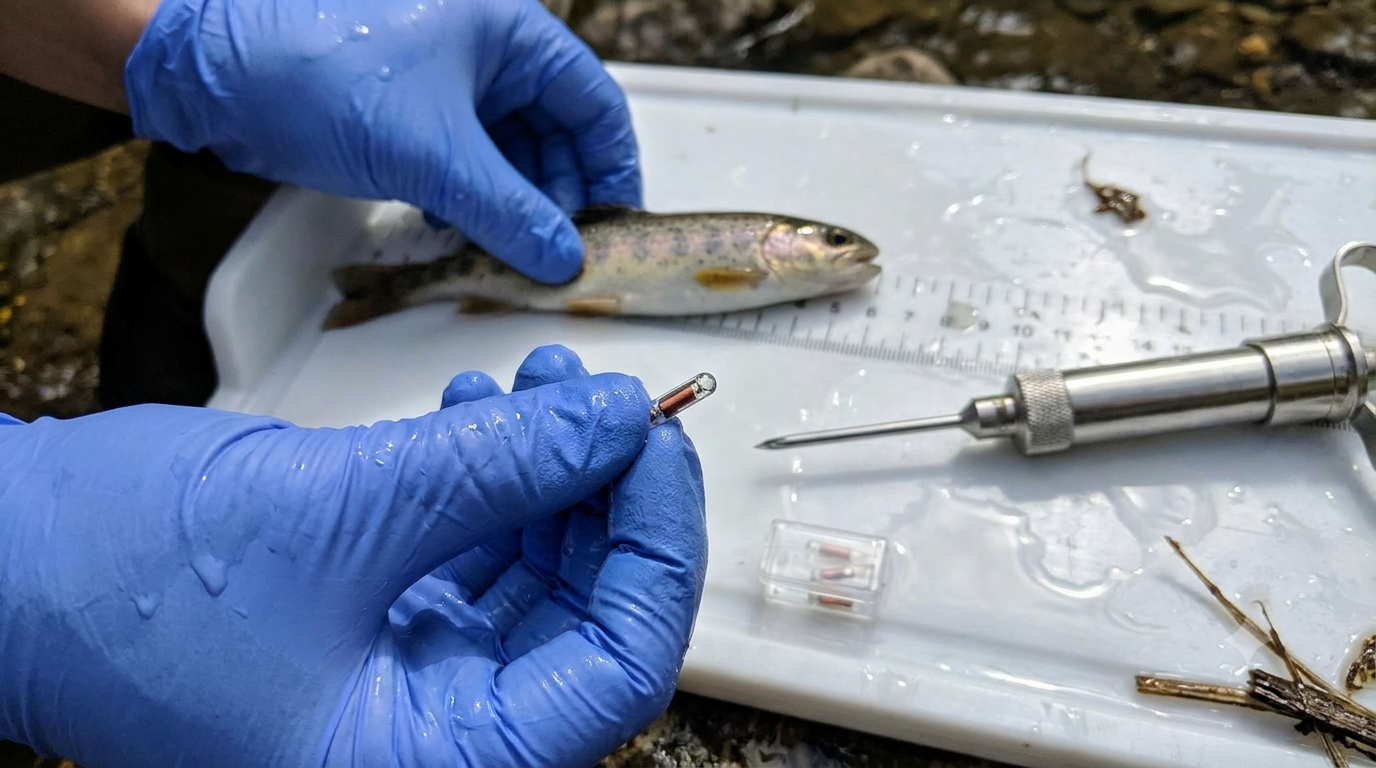
Fisheries research projects can generate information from field sampling, hatchery operations, identification equipment, laboratory measurements and monitoring activities. Each source contributes useful information, but the final dataset is only dependable when the records are complete, consistent and correctly connected.
A spreadsheet may contain hundreds or thousands of entries and still have problems that are difficult to notice at first glance. Some records may lack dates, others may use inconsistent location names, and a few may contain measurements entered in the wrong units. If these issues are discovered only when a report is being prepared, correcting them can take considerable time.
Well-planned fisheries software for organising research and monitoring records can support a more structured data workflow. However, software should be combined with a defined review process that explains what needs to be checked, who is responsible and how problems are resolved.
The purpose of data-quality review is not to make every dataset look perfect. It is to identify limitations, preserve accurate information and make sure that researchers understand the reliability of the records they use.
Data quality depends on the purpose of the research. A dataset used for individual fish monitoring may need different checks from one used for general hatchery stock summaries.
Start by identifying the requirements of the project. Consider which information must be present, which values are permitted and how records should be connected.
A useful review framework may consider five areas:
Completeness: Are the required fields present?
Consistency: Are the same formats and naming conventions used?
Accuracy: Can the recorded information be supported by the original observation or source?
Traceability: Can a record be connected to the correct fish, location and sampling event?
Timeliness: Was information entered and reviewed within the project's expected timeframe?
These areas provide a practical foundation. The project can add further checks depending on its research objectives and data-management requirements.
A data dictionary explains what each field means and how information should be recorded.
Without one, two teams may use the same field name differently. One person might enter a location abbreviation, while another uses the full facility name. Both entries may appear understandable to the individuals who created them, but they can create problems when the records are combined.
A data dictionary should define:
|
Field |
Definition or rule |
Example format |
|
Individual identifier |
Unique reference used by the project |
Approved ID format |
|
Project code |
Identifies the research programme |
Standard project code |
|
Location |
Approved sampling or facility reference |
Site code |
|
Sampling date |
Date of the observation |
Agreed date format |
|
Measurement |
Recorded biological value |
Numeric value |
|
Measurement unit |
Unit used for the measurement |
Agreed unit |
|
Operator |
Person responsible for the activity |
Staff identifier |
|
Record status |
Indicates whether the record is complete |
Approved status value |
The exact fields should reflect the project. Avoid adding information that serves no useful purpose, as unnecessarily complicated templates can increase data-entry mistakes.
A completeness review identifies records that are missing information required by the project.
For example, a measurement may be present without an individual identifier. A sampling event may have a date but no location. An electronic identification record may have been saved without the project reference needed to match it with the wider dataset.
Create a list of mandatory fields and check whether they are present.
The review should distinguish between different situations:
A field was accidentally left blank.
Information was not collected.
Information was collected but could not be confirmed.
A field is not applicable to that particular record.
These situations should not all be represented by the same placeholder. The project should define suitable values or status labels so that researchers can understand why information is missing.
Do not fill blank fields with invented values simply to make a dataset appear complete.
Inconsistent formats can make records difficult to compare.
A project may receive measurements from several teams, each using a different unit or number format. Date entries may also vary, making it difficult to sort records chronologically.
Define approved formats before data collection begins. If records arrive in different formats, use a documented conversion process and retain enough information to understand the original values.
Common areas to standardise include:
Dates and times.
Location names.
Species and stock references.
Measurement units.
Decimal precision.
Individual identification formats.
Project and sampling-event codes.
A standard format should be applied consistently across the complete project. If a format needs to change, document the change and explain how older records are handled.
Duplicate records can occur when information is imported more than once, entered by different staff members or transferred between systems.
A duplicate may be an exact copy, but it can also be a similar entry with a slightly different date or location. The review process should therefore consider the context of the record rather than relying only on identical text.
Useful checks include:
Identify repeated individual identifiers.
Compare dates and sampling-event references.
Check whether two entries describe the same observation.
Review the original source information.
Document the decision to retain, correct or flag a record.
Repeated identifiers are not automatically errors. The same fish may legitimately appear in several observations over time. The question is whether each entry represents a separate, valid sampling event.
This is why the individual identifier should be considered together with the date, location and observation reference.
A measurement that looks unusual should be investigated, not automatically removed.
An unusual value may reflect a genuine biological observation, a measurement error, a unit conversion problem or an incorrect data entry. The project needs a consistent process for determining which explanation is supported.
A review should consider:
The original field record.
The measurement method.
The units used.
The sampling date and location.
Other relevant observations.
The research protocol and review criteria.
If the value cannot be verified, flag it according to the project's rules. Preserve the original information and document any correction or exclusion.
This approach protects the research record and helps prevent valid observations from being discarded simply because they differ from expectations.
Projects using electronic identification need to verify that readings are associated with the intended individual fish and sampling event.
The identification number should not be treated as a complete record on its own. It needs to be connected with the appropriate project information, observation date and location.
A review may check:
Whether the identifier follows the project's format.
Whether the reading is associated with the correct project.
Whether the sampling-event information is present.
Whether the same observation has been imported more than once.
Whether uncertain readings are clearly flagged.
Whether the identification record matches the relevant field notes.
If a connection cannot be confirmed, the record should remain flagged for investigation. Staff should not assign an assumed identity simply to complete the dataset.
Data-quality review is useful only when identified problems can be handled consistently.
The organisation should define who is authorised to correct records, what evidence is required and how changes are documented.
A correction process should generally include:
Identifying the affected record.
Describing the issue.
Reviewing the original source.
Confirming the appropriate correction, if possible.
Recording who made the change and when.
Retaining the relevant history according to the data policy.
Some problems may require the project lead or data manager to approve a correction. Others may be handled by trained staff under an established procedure.
The organisation should also define how unresolved issues are reported. A record that remains uncertain should not be presented as fully verified.
Waiting until the end of a study to check data quality can make problems difficult to resolve. Staff may no longer remember the circumstances of a particular sampling event, and original notes may be harder to locate.
A better approach is to conduct reviews at planned stages.
For example:
After a sampling session: Check required fields and obvious omissions.
During regular project reviews: Look for recurring errors and inconsistencies.
Before data export: Confirm that records are structured correctly.
Before analysis: Review outstanding exceptions and document limitations.
Before final reporting: Confirm that the dataset version is the one approved for use.
The frequency should depend on project size, risk and the amount of information being collected.
A research project receives measurements from two field teams. One team records values in millimetres, while another uses centimetres.
The difference is not immediately obvious because both teams use the same column heading. During the review, the data manager identifies the inconsistency and checks the original records.
The project documents the conversion process, updates the data dictionary and provides both teams with a standard measurement template.
Future records are easier to compare because the unit is defined and recorded consistently.
A monitoring database contains several measurements without an individual identifier. The project team initially assumes that the reader did not capture the identification information.
A review of the original session records shows that some identifiers were saved separately but were not included in the data export. The team checks the available source records and reconnects only those observations that can be verified.
It also updates the export checklist so that required fields are checked before records are transferred.
This hypothetical example demonstrates a data-quality workflow and is not a real research publication or customer result.
A research team prepares a dataset for analysis after several months of fieldwork. During the initial review, staff identify missing location codes, inconsistent date formats and repeated records.
Instead of correcting the spreadsheet informally, the team creates an issue register. Each problem is assigned to a responsible person and reviewed against the original source.
The data manager documents approved corrections and flags observations that cannot be verified. The team then produces a reviewed dataset and retains the earlier version according to its data-management policy.
The process takes additional time, but it gives researchers a clearer understanding of the dataset and the limitations that need to be considered during analysis.
A suitable data-management platform can make it easier to organise records, maintain consistent fields and prepare information for review.
Voda IQ provides VodaTrak, an Android-based data-management solution for fisheries and wildlife research workflows. Its described capabilities include customisable data fields and export options, with integration possibilities involving compatible equipment such as Veloce Measuring Boards, R8BT and RT600 readers, and supported scales or barcode readers through Bluetooth Low Energy.
For a project evaluating software, these capabilities may be relevant when planning how identification readings and observations should be managed.
However, software features should be assessed against the organisation's actual review requirements. Confirm the supported equipment, available fields, export formats and data workflow before adopting a platform.
The project should also test the system using representative records. Check whether staff can identify incomplete information, export the required fields and maintain the correction process.
Data quality is an ongoing responsibility throughout a fisheries research project. It requires consistent field definitions, completeness checks, standardised formats, duplicate reviews and a documented process for correcting or flagging problems.
Suitable fisheries software can support this work by helping teams organise information and manage their data workflows. However, reliable results still depend on clear procedures, trained staff and regular review.
Build the process before the dataset becomes difficult to manage. Review information throughout the project, preserve original records and document unresolved limitations. This gives researchers a stronger foundation for analysis and reporting.
It is a structured check of research records to identify missing information, inconsistent formats, duplicates, unusual values and problems connecting observations with the correct fish or sampling event.
Reviews should take place at planned stages throughout the project. Checking records after sampling sessions and before data exports can help identify issues while the original information is still accessible.
Not automatically. Review the original information, measurement method and research context first. If a value cannot be verified, flag it according to the project's data policy.
They help different teams record information in a consistent way. This makes records easier to combine, review, export and analyse.
No. Software can support data organisation and validation, but it cannot guarantee that every observation is correct. Staff procedures, source verification and regular reviews remain essential.