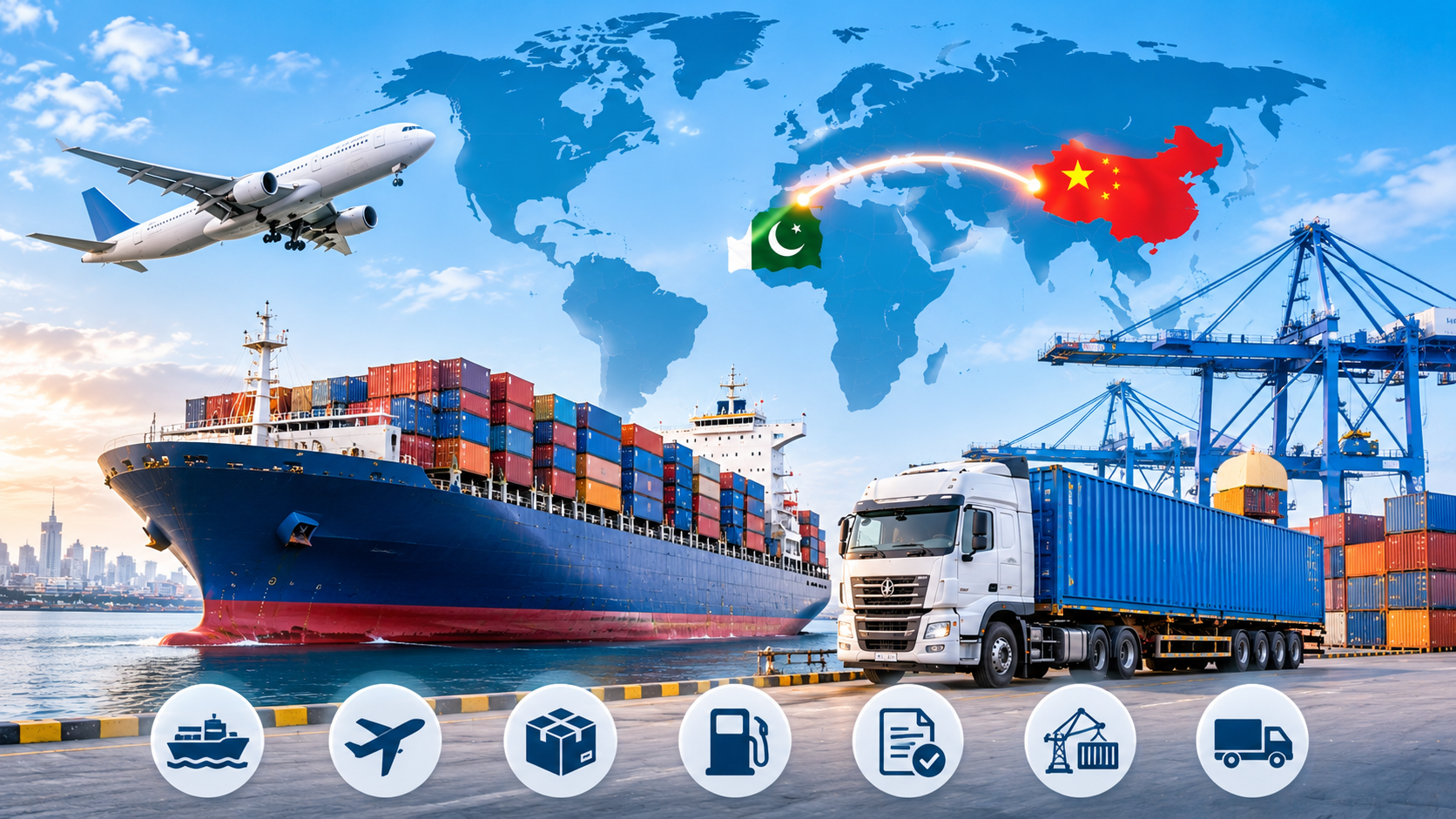
International cargo movement involves several connected decisions, from preparing goods at the supplier's warehouse to receiving them at the final destination. For businesses importing products, understanding the factors behind Cargo from China to Pakistan costs and delivery schedules makes it easier to plan purchases, manage stock, and estimate total import expenses. A shipment's price and arrival time are rarely determined by distance alone. Cargo characteristics, transport arrangements, documentation, customs requirements, and handling conditions can all influence the outcome.
The Supplier's Location Within China
The distance between a supplier's facility and the selected departure port or airport can affect both inland transportation expenses and preparation time. A factory located near major logistics hubs may have easier access to international shipping facilities, while suppliers in less-connected areas may require additional road or rail transportation.
The location also matters when goods are collected from multiple suppliers. If products come from different cities, they may need to be transported separately to a consolidation warehouse before international dispatch. This process can add handling expenses and extend the preparation schedule. Importers should therefore consider the supplier's location when requesting quotations rather than estimating costs only from the international freight rate.
Cargo from China to Pakistan: Weight, Volume, and Packaging
Cargo dimensions and gross weight play an important role in determining transportation charges. Freight providers assess shipments according to the pricing method used for the selected transport service. In air freight, chargeable weight commonly depends on whichever is greater: actual gross weight or volumetric weight. Sea freight pricing may consider cubic volume, container space, cargo weight, and the type of service selected.
Packaging can also influence the final calculation. Oversized cartons, unnecessary protective materials, and irregular shapes may increase the space required during transportation. However, reducing packaging without considering product protection can create damage risks. Importers should provide accurate carton dimensions, total weight, and packaging details before accepting a freight quotation.
Choosing Between Air Freight and Sea Freight
The transportation method has a direct effect on shipping costs and expected transit time. Air freight is generally selected when products are needed quickly, have relatively low volume, or carry a higher value compared with their weight. Sea freight is often considered for larger commercial shipments where a longer delivery schedule is acceptable.
Each option has different cost components. Air shipments may involve chargeable weight, airline handling, and airport-related charges. Sea shipments can include ocean freight, container-related expenses, port handling, and inland transportation. The best choice depends on product requirements, shipment size, budget, and inventory deadlines rather than simply selecting the lowest quoted rate.
Customs Classification and Import Requirements
Every imported product must be identified under the appropriate customs classification. Its classification can affect applicable duties, taxes, regulatory requirements, and the documents needed for clearance. Incorrect product descriptions or inaccurate tariff classifications may lead to additional checks, revised assessments, or delays.
Pakistan's import requirements can vary depending on the product category and applicable regulations. Some goods may require permits, certificates, approvals, or compliance with specific standards. Importers should verify the current requirements before dispatching their orders. Understanding these obligations early helps prevent unexpected expenses and reduces the possibility of cargo remaining uncleared because of incomplete compliance.
Seasonal Demand and Available Shipping Capacity
Shipping prices and schedules can change during periods of increased international trade activity. Major shopping seasons, public holidays, factory shutdowns, and periods of high export demand may affect cargo availability in China. When many businesses arrange shipments at the same time, space at warehouses, airports, and seaports can become limited.
Higher demand may result in increased freight rates or longer waiting periods before dispatch. Production delays around holiday periods can also affect when goods are ready for collection. Businesses importing seasonal products should discuss expected production and dispatch dates with suppliers in advance and allow flexibility in their inventory plans.
The Responsibilities Included in a China to Pakistan DDP Service
A
China to Pakistan DDP service can affect how import expenses are calculated and which party handles different stages of transportation and import clearance. Under Delivered Duty Paid (DDP) Incoterms® 2020, the seller generally assumes responsibility for arranging delivery to the agreed destination and handling import clearance, including applicable duties and taxes, subject to the agreed terms and legal requirements.
However, importers should not assume that every service advertised as DDP includes identical arrangements. The quotation should explain the named destination, included charges, customs responsibilities, and any exclusions. It is also important to confirm that the parties involved can legally perform their assigned import responsibilities in Pakistan. Clear terms help businesses understand the total expected expense and avoid disputes over charges that were not included in the original agreement.
Port, Airport, and Terminal Handling Charges
International freight costs are only one part of the total transportation expense. Cargo may also incur charges for loading, unloading, warehouse handling, terminal operations, screening, documentation, and storage. The applicable charges depend on the shipment type, transport route, service provider, and facilities used.
Additional expenses may arise when cargo is not collected within the permitted storage period or when extra handling is required. For sea freight, container-related charges can become important if clearance or collection takes longer than expected. Importers should ask for a breakdown of origin and destination charges so that they can compare complete quotations rather than relying on the headline freight price.
The Final Delivery Location in Pakistan
The destination address can influence both transportation costs and the overall delivery schedule. Cargo arriving at Karachi may need further transportation to Lahore, Islamabad, Faisalabad, Peshawar, or another commercial centre. The distance from the arrival terminal, road conditions, vehicle availability, and delivery arrangements all contribute to the final cost.
Remote locations or destinations with limited transport access may require additional coordination. Large or heavy shipments can also need specialized vehicles and suitable unloading facilities. Importers should provide the complete delivery address when requesting estimates because a port-to-port quotation does not necessarily include transportation to the buyer's warehouse.
Documentation Accuracy and Communication Between Parties
Incomplete or inconsistent shipment records can create avoidable problems during transportation and customs processing. Commercial invoices, packing lists, transport documents, product descriptions, and consignee details should accurately reflect the actual shipment. Differences in quantities, declared values, or product information may require clarification before cargo can proceed.
Communication is equally important when suppliers, freight providers, customs representatives, and importers are working in different locations. A delay in sharing corrected documents or confirming shipment details can affect the entire schedule. Businesses can reduce administrative problems by reviewing paperwork before dispatch and ensuring that all parties have the same shipment information.
Unexpected Disruptions and Changes During Transit
Even carefully planned shipments can face circumstances that affect their original schedules. Severe weather, port congestion, flight changes, route disruptions, inspections, and operational restrictions may influence transportation progress. These events can increase waiting periods and, in some situations, create additional handling or storage expenses.
Importers should avoid treating estimated transit times as guaranteed delivery dates. A practical approach is to maintain a reasonable time allowance, especially when goods are required for production or seasonal sales. Businesses can also discuss alternative transport arrangements and communication procedures with their logistics provider before the cargo leaves the supplier's premises.
Comparing Common Factors That Influence Cargo Costs and Timing
| |
|
|
| Supplier location |
Inland collection and transportation expenses |
Longer collection or consolidation |
| Weight and dimensions |
Higher chargeable weight or space usage |
Additional handling for unusual cargo |
| Shipping method |
Different air, sea, and handling rates |
Different transit durations |
| Customs requirements |
Duties, taxes, permits, and compliance expenses |
Inspections or document-related delays |
| Seasonal demand |
Higher freight and handling rates |
Limited capacity and waiting periods |
| DDP arrangements |
Depends on included services and responsibilities |
Depends on clearance and delivery coordination |
| Destination address |
Inland delivery and vehicle costs |
Longer final-mile transportation |
| Documentation |
Correction or administrative expenses |
Delays caused by missing or inconsistent records |
Frequently Asked Questions
1. What is the biggest factor affecting cargo costs from China to Pakistan?
There is no single factor for every shipment. Cargo weight, volume, transport method, customs requirements, and destination charges can all influence the final price. The relative importance of each factor depends on the goods and the shipping arrangement.
2. Is air freight faster than sea freight from China to Pakistan?
Air freight generally has a shorter transportation period than sea freight. However, total delivery time also includes supplier preparation, collection, export procedures, customs clearance, and final delivery. The actual schedule depends on the route and service selected.
3. Why can the final shipping cost be higher than the initial quotation?
An initial quotation may cover only international freight. Additional expenses can include origin handling, destination terminal charges, customs duties, taxes, storage, documentation, and inland transportation. A detailed quotation helps identify which services are included and which are billed separately.
4. Does DDP shipping include customs duties in Pakistan?
Under DDP Incoterms® 2020, the seller is generally responsible for import clearance and applicable duties and taxes. However, the agreed named destination and the parties' legal ability to perform these responsibilities must be confirmed before shipment.
5. How can importers reduce avoidable shipping delays?
Importers can improve planning by confirming supplier readiness, providing accurate cargo measurements, checking product-specific import requirements, reviewing documents before dispatch, and allowing sufficient time for customs and final delivery.
Conclusion
Cargo costs and delivery schedules between China and Pakistan depend on several connected factors rather than one fixed shipping rate. Supplier location, cargo dimensions, transport selection, customs classification, seasonal demand, terminal handling, and the final delivery address all contribute to the overall process. Businesses can make better import decisions by requesting itemized quotations, verifying regulatory requirements, and confirming responsibilities before dispatch. A clear understanding of these details helps importers estimate expenses more realistically and plan their supply chains with fewer unexpected interruptions.
 Indonesia
 English
 Arabic
 French
 Spanish
 Portuguese
 Deutsch
 Turkish
 Dutch
 Italiano
 Russian
 Romaian
 Portuguese (Brazil)
 Greek