Indonesia
 English
 Arabic
 French
 Spanish
 Portuguese
 Deutsch
 Turkish
 Dutch
 Italiano
 Russian
 Romaian
 Portuguese (Brazil)
 Greek
Nieuwe inzichten in Domeinnaam Registreren: nooit eerder onthuld
Networking |
2026-07-29 06:53:47
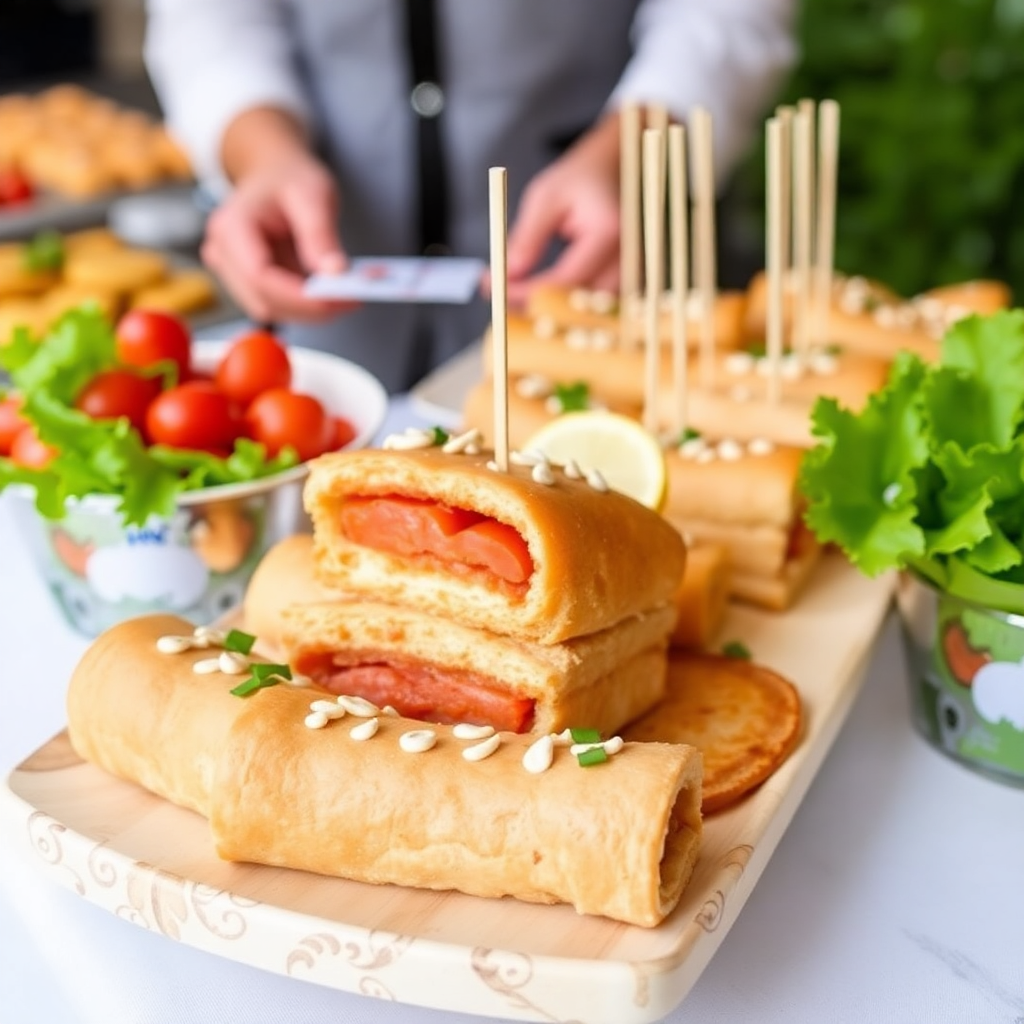
Small food doesn't mean small effort. Plenty of hosts assume that a few trays of mini pies, some skewers and a cheese board will take care of themselves, because nobody has to sit down and nobody needs cutlery. It's the reverse. A plated dinner forgives a lot, since every guest gets the same portion at the same moment. Food served on trays and eaten standing up has no such safety net. Quantities, timing, texture, allergens and staffing all have to be right, or guests are hungry by 7.30pm and holding a soggy spring roll with nowhere to put it.
The most common mistakes in finger food catering are ordering too few pieces per guest, choosing a menu built for a plate rather than a hand, overlooking dietary needs, and leaving service timing to chance. Get those four right and the rest of the event runs far more smoothly.
Here's the sequence behind a good function. The caterer prepares most items in a commercial kitchen, then delivers them cold or part-cooked. Hot items are finished on site in an oven or combi oven, and staff send them out in waves. Canapés are the one-bite items, such as a tartlet or a blini. Fork food is the heartier option, like a slider, a noodle box or a small bowl of risotto. Most events blend both.
Final guest numbers are usually locked about a week out, because the kitchen orders to that figure. Menus are settled well before that.
Under-ordering is the mistake guests notice most. People will forgive a plain sausage roll. They won't forgive an empty tray an hour in.
Caterers generally work from pieces per person. A two-hour cocktail function before a dinner calls for far less than a function that is the dinner. If the food is replacing a meal, say a 6pm start with no sit-down to follow, you're feeding people a full meal in small portions, and that means a much longer menu and more substantial items. Say so plainly when you enquire.
Remember who's coming. A group of footballers after a grand final eats differently from a lunchtime baby shower. A caterer who asks about the crowd, the start time and the drinks is doing the job properly.
Can your guest eat it with one hand, standing, without wearing it?
That's the test, and plenty of menus fail it. Wet dumplings with a pool of dipping sauce, anything needing a knife, and whole prawns with the tails still on all leave guests hunting for somewhere to put the debris. Fried items go limp if they sit under cling film for twenty minutes. Cold seafood in a marquee in January is a gamble.
Balance matters too. Three kinds of pastry and nothing fresh leaves a table feeling heavy. Aim for a spread of textures and temperatures, a few light cold items, a few hot ones, something sweet to finish, and at least one thing that's properly filling.
And bring napkins, small bins and a clear place for toothpicks and skewers. It's an unglamorous detail that rescues a lot of evenings.
Guessing is how people end up in the emergency department. Collect dietary information with the RSVP, not on the day. Ask about coeliac disease, nut and shellfish allergies, vegetarian and vegan guests, and halal or kosher requirements.
Then pass it on in specifics. "A couple of vegos" tells the caterer little. "Four vegan, one coeliac, one severe tree nut allergy" lets them plan separate preparation, because cross-contact (traces of an allergen transferring from shared surfaces, oil or utensils) is the real risk, not just the ingredient list.
Ask for items to be labelled on the tray or with small cards. Staff should also know what's in each item when a guest asks. Gluten-free and vegan guests shouldn't be left with a lone fruit plate while everyone else eats well.
So how much should you budget? There's no single figure, because cost per head moves with the menu, not just the guest count.
Prices rise with premium ingredients like scallops and lamb, with hot items that need on-site finishing, and with the number of different items. Staffing is the other big driver. Wait staff are usually charged by the hour with a minimum shift, and a Saturday night in December costs more than a Tuesday lunch. Delivery distance, equipment hire (platters, linen, chafing dishes, glassware) and public holiday surcharges all add up.
Ask for an itemised quote. A low per-head price that leaves out staff and hire often ends up costing more than a package that includes both.
The venue decides more than hosts expect. Before booking, check these.
A hall with no kitchen means the menu has to be built around cold items or a mobile setup. It's far better to know that in week one than on the afternoon.
Staffing is the next gap. One waiter for every 25 to 30 guests sounds reasonable until the first rush. Without enough staff circulating, guests crowd the table where the food is, and the far side of the room never sees a tray. Working with an established catering group usually means you get a staffing recommendation based on the venue and the guest list, rather than a guess.
Food safety matters here as well. Use a caterer who runs a registered food business with their local council, and ask how they keep hot food hot and cold food cold during service.
Popular caterers book out for peak season, particularly November and December and long weekends. A month's notice is comfortable. A fortnight is a scramble.
If the event is large or the budget is real, book a tasting. It's the one chance to check seasoning, portion size and how an item holds up after twenty minutes. Ask, too, how the caterer handles a late guest-number change, since most set a cut-off.
Good finger food depends on planning. Order enough pieces for the time of day and the crowd. Choose items that work in one hand. Collect dietary details early and pass them on exactly. Compare itemised quotes, check the venue's kitchen and power, and book early enough to taste the food. Do those things and the food stops being a worry and becomes the reason people stay.
How far ahead should I book a caterer for a party?
Four to six weeks suits most events. Book earlier for December, long weekends and weddings, as popular caterers fill those dates early.
How many different items should be on the menu?
Five to eight varieties works for most functions under 50 guests. More than that adds cost and complexity without improving the night.
Is finger food cheaper than a sit-down dinner?
Not always. You save on tables and plated service, but a long menu of detailed canapés and the extra wait staff can cost as much as a simple seated meal.
Do I need wait staff, or can guests help themselves?
Staff are worth having for anything over about 30 guests. Self-serve platters suit smaller, casual gatherings, but they empty unevenly and need topping up.
How long can food safely sit out?
Perishable food shouldn't sit at room temperature for more than two hours, and less in hot weather. Ask your caterer to bring out cold items in stages rather than all at once.
Can I mix catered food with dishes I make myself?
Yes, and it's a good way to save money. Let the caterer know so the menu doesn't double up, and keep homemade items out of allergy-sensitive areas.
Should I feed children differently?
Children usually do better with simple items like sliders, fruit cups and mini sausage rolls. Mention the number of kids when you enquire so the caterer can portion accordingly.
What if guest numbers change at the last minute?
Most caterers set a final-numbers date about a week before. After that, small increases are often possible, but cuts rarely reduce the bill.