Indonesia
 English
 Arabic
 French
 Spanish
 Portuguese
 Deutsch
 Turkish
 Dutch
 Italiano
 Russian
 Romaian
 Portuguese (Brazil)
 Greek
Rhinoplasty for Understanding Cartilage Grafts in Nose Surgery
Health |
2026-10-22 12:22:19
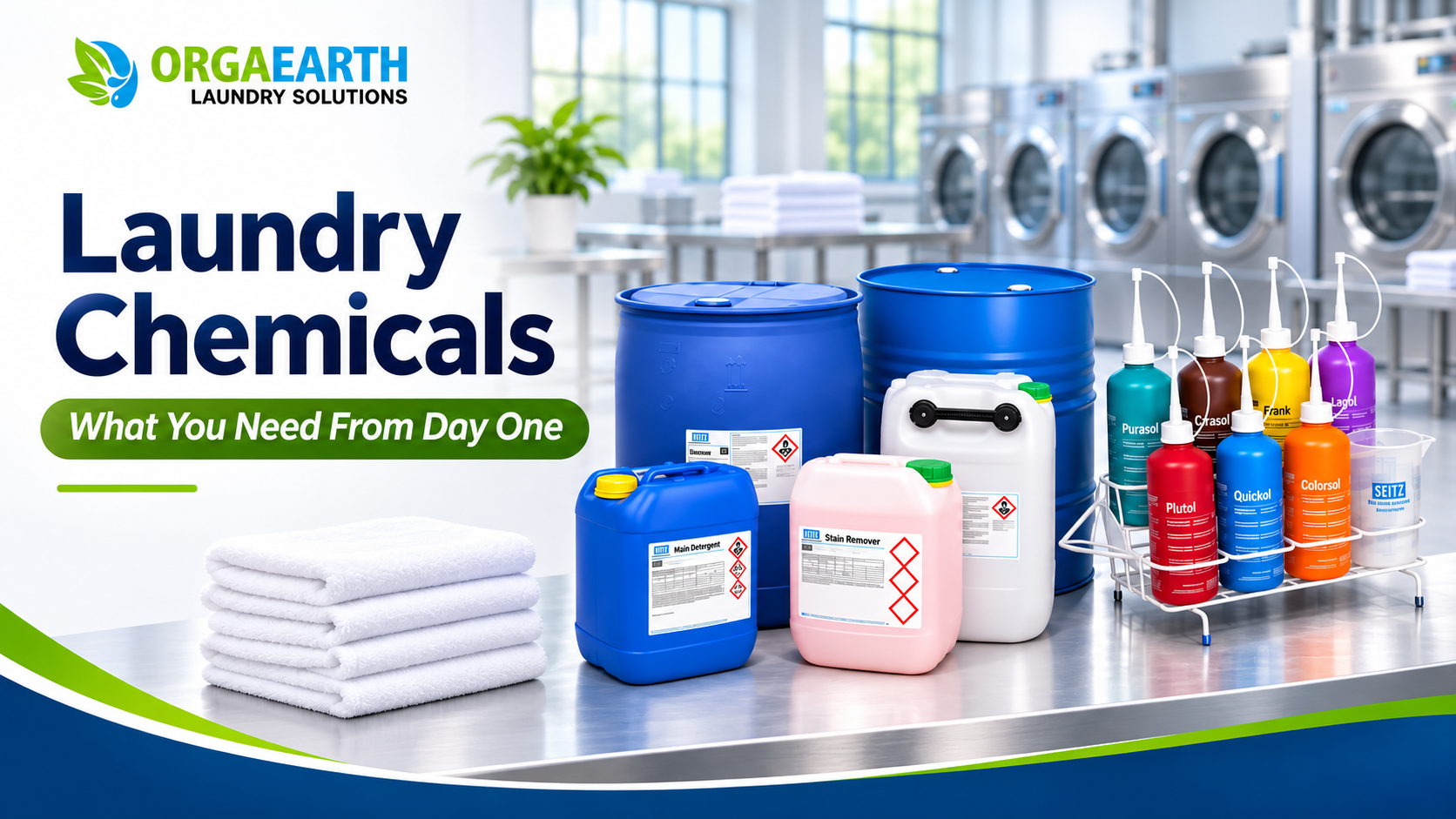
Starting a laundry business in India involves several decisions, from selecting commercial washing machines to choosing a location and estimating daily operating expenses.
But what happens after your machines are installed and the first customer brings in a bag of clothes?
You need the right cleaning products to deliver professional results.
Many new laundry owners invest heavily in equipment but give little attention to the laundry chemicals required for regular operations. Some purchase too many products, while others depend on one detergent for every fabric and stain.
Both approaches can create problems with cleaning quality, chemical consumption, and operating costs.
If you are planning to open a laundromat, wash-and-fold shop, or commercial laundry facility, understanding your chemical requirements before opening can help you establish a more reliable operation.
A commercial laundry handles different types of garments and linen every day.
Cotton shirts, towels, bedsheets, uniforms, and delicate fabrics may require different washing conditions.
Ordinary household detergents are not always suitable for professional washing programmes, particularly when machines operate repeatedly throughout the day.
Professional laundry chemicals are formulated for specific cleaning applications and can support consistent results when used according to the manufacturer's instructions.
The correct chemical programme can help businesses:
Improve stain and soil removal
Reduce unnecessary rewashing
Maintain linen and garment appearance
Control chemical consumption
Standardise washing processes
However, not every laundry requires the same products. Your initial chemical inventory should depend on the services you plan to offer.
A professional detergent is the foundation of most water-based laundry operations.
It removes everyday dirt, body oils, and other soils from washable garments and textiles.
For a new laundry business, detergent selection should depend on fabric type, water quality, washing temperature, and machine compatibility.
For example, a wash-and-fold shop handling everyday clothes may require a different cleaning programme from a commercial facility processing heavily soiled restaurant uniforms.
When choosing a detergent, evaluate its recommended dosage, cleaning performance, compatibility with your machines, and cost per kilogram of laundry.
Avoid selecting products based only on the price of the container.
Customers expect more than basic washing when they visit a professional laundry.
Garments may arrive with food stains, grease, coffee, tea, cosmetics, or ink marks that require individual attention.
This is where professional spotting and stain-removal chemicals become useful.
Different products are designed for different stain categories.
For example, oily stains may require suitable degreasing formulations, while tannin-based stains may need a different treatment approach.
A startup does not necessarily need every specialised stain remover immediately.
Begin with products suitable for the stains most likely to occur in your chosen customer segment.
Employees should be trained to identify stains, check garment care instructions, test compatibility, and follow manufacturer-approved treatment procedures.
Incorrect spotting can damage fabric or cause permanent colour changes.
Customers often evaluate laundry quality through cleanliness, fabric feel, and overall presentation.
Fabric softeners and conditioners can help achieve specific finishing characteristics for suitable textiles.
They may be useful for selected garments, bedsheets, and other washable items.
However, softeners should not be applied automatically to every load. Certain towels, performance fabrics, and specialist textiles may require restricted or no softener use.
A new laundry business should select conditioning products according to its actual fabric mix and customer requirements.
Using the correct quantity is important because overdosing can increase costs and leave unwanted residues.
A business processing white bedsheets, uniforms, or hospitality linen may require bleaching or whitening products.
These chemicals support particular stain-removal and whiteness-maintenance programmes.
However, bleaching agents must be selected carefully.
The wrong product or concentration can damage coloured fabrics, weaken fibres, or cause unwanted discolouration.
Some commercial laundry programmes use oxygen-based bleaching products, while others use chlorine-based systems where appropriate.
The correct choice depends on the fabric, machine programme, product instructions, and required cleaning standard.
Bleach should never be mixed with other chemicals unless the manufacturer explicitly authorises the procedure.
For a general wash-and-fold startup, specialised bleaching products can be added according to actual service requirements rather than purchased automatically.
Some professional washing programmes use alkaline detergents or builders to remove difficult soils.
A neutralising agent, commonly called a laundry sour, may be used during the final rinse to help control residual alkalinity.
This is particularly relevant in certain commercial and institutional laundry operations.
However, not every detergent programme requires a separate neutraliser.
A new business should follow the complete chemical programme recommended for its equipment, water conditions, and products.
Purchasing neutralisers without understanding their purpose can create unnecessary expenses or chemical imbalances.
Entrepreneurs planning to offer premium garment care may require specialist wet-cleaning products.
Professional wet cleaning uses controlled water-based processes, suitable chemicals, and appropriate machine programmes for selected sensitive textiles.
It can expand the service offering beyond everyday washable garments.
However, wet cleaning is not automatically suitable for every delicate garment.
If your business plans to handle wool, silk, designer clothing, or other sensitive fabrics, evaluate the full process before purchasing specialist chemicals.
These products may not be necessary for a basic wash-and-fold operation.
Instead of ordering a large inventory, create a starter kit based on the services your business will provide.
|
Chemical Category |
Startup Priority |
|
Professional laundry detergent |
Essential for most water-based washing businesses |
|
Basic stain-removal chemicals |
High priority |
|
Fabric softener or conditioner |
Based on fabric and service requirements |
|
Bleaching and whitening products |
If processing compatible white textiles |
|
Neutralising agent |
If required by the selected wash programme |
|
Wet-cleaning chemicals |
If offering professional wet cleaning |
|
Specialist spotting products |
Add according to customer demand |
For example, a small retail laundry primarily washing everyday clothes may start with a simpler chemical programme.
A hotel laundry processing large quantities of white linen may require a more structured combination of detergents, bleaches, neutralisers, and finishing products.
The objective is to purchase what your business actually needs, not every chemical available in the market.
Chemical expenses depend on the daily washing volume, product concentration, soil level, and recommended dosage.
To estimate monthly chemical consumption, begin with your expected processing capacity.
Suppose your startup plans to wash 100 kg of laundry per day and operate 26 days monthly.
Monthly laundry volume = 100 × 26 = 2,600 kg
Now assume your selected chemical programme has an illustrative total chemical cost of ₹4 per kilogram.
Estimated monthly chemical cost = 2,600 × ₹4 = ₹10,400
This is only a calculation example, not a verified market price or supplier quotation.
Actual expenses may be higher or lower depending on the chemicals used, dosage, water quality, and textile requirements.
It is advisable to obtain product quotations and calculate chemical cost per kilogram before finalising service prices.
Also remember that chemical expenses are only one part of the total laundry processing cost.
A new laundry business can lose money through poor chemical handling even when it purchases suitable products.
Avoid overdosing: Using more detergent than recommended does not necessarily improve cleaning and can create rinsing problems.
Separate laundry correctly: White, coloured, delicate, and heavily soiled textiles may require different washing programmes.
Monitor water quality: Hard water and other unsuitable water conditions can influence cleaning performance and chemical requirements.
Train operators: Staff should understand chemical identification, safe handling, machine programmes, and approved dosage instructions.
Maintain inventory records: Track product consumption, stock levels, and purchase frequency.
As business volume increases, a compatible automatic chemical dosing system may help maintain more consistent dispensing.
These practices can make chemical expenses easier to predict.
Choosing the right chemical programme is an important part of preparing a commercial laundry business.
OrgaEarth Laundry Solutions supplies professional laundry chemicals in India for laundromats, hotels, hospitals, dry cleaners, and commercial laundry facilities.
Its product range includes professional detergents, bleaching agents, fabric conditioners, wet-cleaning products, and specialised stain-removal chemicals.
OrgaEarth also offers chemical dosing solutions and guidance on selecting products according to fabric categories, machine requirements, and operating conditions.
Whether you are establishing a small laundry shop or planning a larger commercial facility, evaluating suitable chemicals before opening can help you manage washing quality and operating expenses more effectively.
Starting a laundry business requires more than machines, shop interiors, and marketing.
The products used in every wash cycle influence cleaning results, fabric care, and recurring operating expenses.
Professional laundry chemicals such as detergents, spotting products, conditioners, and other specialised formulations should be selected according to your business model.
Begin with the essential products, estimate chemical consumption per kilogram, train your staff, and expand your inventory as customer demand grows.
A practical chemical purchasing plan can help you avoid unnecessary investment while establishing consistent laundry operations from day one.
Most water-based laundry businesses need a suitable professional detergent and appropriate stain-removal products. Softeners, bleaches, neutralisers, and specialist chemicals depend on the textiles and services offered.
Use a detergent approved for the machine and washing programme. Household products may have unsuitable foaming or dosing characteristics for certain commercial equipment.
The cost depends on product pricing, concentration, dosage, fabric type, soil level, and water conditions. Divide total chemical consumption cost by the kilograms processed to calculate the actual cost per kg.
Not always, but some washing programmes require different products. Bleaching and whitening chemicals must be selected according to fabric and colour compatibility.
No. Conventional laundry chemicals are typically used in water-based washing, while solvent-based dry cleaning requires chemicals compatible with the particular dry-cleaning system.
Professional chemical suppliers such as Orgaearth provide commercial detergents, fabric conditioners, spotting products, and other laundry chemicals. Buyers should confirm product suitability and recommended dosages before purchasing.
Orgaearth Laundry Solutions
Plot no 774 Udyog Vihar, Phase 5, Gurugram, Haryana, India-122016
Email: marketing@orgaearth.com
Contact No.- +91 7042912777