Indonesia
 English
 Arabic
 French
 Spanish
 Portuguese
 Deutsch
 Turkish
 Dutch
 Italiano
 Russian
 Romaian
 Portuguese (Brazil)
 Greek
Looking for Vegetable Display Stands in the UK? Which Options Are Best for Your Store?
Shopping |
2026-10-29 10:40:37
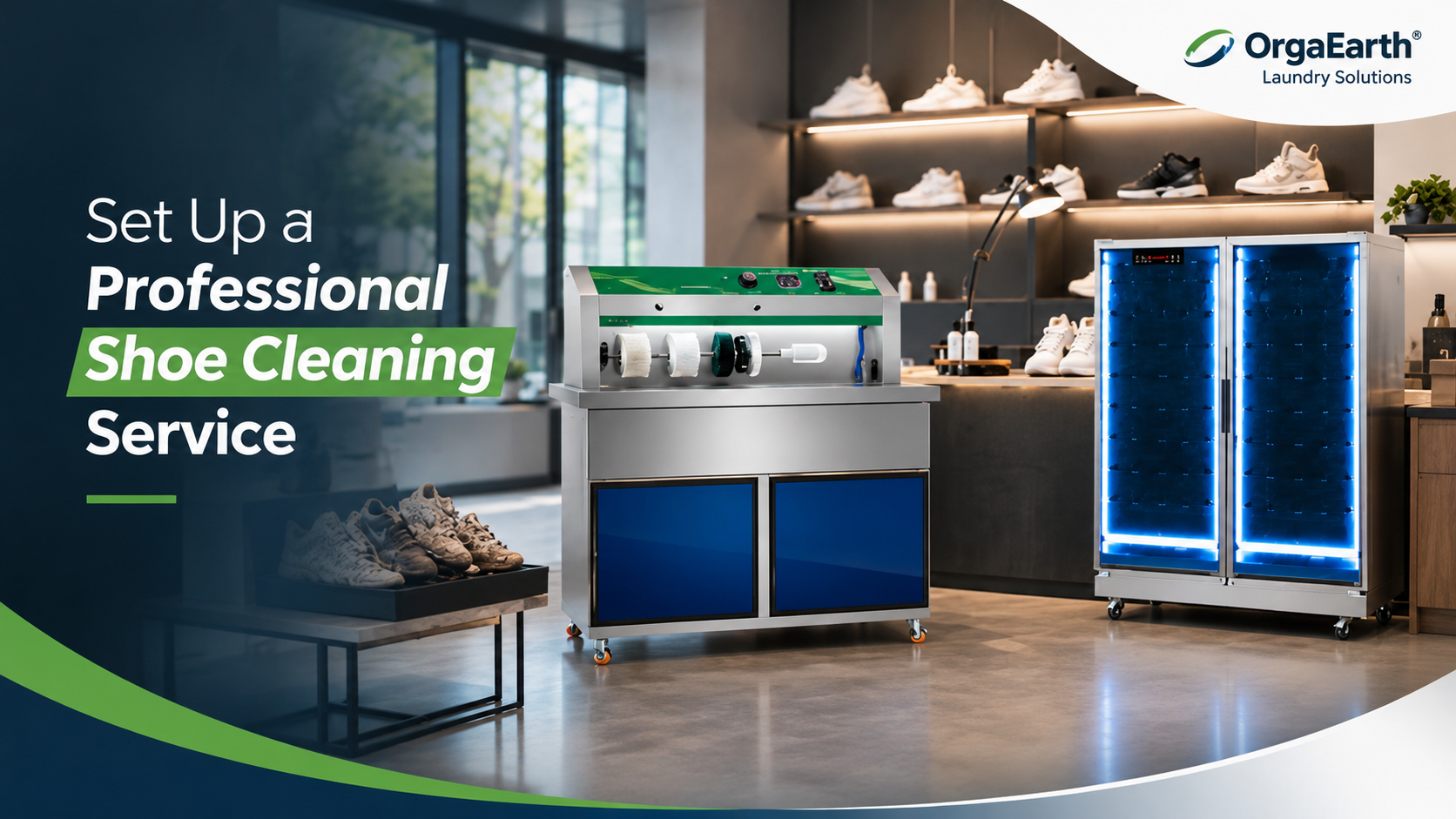
Your shoe-cleaning business is receiving 20 pairs every day. Orders are increasing, manual cleaning takes time, and customers expect their footwear back quickly.
At this stage, buying a shoe-cleaning machine might seem like the next step.
But will professional equipment reduce your expenses, improve productivity and recover its purchase cost?
The answer depends on more than daily orders. Footwear materials, machine capacity, labour requirements, drying time and service pricing all influence the decision.
Before investing, compare how much your current process costs with what a machine-assisted operation could realistically deliver.
Professional footwear-cleaning equipment is designed to support repeatable cleaning processes for suitable shoes.
Depending on the machine, features may include rotating brushes, adjustable water flow, spraying systems and controlled cleaning functions.
These systems can reduce repetitive manual work, especially when businesses regularly handle compatible sports shoes and everyday footwear.
However, a machine doesn't eliminate the need for inspection, stain treatment, finishing or quality checks.
Commercial footwear washing is also different from shoe polishing or automatic sole cleaning.
Understanding what the equipment actually does is important before comparing prices.
Twenty customer orders do not necessarily mean 20 pairs can enter the machine.
Some shoes may require specialist treatment because of their materials or construction.
Consider this hypothetical workload:
|
Daily Processing Requirement |
Example |
|
Total shoes received |
20 pairs |
|
Suitable for machine-assisted cleaning |
15 pairs |
|
Requiring alternative cleaning |
5 pairs |
|
Assumed practical batch capacity |
5 pairs |
|
Machine batches needed |
3 |
This is an illustrative calculation, not the rated capacity of a particular model.
Actual output depends on the machine's approved loading method, cleaning process and operating time.
You must also allow for pretreatment, inspection, drying and packaging.
Manual cleaning may suit a smaller business handling occasional orders or delicate materials.
It allows operators to work on individual stains and apply specific cleaning techniques.
Machine-assisted processing may become useful when the same types of compatible footwear arrive regularly.
|
Factor |
Manual Cleaning |
Machine-Assisted Cleaning |
|
Initial investment |
Usually lower |
Higher equipment cost |
|
Labour |
More hands-on work |
May reduce repetitive tasks |
|
Material suitability |
Flexible specialist methods |
Limited by approved applications |
|
Production |
Operator-dependent |
Depends on machine and workflow |
|
Maintenance |
Basic tools and supplies |
Equipment servicing required |
Neither method is suitable for every situation.
The best operation may combine professional machinery with skilled manual cleaning.
The price depends on the equipment's design, cleaning functions, capacity and supplier.
An automatic footwear washer, a manual brushing station and a sole-cleaning machine are different products and should not be compared as identical equipment.
Before purchasing, calculate the complete installed cost.
Include the washer, suitable drying equipment, cleaning supplies, electrical work, plumbing, drainage and maintenance arrangements.
Also account for operator training and any changes needed to your existing workplace.
Request a model-specific quotation rather than relying on generic online price ranges.
Suppose a footwear-care business processes 20 paid orders daily over 26 working days.
Use the following hypothetical financial assumptions:
|
Monthly Calculation |
Amount |
|
Daily orders |
20 pairs |
|
Monthly orders |
520 pairs |
|
Average charge |
₹400/pair |
|
Gross monthly revenue |
₹2,08,000 |
|
Variable processing cost |
₹140/pair |
|
Contribution before fixed expenses |
₹1,35,200 |
|
Assumed monthly fixed expenses |
₹90,000 |
|
Illustrative operating surplus |
₹45,200 |
These figures are examples, not verified market averages or guaranteed earnings.
The assumed variable costs should include applicable cleaning materials, packaging, processing labour and other costs that change with order volume.
Fixed expenses may include rent, salaries, equipment-related costs and administration.
Actual profit depends on which expenses are included, customer demand and the price customers are willing to pay.
Using the same assumptions, each pair contributes:
₹400 − ₹140 = ₹260
To cover ₹90,000 in monthly fixed expenses:
₹90,000 ÷ ₹260 = approximately 347 pairs per month
Across 26 working days, that means approximately 14 paid pairs daily.
At 20 pairs per day, the model produces an operating surplus.
However, business break-even and machine investment recovery are different calculations.
A profitable business does not automatically mean purchasing additional equipment is worthwhile.
The most useful comparison is the additional money your machine could save or earn.
Suppose the complete equipment investment is ₹4,00,000.
If machine-assisted processing improves monthly cash contribution by ₹20,000 after additional running expenses, simple payback would be:
₹4,00,000 ÷ ₹20,000 = 20 months
This is a hypothetical example.
The calculation should account for reduced manual work, extra orders processed, maintenance, utilities and financing where applicable.
If the machine creates no additional contribution, the investment cannot be justified by the existing revenue alone.
Not every shoe is suitable for the same cleaning process.
Some canvas and synthetic sports shoes may tolerate approved wet-cleaning methods.
Leather, suede, nubuck, embellished footwear and shoes with sensitive adhesives may require specialist care.
Incorrect cleaning can cause colour changes, material damage, deformation or adhesive failure.
Inspect each pair and follow the footwear manufacturer's instructions before selecting a method.
A professional machine should only be used for materials and constructions approved for its specific process.
Drying is an important part of commercial footwear care.
Even when washing capacity is sufficient, slow drying can delay customer orders.
Suitable professional shoe dryers may provide controlled temperatures and dedicated footwear supports.
However, some shoes should not be exposed to heated drying.
Evaluate material compatibility, drying capacity, temperature settings and daily turnaround requirements before purchasing a dryer.
A complete footwear-care operation should balance cleaning and drying rather than maximising washing output alone.
Consistent demand is essential before investing in machinery.
Start by approaching customers who regularly use footwear-care services.
Potential opportunities include apartment communities, colleges, sports academies, fitness centres and existing laundry customers.
Local footwear retailers may also provide referral opportunities.
Offer clearly defined cleaning categories, transparent prices and realistic delivery commitments.
Keep records of repeat customers and average weekly orders.
Twenty orders on a busy Saturday do not necessarily mean the business receives 20 pairs every day.
Consider machinery when manual cleaning consistently delays orders or makes it difficult to accept additional compatible footwear.
Compare the cost of hiring and training another operator with the complete cost of purchasing and running equipment.
Measure current labour time, rework, daily order volume and expected additional capacity.
A machine may be worthwhile when sufficient repeatable work exists to support it.
If most customer orders involve delicate or unsuitable shoes, specialist manual skills may remain the better investment.
OrgaEarth Laundry Solutions supplies professional footwear-care equipment for commercial laundry businesses, dry cleaners and specialised shoe-cleaning operations.
Its range includes the X6 commercial shoe washer and D40 footwear dryer.
Businesses can explore commercial shoe-cleaning machines from OrgaEarth to review equipment options and discuss suitable processing requirements.
OrgaEarth also provides equipment-selection assistance, installation planning and technical support to help businesses evaluate professional footwear-care setups.
Handling 20 pairs daily can provide a useful starting point for evaluating professional equipment.
However, order volume alone does not justify the investment.
The decision depends on compatible footwear, operating costs, production capacity and additional financial benefits.
Calculate how much the machine could genuinely save or earn compared with your existing process.
Buy equipment when confirmed customer demand supports the complete investment.
It can support profitability when sufficient compatible orders and service margins cover equipment and operating expenses.
Capacity depends on the machine, cleaning method, processing time and approved footwear types.
It may be, but the investment should be based on actual labour savings, additional earnings and total equipment costs.
Prices vary by model, features and configuration. Request a detailed quotation including installation and supporting equipment.
Not universally. These materials often require specialist care, and compatibility must be checked against manufacturer instructions.
It depends on footwear materials, the cleaning process and the required turnaround time.
Divide the complete additional investment by the monthly net cash benefit attributable to the equipment, using realistic operating assumptions.
Orgaearth Laundry Solutions
Plot no. 774, Udyog Vihar, Phase 5, Gurugram, Haryana, India-122016
Email: marketing@orgaearth.com
Contact No. +91 7042912777