Indonesia
 English
 Arabic
 French
 Spanish
 Portuguese
 Deutsch
 Turkish
 Dutch
 Italiano
 Russian
 Romaian
 Portuguese (Brazil)
 Greek
Rishikesh and the Journey of Self-Development Through Yoga, Wellness and Travel
Wellness |
2026-10-30 15:39:35
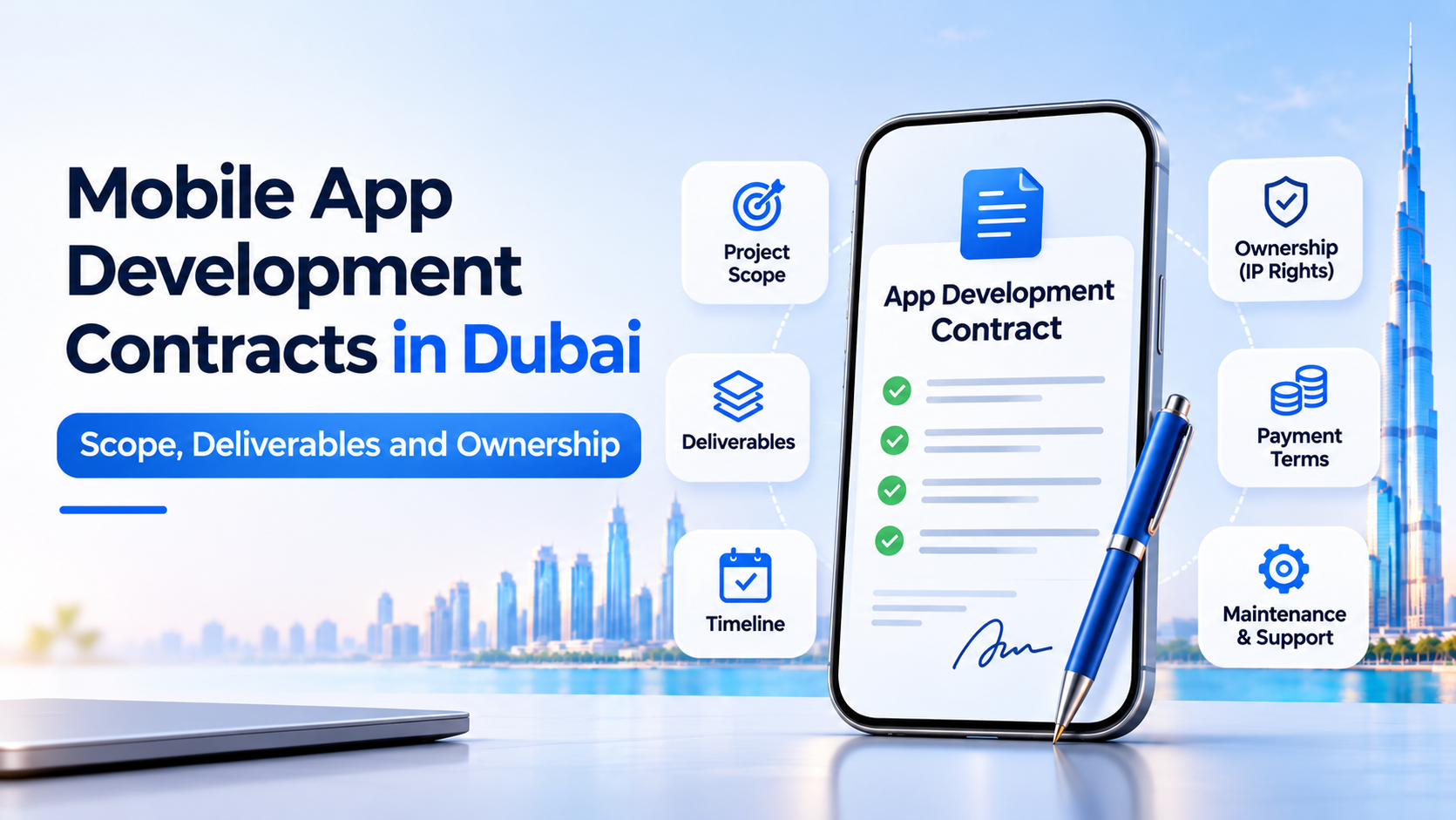
Developing a mobile application involves more than selecting features, designing screens and writing code. Businesses must also establish clear agreements with their development partners to define project responsibilities, timelines, costs and ownership rights. This makes a well-structured contract an essential part of every mobile app development project.
For businesses planning to hire a mobile app development company in Dubai, understanding the terms of a development contract can help prevent misunderstandings, control project costs and protect long-term business interests.
Whether you are building an eCommerce application, fintech platform, healthcare app or on-demand service, your contract should clearly explain what will be developed, what the development team will deliver and who will own the final product.
A mobile app development contract is a formal agreement between a business (the client) and an app development company. It outlines the terms and conditions under which the application will be designed, developed, tested and delivered.
The agreement establishes expectations for both parties and provides a reference point throughout the development process.
A typical mobile app development agreement covers:
Project requirements and development scope
Features and technical specifications
Project milestones and delivery timelines
Development costs and payment schedules
Intellectual property and source code ownership
Confidentiality and data protection
Testing, maintenance and technical support
Project changes and termination conditions
Having these terms documented helps both parties work towards the same business objectives.
The project scope is one of the most important sections of a mobile app development contract. It explains exactly what the development team is expected to build and which services are included in the agreement.
Without a clearly defined scope, businesses may face unexpected costs, additional development requests and delays.
Your contract should specify:
Application platforms: Confirm whether the application will be developed for iOS, Android or both.
Core features: List the required functionality, such as user registration, payment integration, booking systems, notifications and admin dashboards.
Design requirements: Explain the expected UI/UX design, branding guidelines, screen layouts and user journeys.
Third-party integrations: Identify external services such as payment gateways, maps, CRM systems and analytics tools.
Technical requirements: Define the preferred technology stack, backend infrastructure, APIs and performance expectations where relevant.
For example, if a Dubai-based business plans to develop an eCommerce app, the scope may include product catalogues, shopping carts, payment integration, order tracking, customer accounts and an administration panel.
A detailed scope reduces confusion and helps the development team provide a more accurate project estimate.
A contract should explain what the client will receive at each stage of the project. These deliverables help businesses monitor progress and evaluate whether the agreed work has been completed.
Common mobile app development deliverables include:
| Development stage | Expected deliverables |
|---|---|
| Discovery and planning | Project requirements and technical specifications |
| UI/UX design | Wireframes, user flows and final designs |
| Development | Frontend, backend and API functionality |
| Testing | Test reports and resolved defects |
| Deployment | Production-ready application and store submission support |
| Handover | Source code, documentation and agreed credentials |
The agreement should also define milestone approval procedures. For example, the client may need to review and approve the design before the development team begins implementation.
This approach makes project progress easier to track and reduces the risk of disagreements about completed work.
Mobile app development involves multiple stages, and each stage requires sufficient time for planning, implementation, testing and feedback.
Your contract should include an estimated project schedule covering:
Requirement gathering and project planning
UI/UX design and approval
Frontend and backend development
Third-party integrations
Quality assurance and testing
Deployment and final handover
It is also important to define how delays will be handled. Client feedback, changes in requirements, third-party service issues and delayed approvals can affect delivery dates.
A clear timeline should identify the responsibilities of both parties and explain how significant schedule changes will be communicated.
Development costs can vary depending on application complexity, platform requirements, integrations and the development team's expertise.
A professional mobile app development contract should explain the complete pricing structure instead of providing only a single project estimate.
Consider including:
Total project cost: The agreed development budget and the services covered.
Payment milestones: Payments linked to specific project stages or deliverables.
Additional costs: Charges for extra features, third-party subscriptions, cloud hosting or external services.
Change requests: The process for estimating and approving work outside the original scope.
Taxes and other charges: Any applicable taxes and additional expenses should be clearly identified.
For businesses comparing mobile app development companies in Dubai, transparent payment terms make it easier to evaluate proposals and manage project budgets.
Intellectual property ownership is one of the most important topics to address before signing a mobile app development contract.
Businesses should understand who will own the application, its source code, design assets and other custom-developed materials after the project is completed.
The contract should clearly address:
Ownership or licensing of custom-developed source code
Rights to UI/UX designs, graphics and application assets
Ownership of databases and project documentation
Access to repositories and development environments
Use of third-party libraries and open-source components
Rights to modify, maintain and further develop the application
The agreement should also explain when ownership or usage rights transfer, including whether this happens after full payment or at another agreed milestone.
In the UAE, Federal Decree-Law No. 38 of 2021 on Copyrights and Neighbouring Rights recognises computer software, applications and databases as protected intellectual works. Businesses should therefore make sure their contracts clearly address the relevant ownership, licensing and usage rights.
Pre-existing tools, reusable development frameworks and third-party software may remain subject to separate ownership or licence terms. These should not be confused with custom-developed assets.
Mobile applications may process sensitive business information, customer details, payment-related information and other personal data.
A development contract should explain how this information will be accessed, stored, processed and protected.
Important areas include:
Confidentiality obligations for both parties
Secure handling of business and customer information
Access permissions for development teams
Data storage and transfer arrangements
Security testing and vulnerability management
Procedures for reporting security incidents
Data return or deletion after project completion
Businesses operating in the UAE should also assess applicable data protection requirements, including the UAE Personal Data Protection Law where relevant to their activities.
The contract should make clear which party is responsible for specific data protection and security obligations.
Before an application goes live, it must undergo testing to identify functionality issues, security weaknesses and performance problems.
Your agreement should define the testing process and the conditions under which the client will accept the final application.
Consider including:
Functional testing: Confirms that all agreed features work as expected.
Compatibility testing: Checks application performance across supported devices and operating system versions.
Performance testing: Evaluates loading speed, responsiveness and stability.
Security testing: Identifies potential vulnerabilities and access control issues.
User acceptance testing: Allows the client to verify that the application meets the agreed requirements.
The contract should also specify how defects will be reported, prioritised and resolved before final acceptance.
Launching an application is not the end of the development process. Mobile operating systems change, security updates become necessary and businesses may need new features as customer expectations evolve.
A mobile app development agreement should explain what post-launch support is included.
Important points include:
Duration of the initial support period
Bug-fixing responsibilities
Operating system compatibility updates
Security patches and maintenance
Server and infrastructure support
Additional feature development costs
Response times for technical issues
Businesses should distinguish between warranty support for defects and ongoing maintenance services, as these may have different pricing and service conditions.
Project requirements may evolve during development. A contract should provide a formal process for handling changes without creating unnecessary disagreements.
For every significant change, the agreement should explain how the parties will assess its impact on cost, scope and delivery timelines.
It should also cover circumstances in which either party can terminate the agreement.
Important termination considerations include:
Notice periods and termination conditions
Payment for completed work
Handover of paid-for deliverables
Return or deletion of confidential information
Transfer of agreed project assets and access credentials
Resolution of outstanding disputes
These clauses help protect both parties if the project cannot continue as originally planned.
Selecting the right development partner is just as important as preparing a strong contract. Businesses should evaluate technical expertise, industry experience, communication practices and the ability to deliver applications that meet their long-term requirements.
Before choosing a mobile app development company in Dubai, consider the following factors:
Portfolio and experience: Review previous projects to understand the company's development capabilities and industry knowledge.
Technical expertise: Check its experience with iOS, Android, cross-platform frameworks, backend development and third-party integrations.
Project management: Understand how the team manages milestones, feedback, testing and communication.
Transparency: Choose a development partner that provides clear project estimates, deliverables and ownership terms.
Post-launch support: Confirm whether the company can provide maintenance, updates and future enhancements.
Comparing these factors can help businesses find an experienced app development company in UAE that understands their project goals.